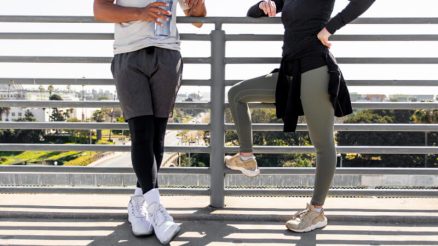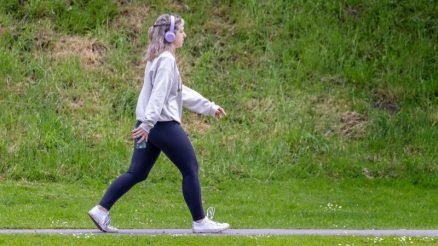

Walking is already one of the most underrated forms of exercise — it’s low-impact, requires no equipment, and fits into almost any schedule. But with a few small adjustments, you can transform an ordinary walk into a full-body workout that builds strength, improves balance, and burns more calories, all without adding extra time to your day. Here’s how to make the most of every stride.
Why Combine Exercise With Walking?
Multitasking your movement has real benefits:
- Efficiency: You get strength, mobility, and cardio work done simultaneously.
- Joint-friendly: Most walking-based exercises are low-impact, making them accessible for beginners, older adults, and people recovering from injury.
- Habit-stacking: It’s easier to stick to a routine when it’s layered onto something you already do daily, like walking the dog or commuting.
- Functional strength: Many of these movements mimic real-life motions, improving coordination and reducing fall risk.
Warm-Up: Walk With Intention
Before adding exercises, spend the first 5 minutes walking at a relaxed pace to warm up your muscles and joints. Focus on posture: shoulders back, core lightly engaged, and eyes forward.
1. Power Walking Intervals
The simplest way to boost intensity is by varying your pace.
- Walk briskly for 1–2 minutes, then slow to a recovery pace for 1 minute.
- Repeat for 20–30 minutes.
- This interval structure elevates your heart rate, improves cardiovascular fitness, and torches more calories than a steady pace.
2. Walking Lunges
Great for building leg and glute strength.
- Take an exaggerated step forward, lowering your back knee toward the ground.
- Push through your front heel to bring your feet together, then step forward into the next lunge with the opposite leg.
- Do 10–15 lunges every few minutes during your walk, or dedicate a full block to them.
Tip: Keep your torso upright and avoid letting your front knee extend past your toes.
3. High Knees
A quick burst of high knees adds a cardio and core challenge.
- While walking, switch to a marching motion, driving your knees up toward hip height.
- Pump your arms in rhythm.
- Do this for 20–30 steps, then return to your normal walking pace.
4. Calf Raises on the Move
This subtly strengthens your calves and improves ankle stability.
- As you walk, consciously push off through the ball of your foot with each step, rising slightly onto your toes.
- Alternatively, pause every few minutes and do 15–20 standing calf raises before continuing.
5. Arm Circles and Presses
Don’t neglect your upper body.
- Extend your arms out to the sides and make small circles, gradually increasing the size, for 30 seconds forward and 30 seconds backward.
- Alternatively, mimic an overhead press motion with light hand weights or water bottles as you walk.
6. Walking with Ankle or Wrist Weights
Adding light resistance (1–3 lbs) increases the intensity of ordinary walking.
- Ankle weights make your leg muscles work harder with each step.
- Wrist weights let you add arm movements like curls or presses while you walk.
Caution: Start light. Heavier weights can strain joints and alter your natural gait.
7. Side Steps and Grapevines
Add lateral movement to work muscles that forward walking neglects.
- Every few minutes, transition into side-stepping for 20–30 steps in each direction.
- For a grapevine, cross one foot in front of the other, then step the trailing foot behind, moving sideways in a braiding pattern.
- This targets your hip abductors, adductors, and improves lateral stability.
8. Butt Kicks
- While walking, kick your heels back toward your glutes with each step.
- Do this for 20–30 steps to engage your hamstrings and add a light plyometric element.
9. Standing Core Twists
- As you walk, rotate your torso gently from side to side, letting your arms swing naturally across your body.
- This engages your obliques and improves spinal mobility without breaking stride.
10. Incorporate Hills or Stairs
If your route allows, seek out an incline or a set of stairs.
- Walking uphill activates your glutes and hamstrings more intensely than flat terrain.
- Stairs add a vertical challenge that boosts heart rate and builds lower-body power.
11. Balance Challenges
- Occasionally walk heel-to-toe (as if on a tightrope) for 20–30 steps to challenge your balance and coordination.
- This is especially useful for older adults working on fall prevention.
12. Pause-and-Hold Exercises
Every 5–10 minutes, stop and perform a short bodyweight circuit:
- Squats: 10–15 reps
- Standing push-ups (against a wall, tree, or bench): 10–15 reps
- Plank hold (if you have a bench or ledge): 20–30 seconds
This breaks up the monotony of walking and adds strength training benefits.
Sample 30-Minute Walking Workout
| Time | Activity |
|---|---|
| 0–5 min | Warm-up walk, relaxed pace |
| 5–8 min | Brisk walk |
| 8–9 min | Walking lunges |
| 9–13 min | Brisk walk |
| 13–14 min | High knees |
| 14–18 min | Brisk walk |
| 18–19 min | Side steps/grapevine |
| 19–23 min | Brisk walk |
| 23–24 min | Butt kicks |
| 24–28 min | Cool-down walk |
| 28–30 min | Standing core twists + calf raises |
Safety Tips
- Choose safe terrain: Avoid uneven or crowded areas when doing lunges, side steps, or balance work.
- Stay aware of surroundings: If walking outdoors, keep exercises like high knees or grapevines to open, low-traffic areas.
- Hydrate: Especially important if you’re adding intensity intervals.
- Listen to your body: Stop any exercise that causes pain (not to be confused with normal muscle fatigue).
- Footwear matters: Wear supportive shoes designed for lateral and dynamic movement, not just forward walking.
Final Thoughts
Walking doesn’t have to be a passive activity squeezed between errands. With small additions like lunges, high knees, side steps, and interval bursts, you can turn a simple walk into a well-rounded workout that builds strength, boosts cardiovascular health, and improves balance — all without needing a gym. Start by adding one or two of these exercises to your regular walk, and gradually build up as your fitness improves.