
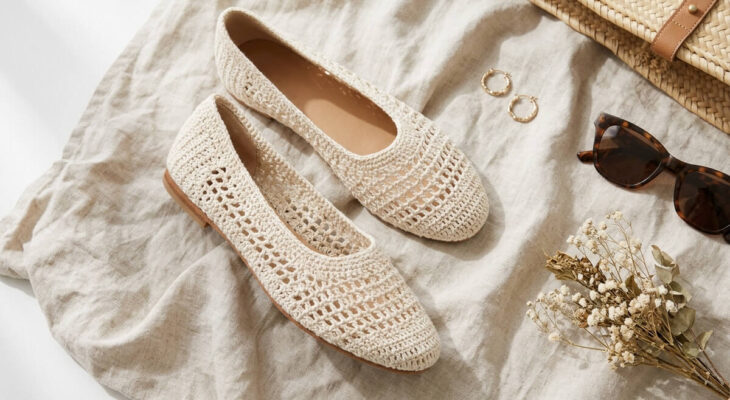
If you have scrolled through Pinterest, Instagram, or TikTok in the last year or so, you have almost certainly seen them: soft, handmade-looking ballet flats with an open, lacy crochet weave, worn with linen trousers, slip dresses, and cuffed jeans. Crochet ballet flats started as a quiet street-style favorite and quickly turned into one of the most talked-about shoe trends, with fashion editors calling them the natural follow-up to the mesh flats craze. Now you can find them everywhere, from small handmade shops to big-name designers and budget-friendly high-street stores.
But here is the real question most of us are asking before we click “add to cart”: are crochet ballet flats actually worth it? Are they comfortable enough for real life, will they hold up past one summer, and are they kind to your feet? In this guide, we break down everything you need to know, including the pros, the cons, how to choose a good pair, how to style them, and how to keep them looking fresh, so you can decide whether this trend deserves a spot in your shoe closet.
What Exactly Are Crochet Ballet Flats?
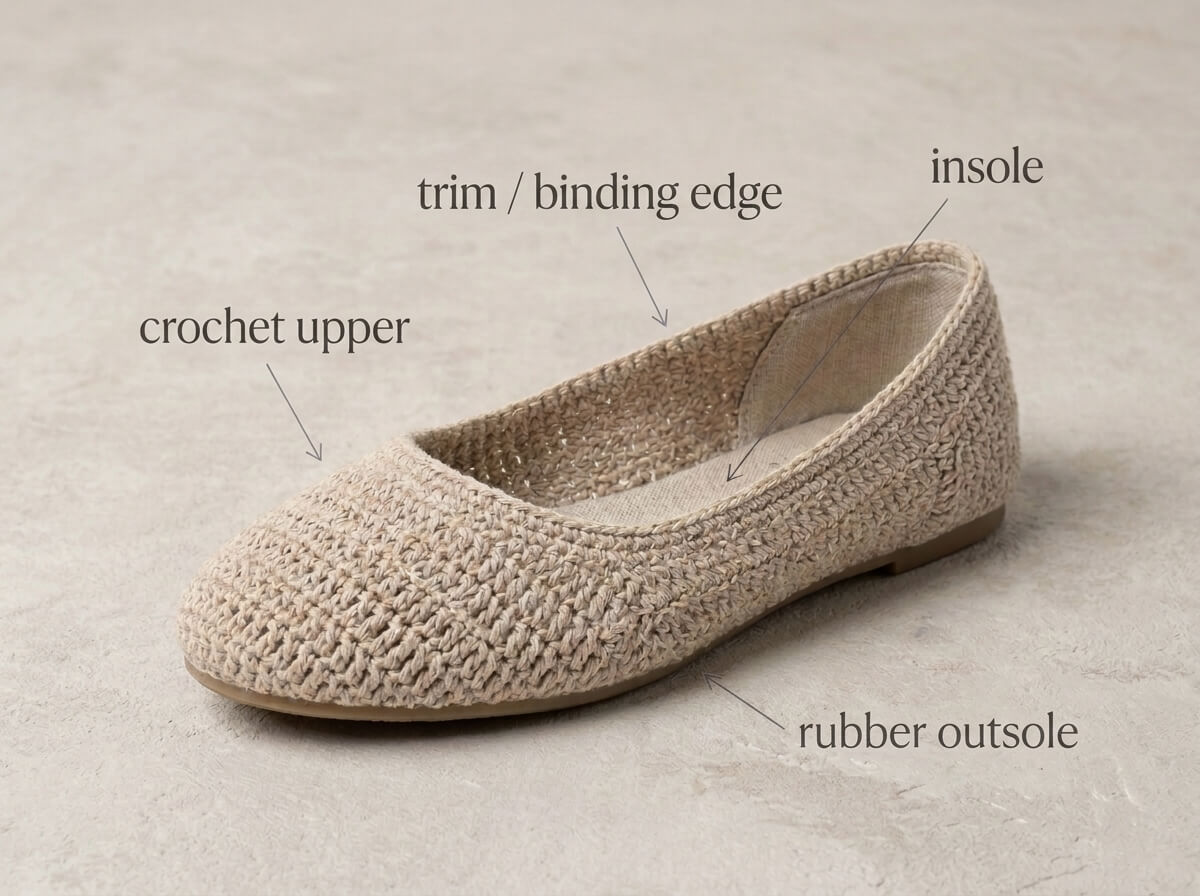
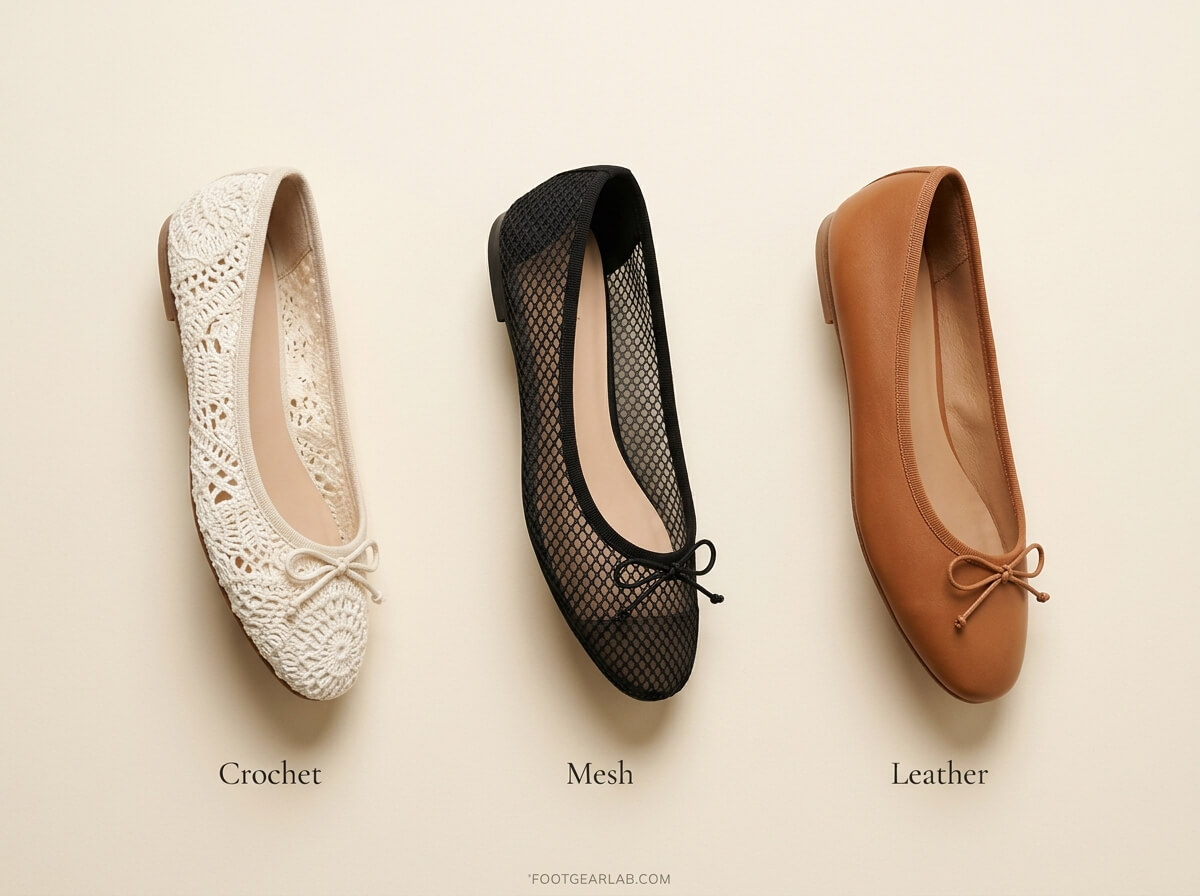
Crochet ballet flats are slip-on flat shoes with the classic rounded or almond ballet silhouette, but instead of a solid leather or fabric upper, the top of the shoe is made from crocheted yarn. The yarn is usually cotton, raffia, a cotton blend, or sometimes a synthetic cord, worked into patterns that range from tight, almost solid stitches to airy, see-through lace designs. The upper is then attached to a sole, which can be anything from a thin leather sole to a cushioned rubber outsole, depending on the brand and the price.
What makes them different from regular knit or fabric flats is the handmade texture. Because real crochet is worked by hand, stitch by stitch, many pairs have small irregularities that give each shoe a one-of-a-kind, artisanal feel. Some brands also use machine-made “crochet-look” knits that copy the appearance at a lower price, which is worth knowing when you are comparing options, because the look, stretch, and durability can be quite different.
Where Did the Trend Come From?
Crochet shoes are not new at all. Handmade crochet slippers and sandals have been around for generations, and they had a big moment during the bohemian 1970s, when anything handmade felt free-spirited and personal. What is new is how they have been reshaped into the polished ballet flat silhouette that fits today’s minimalist, “quiet luxury” wardrobes.
The modern wave really took off when a small Ukrainian footwear brand’s handmade crochet flats went viral, and soon after, fashion insiders in cities like Lisbon and Miami were spotted wearing them everywhere. This came right on the heels of the mesh and fishnet ballet flat trend, which had already made see-through, breathable flats feel fashionable again. Add in the ongoing “balletcore” aesthetic, with its soft layers, ribbons, and feminine details, and crochet flats became the perfect next step: just as airy and delicate as mesh, but warmer, softer, and more crafted-looking.
The Pros: Why Women Love Crochet Ballet Flats
They Are Incredibly Breathable
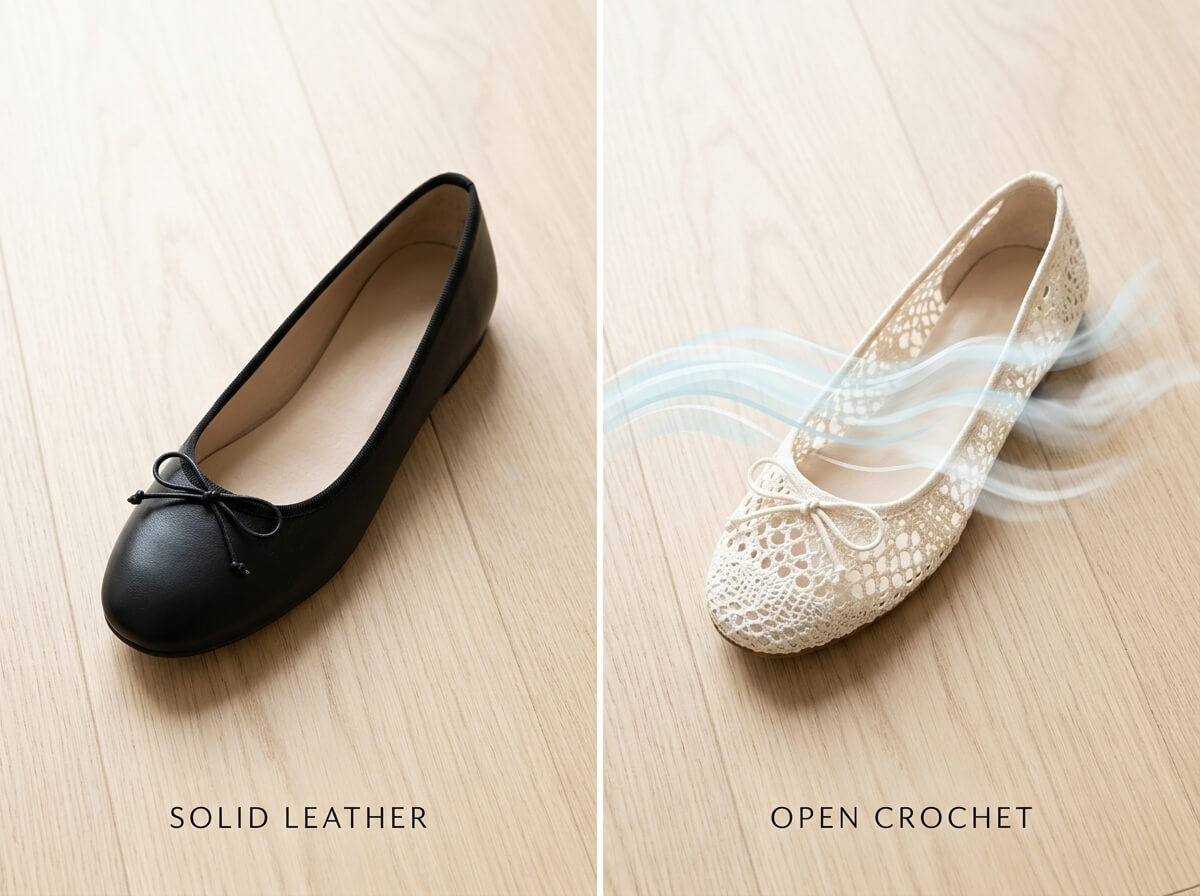
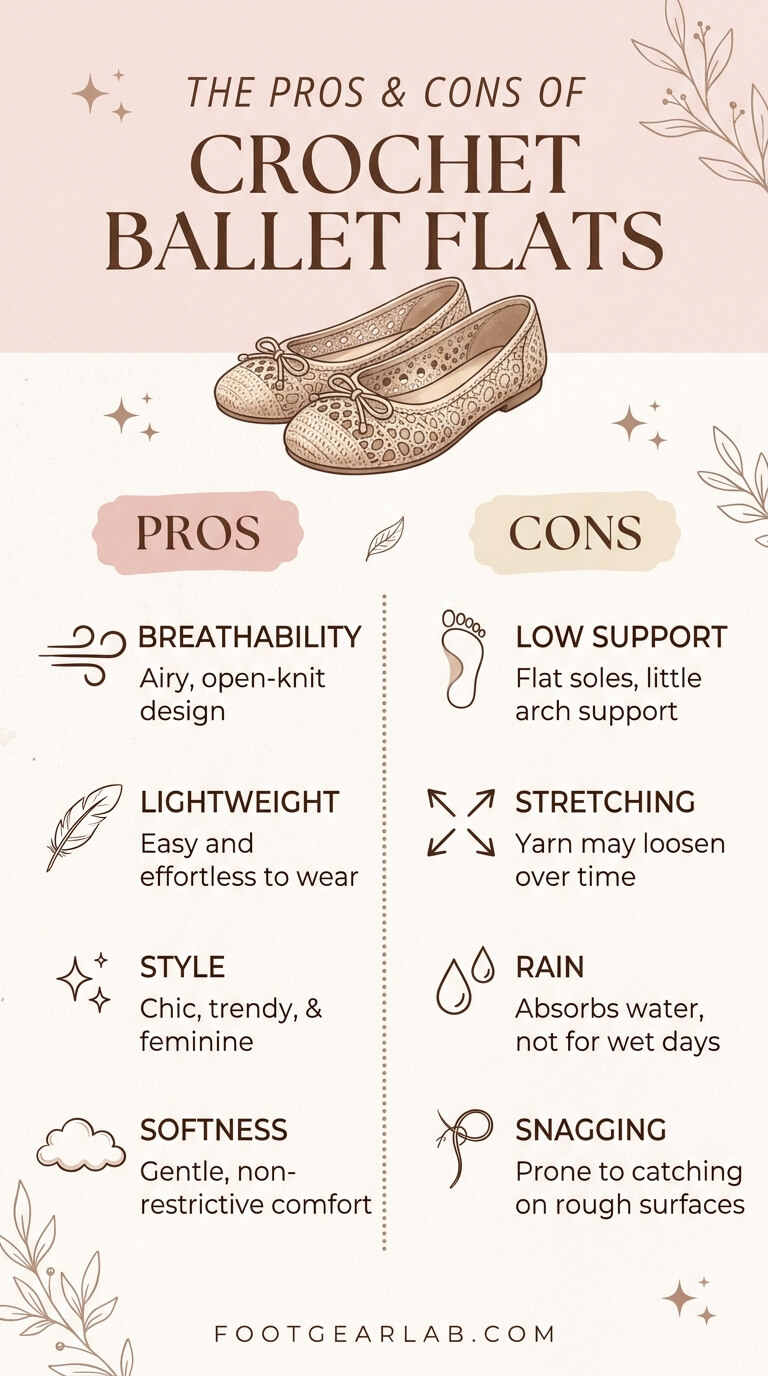
The open weave of crochet lets air circulate around your feet in a way that solid leather or synthetic flats simply cannot. On hot summer days, this can make a big difference in how sweaty and sticky your feet feel by the end of the afternoon. For anyone who finds closed-toe shoes stuffy in warm weather but does not always want to wear sandals, crochet flats sit right in that sweet spot between the two.
They Are Lightweight and Easy to Pack
Most crochet flats weigh noticeably less than leather ballet flats or sneakers, and because the upper is soft, many pairs can be gently folded or squished into a suitcase without losing their shape. That makes them a favorite for vacations, beach towns, and city breaks where you want something cute for dinner that will not take up half your carry-on.
They Add Instant Texture and Personality to Outfits
A simple outfit, like a white tee and straight-leg jeans or a plain black slip dress, can look a little flat on its own. Crochet shoes bring in texture, a handmade touch, and a slightly romantic, vacation-ready feel without being loud or flashy. They are an easy way to make a basic outfit look intentional and styled, which is exactly why they photograph so well for Pinterest and Instagram.
They Feel Soft Against the Skin
Because the upper is made from yarn rather than stiff leather, there is usually no painful “breaking-in” period around the heel and the sides of the foot. Many women who struggle with blisters from structured ballet flats find crochet versions far gentler, especially when the edges are finished with a soft binding.
They Come in Every Price Range
You can find crochet flats as affordable high-street buys, as mid-range pieces from contemporary brands, as handmade pieces from independent makers on Etsy and small shops, and as luxury designer versions that cost well over a thousand dollars. That range makes the trend easy to try without a big commitment, while also offering long-lasting options if you fall in love with it.
The Cons: What Nobody Tells You Before You Buy
Most Pairs Offer Very Little Support
This is the biggest drawback, and it matters a lot for foot health. Like most ballet flats, many crochet versions have thin, flat soles with almost no arch support and very little cushioning. On top of that, the soft yarn upper does not hold your foot as firmly as leather, so your toes may grip to keep the shoe on, which can lead to tired feet, aching arches, or heel pain after long days of walking. If you have flat feet, plantar fasciitis, bunions, or knee and back discomfort, wearing unsupportive flats for hours at a time can make those issues feel worse.
They Stretch Out Over Time
Yarn naturally relaxes with wear, heat, and moisture. A pair that feels snug and perfect on day one may feel loose and sloppy a few weeks later, especially if it is made from cotton or a loose stitch. This is why sizing and stitch tightness are so important when choosing a pair, and why some brands reinforce the edges with leather or elastic binding.
They Are Not Made for Bad Weather
Crochet and rain do not mix. The open weave soaks up water quickly, muddy puddles go straight through to your feet, and wet yarn can lose its shape or take a long time to dry. Crochet flats are best treated as fair-weather shoes for dry days, indoor events, and summer outings, not as everyday commuters in rainy climates.
They Can Snag and Get Dirty Easily
Loose yarn loops can catch on rough pavement, Velcro, jewelry, or even the edge of a stair. Light colors like cream, white, and pastel pink also show dirt and scuffs fast. With gentle care, these issues are manageable, but they do require more attention than a wipe-clean leather flat.
The Trend Factor Is Real
Crochet flats are very “of the moment.” Ballet flats in general have proven they can stay in style for years, but a highly textured, trend-driven version might feel dated faster than a classic leather pair. If you prefer timeless pieces, choose a neutral color and a subtle stitch rather than a bright, chunky, or heavily embellished design.
Are Crochet Ballet Flats Bad for Your Feet?
Crochet ballet flats are not “bad” shoes on their own, but they are not designed for all-day walking or long periods on your feet either. The main concerns from a foot-health point of view are the same ones that apply to most traditional ballet flats: a lack of arch support, minimal shock absorption under the heel, and a loose fit that makes the small muscles in your feet and toes work harder to keep the shoe in place.
For short outings, like brunch, a dinner date, a gallery visit, or a relaxed day at the office where you are mostly seated, a well-made pair is usually perfectly fine for most people. Problems are more likely to show up when you wear them for long city walks, travel days with lots of sightseeing, or eight-hour shifts on your feet. If you start to notice heel pain in the morning, aching arches, or tired calves after wearing them, that is a sign to limit the time you spend in them and rotate in more supportive footwear.
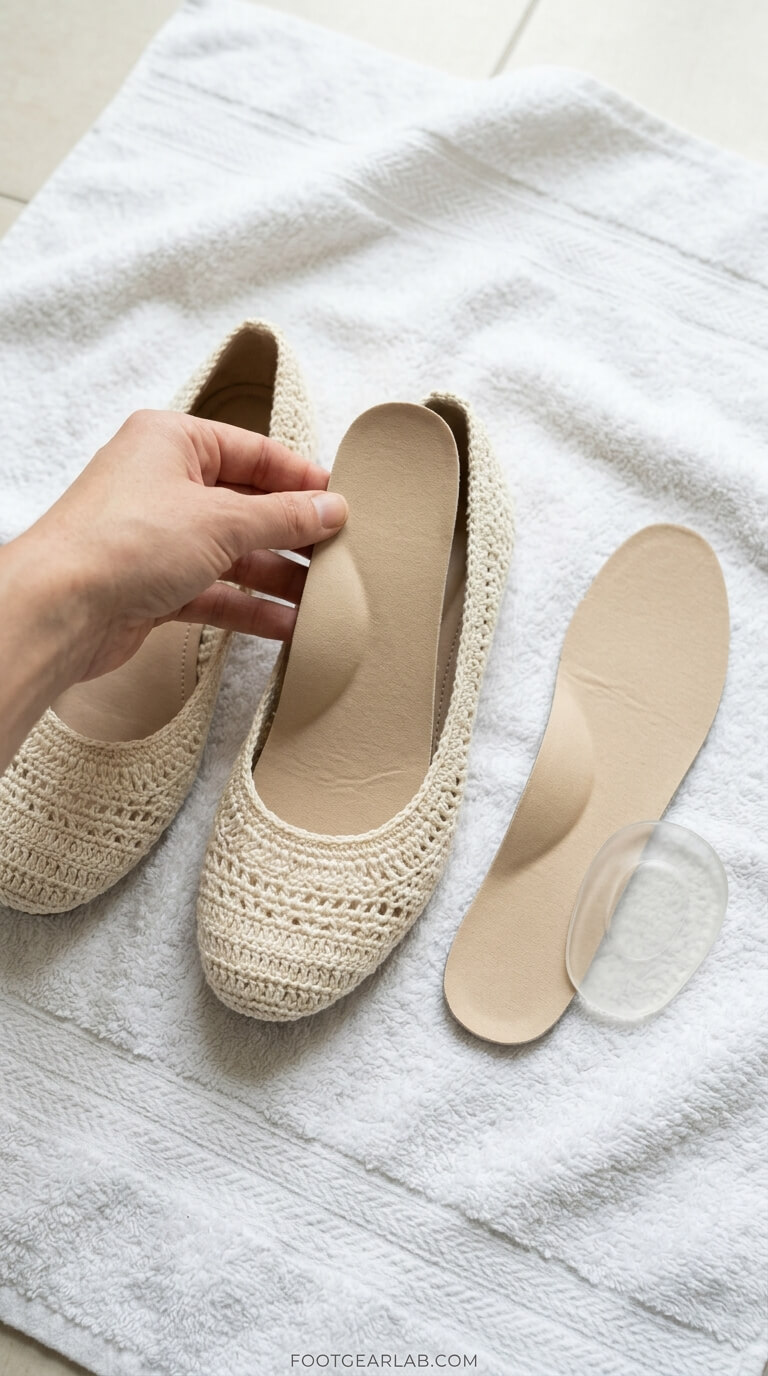
A few simple habits can make them much more comfortable. Look for pairs with a cushioned or rubber sole instead of a paper-thin leather one, and slip in a thin, low-profile arch support insert or gel heel pad if there is room inside the shoe. Alternate them with supportive sneakers or sandals throughout the week rather than wearing them every single day. If you already deal with foot conditions such as plantar fasciitis, bunions, or flat feet, it is worth checking with a podiatrist about whether flat shoes are right for you and which inserts could help.
How to Choose a Good Pair of Crochet Ballet Flats
Check the Sole First
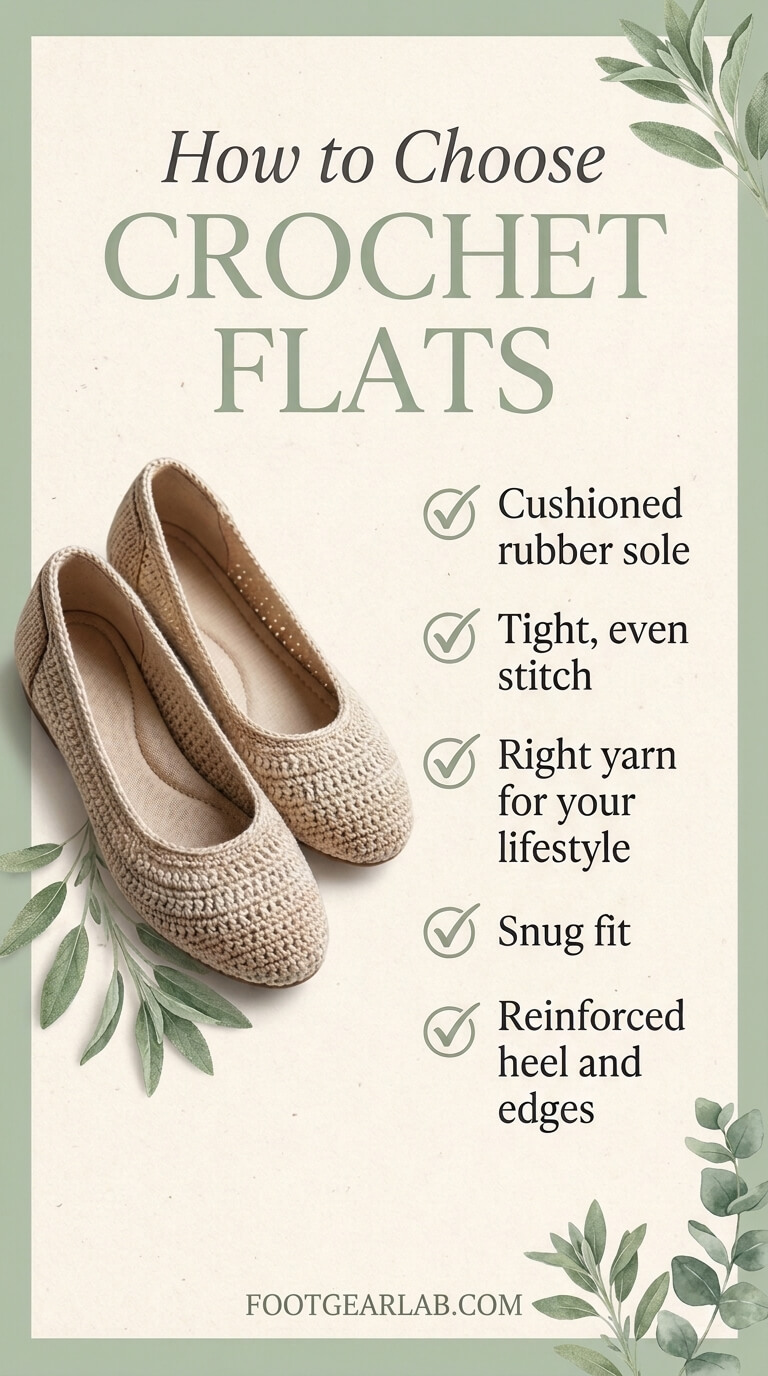
The sole is what your feet actually stand on all day, so it deserves more attention than the pattern. A rubber or cushioned outsole will give you better grip, more shock absorption, and longer wear than a very thin leather or fabric sole. If you can, press on the sole with your thumb: a little give and flexibility at the ball of the foot is a good sign, while a completely flat, hard sole means you will feel every step.
Look for a Tight, Even Stitch
A tighter crochet stitch holds its shape better, snags less, and stretches out more slowly than a very loose, open lace pattern. Turn the shoe over in your hands and look closely: the stitches should be even and consistent, with no loose loops or thin, stretched-out areas around the heel and toe.
Pay Attention to the Yarn
Cotton is soft and breathable but stretches and absorbs water more easily. Raffia and paper-yarn blends hold their shape better and feel more summery, though they can be a little stiffer at first. Synthetic cords and blends tend to be the most durable and easiest to clean, but they may feel slightly less breathable. Choose based on how and where you plan to wear them.
Go for a Snug Fit
Because yarn relaxes with wear, a crochet flat should feel snug, but not painful, when you first try it on. If you are between sizes, many women find that sizing down or choosing the snugger option works better in the long run. Reinforced edges, a leather-lined heel, or an elastic binding around the opening will also help the shoe stay on your foot without your toes having to grip.
Consider Lined or Unlined
Some crochet flats have a fabric or leather lining inside, which adds structure, comfort, and a little modesty if you do not love the fully see-through look. Unlined pairs are the most breathable and the most “authentic” looking, but they offer less structure and may rub more on sensitive skin.
How to Style Crochet Ballet Flats
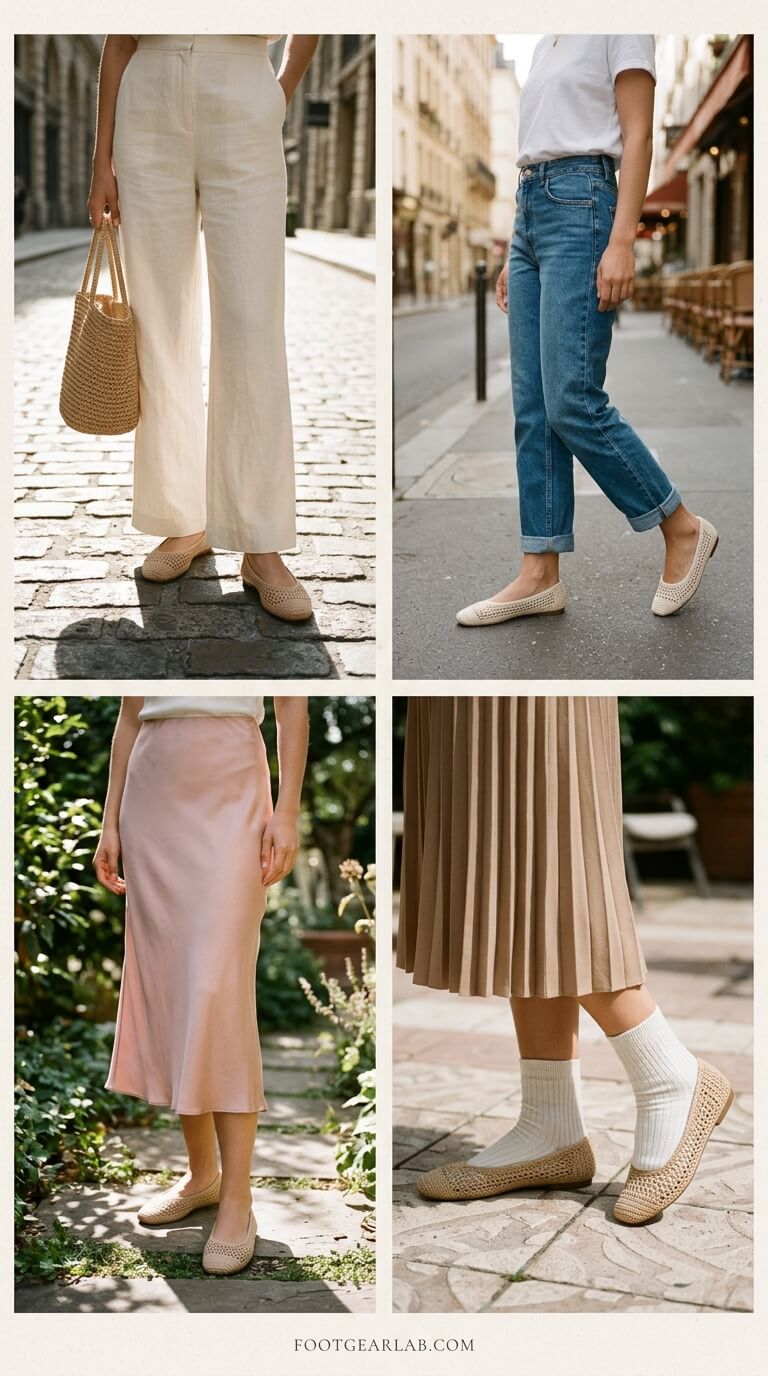
With Wide-Leg Linen Trousers
This is one of the easiest and most elegant ways to wear them. Pair cream or natural crochet flats with flowy linen trousers, a fitted tank or a relaxed button-down shirt, and a woven bag for an effortless summer look that works for brunch, shopping, or a casual workday. The texture of the crochet echoes the natural feel of the linen and keeps the whole outfit soft and breezy.
With Straight-Leg or Cuffed Jeans
Crochet flats balance the structure of denim beautifully. Try straight-leg jeans with a small cuff at the ankle, a crisp white tee or a striped Breton top, and a simple shoulder bag. The cuff shows off the shoe and gives the outfit that relaxed, “European summer” street-style feel that dominates Pinterest boards.
With Slip Dresses and Midi Skirts
For a more romantic, balletcore look, wear crochet flats with a satin slip dress or a flowing midi skirt and a fitted cardigan. Soft colors like blush, butter yellow, or ivory look especially pretty here. This combination is perfect for garden parties, date nights, and summer weddings where you want to be comfortable without looking underdressed.
With Shorts and Summer Sets
On hot days, a matching linen or cotton shorts set paired with crochet flats looks polished but easygoing. Add gold jewelry and a straw bag, and you have a vacation-ready outfit that moves easily from sightseeing to an evening stroll by the sea.
With Socks for Cooler Days
To stretch your crochet flats into spring and early fall, try them with thin ribbed socks or sheer socks in a coordinating or contrasting color. The sock peeks through the open weave and adds an extra layer of texture, and it also helps protect your skin from rubbing and keeps the shoes cleaner.
How to Care for Crochet Ballet Flats
Clean Them Gently
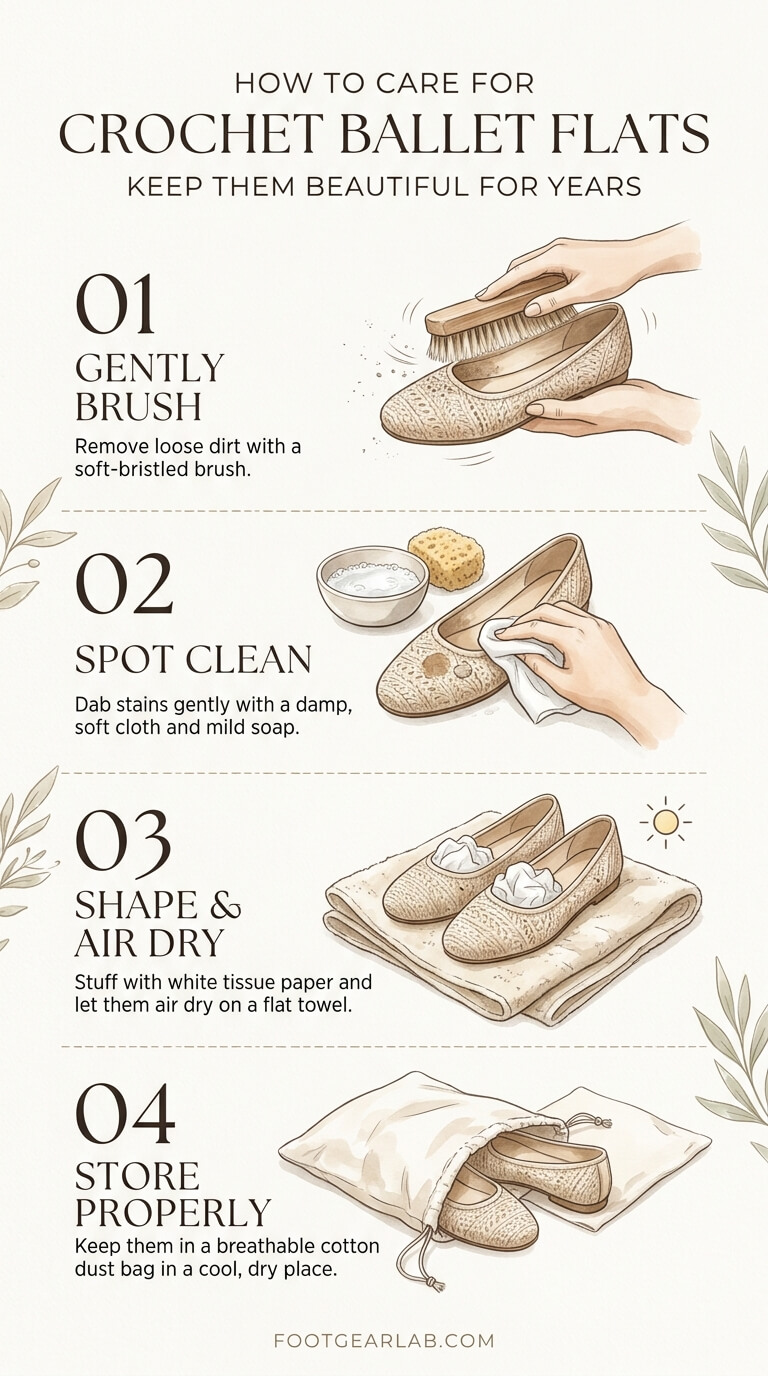
Most crochet flats should not go in the washing machine, since the agitation can stretch the yarn and damage the glue that holds the upper to the sole. Instead, use a soft brush or a clean toothbrush to remove dust and loose dirt, then spot-clean marks with a damp cloth and a small amount of mild soap or gentle detergent. Always check the brand’s care instructions first, especially for raffia or paper-yarn styles, which can be damaged by too much water.
Dry Them the Right Way
If your flats get wet, gently press out the extra water with a towel, stuff them with paper towels or clean socks to help them keep their shape, and let them air-dry at room temperature. Avoid radiators, hair dryers, and direct hot sunlight, which can shrink, warp, or fade the yarn and weaken the sole’s adhesive.
Fix Snags Right Away
If a loop gets pulled, do not cut it. Use a crochet hook, a blunt needle, or a toothpick to gently ease the loop back into the stitch from the inside of the shoe. Tackling snags early stops them from turning into bigger holes or runs.
Store Them With Care
Keep your crochet flats in a breathable cotton dust bag or a shoe box, away from rough items that could snag them. Stuffing them lightly with tissue paper when you store them helps them hold their shape, especially over the off-season.
Who Should Buy Crochet Ballet Flats (and Who Should Skip Them)
Crochet ballet flats are a great choice if you love soft, feminine, texture-rich outfits, live somewhere with warm and mostly dry weather, and want a breathable shoe for short to moderate outings like brunch, the office, dinner dates, and vacations. They also make sense if you enjoy trying fun trends, appreciate handmade craftsmanship, and do not mind a little extra care to keep your shoes looking nice.
On the other hand, you may want to skip them, or at least keep them as an occasional pair, if you need a shoe for long walking days, live in a rainy climate, or prefer low-maintenance footwear you can wipe clean and forget about. They are also not the best everyday option if you already deal with foot pain, plantar fasciitis, or flat feet and need structured arch support. In that case, a more supportive flat or a sneaker will likely serve you better, with crochet flats saved for special outings.
Crochet Ballet Flats vs. Other Trendy Flats
| Feature | Crochet Ballet Flats | Mesh Ballet Flats | Classic Leather Ballet Flats |
|---|---|---|---|
| Breathability | Very high thanks to the open weave | Very high, almost fully see-through | Low to moderate |
| Support | Usually low, depends on the sole | Usually low | Low to moderate, depends on the brand |
| Durability | Moderate, can stretch and snag | Moderate, mesh can tear | High with good care |
| Weather Friendliness | Best for dry, warm days | Best for dry, warm days | Works in most seasons |
| Ease of Cleaning | Requires gentle spot cleaning | Fairly easy to wipe | Easy to wipe and polish |
| Style Vibe | Soft, handmade, boho-romantic | Sleek, modern, minimal | Timeless and polished |
| Trend Longevity | Trend-driven, choose neutrals to last | Trend-driven | Long-lasting classic |
Final Verdict: Are Crochet Ballet Flats Worth the Hype?
For many women, yes, as long as you buy them for the right reasons and wear them in the right situations. Crochet ballet flats are breathable, lightweight, soft on the skin, and genuinely beautiful, with a handmade charm that instantly makes simple outfits feel more styled and personal. They are perfect for warm-weather days, vacations, brunches, and relaxed office looks, and they pair effortlessly with linen, denim, and flowing dresses.
At the same time, they are not a do-everything shoe. Most pairs offer little support, they can stretch and snag, and they are not made for rain or long walking days. If you choose a pair with a cushioned sole, a tight stitch, and a snug fit, add a slim insert when needed, and rotate them with more supportive shoes, you can enjoy the trend without sacrificing comfort. Think of them as a fun, feminine summer favorite rather than your one and only everyday flat, and they will be well worth the hype.