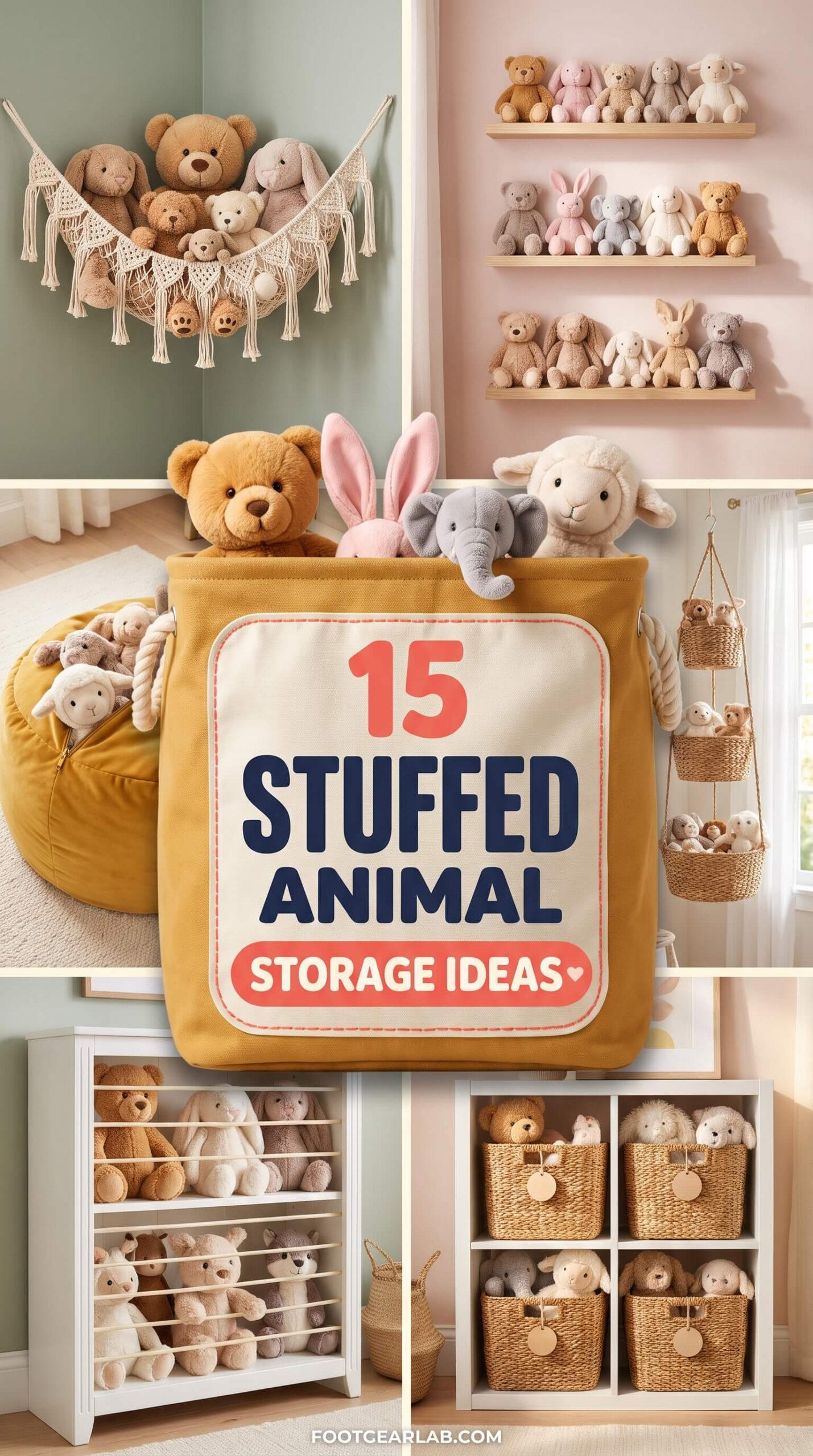
If you’ve ever stepped on a squeaky giraffe in the dark or watched a bed slowly disappear under a mountain of teddy bears, you know that stuffed animals have a way of multiplying. They come home from birthday parties, grandparents’ visits, carnival games and claw machines, and every single one seems to have a name and a backstory. Throwing them all in a toy box rarely works, because plush toys are bulky, squishy and light, and they quickly overflow any bin that wasn’t made for them.
The good news is that stuffed animals are one of the easiest toys to store beautifully. Because they’re soft, lightweight and cute, they can be hung, displayed, tucked into furniture or even turned into seating. The trick is choosing a system that matches the size of your collection, the age of the person who owns it and the look of the room. A toddler needs bins she can reach on her own, while a grown-up plush collector may want a display that shows off her favorites like the small works of art they are.
In this guide, you’ll find 15 stuffed animal storage ideas, from playful toy hammocks and “toy zoo” bookcases to hidden under-bed bins and clever bean bag chairs. Each idea comes with tips on how to set it up, who it suits best and its own image prompt, plus advice on decluttering, safety and keeping your plushies clean.
Before You Start: Sort the Plush Pile
Storage works best when you aren’t trying to organize toys that nobody loves anymore. Before buying a single basket, gather every stuffed animal in the house into one place, such as the living room floor or a bed. Seeing the whole collection at once is often a surprise, and it gives you a realistic idea of how much space you actually need.
Next, sort the toys into a few simple groups, ideally with your child if she’s old enough to have opinions:
- Daily favorites: These are the bedtime buddies and constant companions that get carried around the house. They need the easiest spot to reach, such as a basket by the bed or a low shelf, because they’ll be taken out and put back many times a day.
- Loved but occasional: These are the toys that get played with now and then. They can go into displays, hammocks and baskets, where they’re visible and easy to grab but not underfoot.
- Sentimental keepsakes: A first teddy bear, a toy from a grandparent or a childhood plush of your own deserves protection from dust and rough play. Keep these in a closed or glass-front spot, or store them away safely.
- Ready to go: Toys that are worn out, broken, duplicated or simply forgotten can be donated if they’re clean and in good shape, passed on to a younger cousin, or recycled where textile recycling exists. Some shelters and charities don’t accept used stuffed animals for hygiene reasons, so check before you drop them off.
A helpful rule for kids is the “one in, one out” habit: when a new plush comes home, an older one gets donated or moved into rotation storage. It keeps the collection from growing out of control without making a child feel she’s losing her favorites.
1. A Corner Toy Hammock
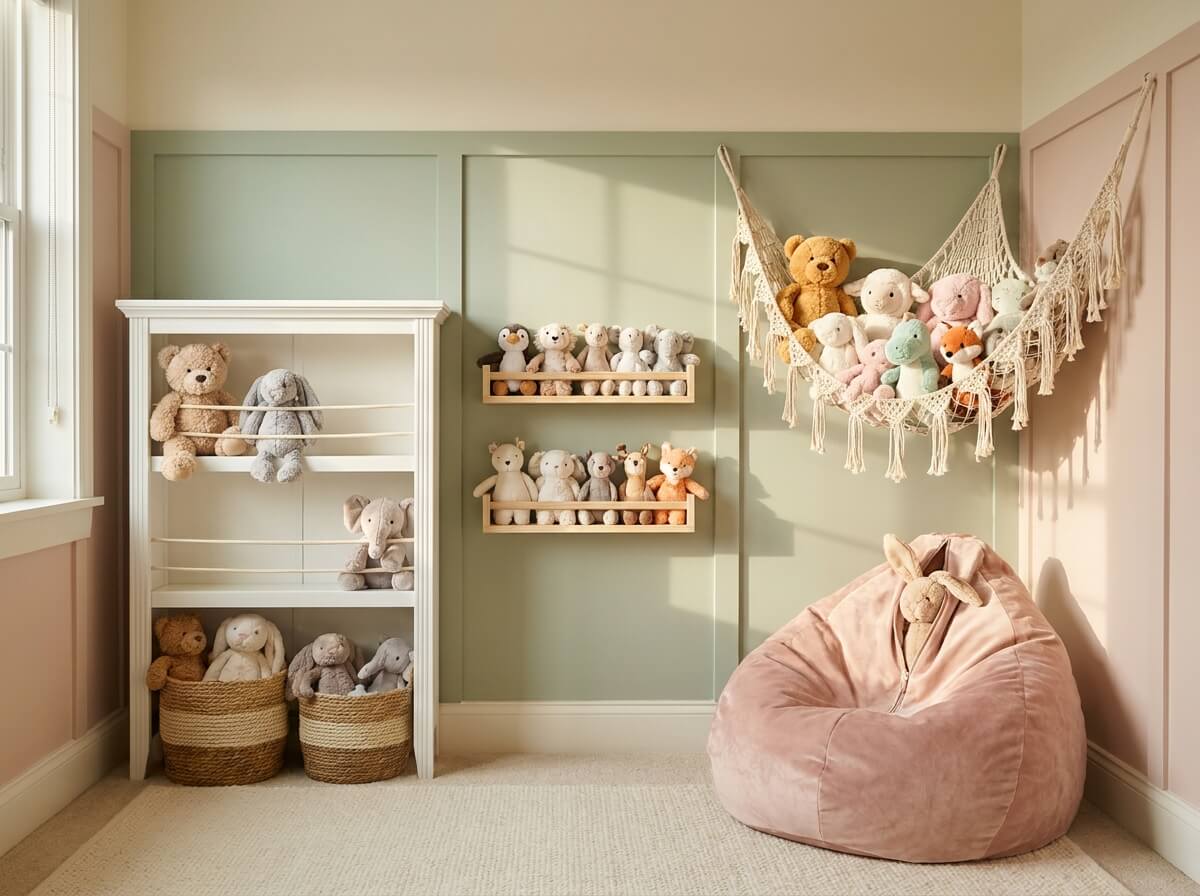
A toy hammock is the classic stuffed animal storage idea for good reason. A triangle of netting or macramé stretches between two walls in a corner, creating a soft “nest” that holds a surprising number of toys while using space that would otherwise sit empty. Because it hangs above the floor, it frees up play space, and because it’s open, kids can still see all their friends.
Today’s toy hammocks go far beyond the old plastic mesh versions. You can find hand-knotted cotton macramé hammocks with fringe, linen-look fabric slings, and boho rope designs that look like a decor piece rather than a storage tool. A cream or natural macramé hammock fits almost any nursery or bedroom style, from Scandinavian to farmhouse.
How to set it up:
- Choose a corner away from the crib, the bed and any window cords, so no part of the hammock or its ties can be reached by a sleeping child. Mount it at a height where an adult can easily lift toys in and out, usually around 5 feet for kids’ rooms, or lower in a playroom where an older child helps tidy up.
- Use the screw hooks or adhesive hooks that come with the hammock, and install them into studs or with proper wall anchors if your toys are heavy. A hammock filled with large plushies can weigh more than you’d expect, and you don’t want it pulling out of drywall.
- Fill it loosely rather than packing it tight. A gently sagging hammock with ears and paws hanging over the edge looks adorable, while an overstuffed one looks cluttered and strains the hooks.
Best for: Medium to large collections of soft, lightweight toys, small rooms and anyone who wants storage that doubles as decor.
2. A Stuffed Animal Bean Bag Chair
This idea is pure genius for big collections: a zippered bean bag cover, sold empty, that you fill with stuffed animals instead of foam beads. The toys become the filling, the bag becomes a cozy seat, and a pile of plush that used to cover the floor disappears into one soft piece of furniture. When your child wants a particular toy, she just unzips the cover and digs it out.
Stuffed animal bean bag covers come in velvet, corduroy, cotton canvas and faux fur, and in sizes from small kids’ chairs to huge loungers that hold well over a hundred toys. A velvet cover in mustard, blush or sage instantly looks like a designer piece, while a soft corduroy cover feels cozy in a reading nook.
How to set it up:
- Use the toys you want to keep but don’t play with every day, since digging the bottom ones out takes some effort. Put the softest, squishiest toys in first, and save firmer or lumpier ones for the middle so the seat feels comfortable.
- Remove anything with hard plastic parts, batteries or sound boxes, because they’ll press into whoever sits there and can break under weight.
- Choose a cover with a childproof zipper or a zipper hidden under a flap if you have toddlers, and fill it fully so the chair keeps a nice rounded shape rather than slumping.
Best for: Very large collections, reading corners, teen rooms and anyone who wants storage that also adds seating.
3. A “Toy Zoo” Bookcase
The toy zoo is one of the most loved stuffed animal storage ideas on Pinterest, and kids adore it. You take a simple bookcase or cube shelf, then stretch elastic cords or bungee-style bands vertically or horizontally across the front so the stuffed animals look like they’re peeking out from behind the “bars” of their zoo enclosure. Kids can pull a toy out through the stretchy cords and push it back in, which makes tidying feel like a game.
You can buy ready-made toy zoo units, but a DIY version is easy and inexpensive. A basic bookcase, some colorful round elastic cord or fabric-covered elastic, and a few screw eyes or cup hooks are all you need. Painting the bookcase in a cheerful color or adding a little wooden sign on top (like “Zoo” or your child’s name) makes it feel like a real feature of the room.
How to set it up:
- Fix small screw eyes along the top and bottom (or both sides) of each shelf opening and tie the elastic between them, leaving about 3 to 4 inches between cords so toys can be squeezed through but don’t fall out. Knot the ends securely and trim them short so there are no loose tails.
- Anchor the bookcase to the wall with an anti-tip kit, as every piece of kids’ furniture should be. Children love climbing a toy zoo to reach a favorite animal, and an unanchored bookcase can tip over.
- Keep the elastic taut but not overly tight, and check it every few months, because elastic loosens over time and will need re-tying.
Best for: Toddlers and young kids who love playing “zookeeper,” medium collections and families who already own a basic bookcase.
4. Woven Baskets on Cube Shelves
Sometimes the simplest solution is the most beautiful. A cube shelf fitted with woven baskets gives every group of stuffed animals its own “home,” hides visual clutter and looks polished in any room, including a shared living room or family room where you don’t want toys on display all the time. Seagrass, water hyacinth, rattan and cotton rope baskets all add warm natural texture that softens the look of kids’ things.
The real strength of this system is sorting. You can group plushies by type (bears, bunnies, dinosaurs, ocean animals) or by size, and even young children can learn where each group belongs. For pre-readers, a small picture tag on each basket, such as a drawing or photo of a bear or a fish, shows exactly which toys go inside.
How to set it up:
- Measure the cube openings before buying baskets, since cube shelves come in a few common sizes and a basket that’s too large won’t slide in. Choose baskets with handles or cutouts so small hands can pull them out easily.
- Put the most-loved toys in the lowest baskets, at your child’s height, and store less-used or keepsake plushies higher up. This little detail lets kids tidy up independently.
- Leave one or two cubes open to display a few favorite toys or books, which keeps the unit from looking like a wall of boxes.
Best for: Living rooms, playrooms, shared spaces and families who want a tidy, grown-up look.
5. Floating Wall Ledges for a Plush Display
If you’d rather show off stuffed animals than hide them, slim floating ledges (often sold as picture ledges) turn them into a sweet wall display. The small lip at the front keeps toys from tumbling off, and a few ledges stacked on one wall create a gallery of soft faces that looks charming in a nursery, a girl’s bedroom or even a grown-up’s room for plush collectors.
Ledges work especially well for small to medium-sized toys, which can sit upright in a neat row. They also keep favorite toys off the bed and the floor while still being in sight, which many kids find comforting.
How to set it up:
- Install two to four ledges about 10 to 14 inches apart, screwed into wall studs or proper anchors. In a child’s room, place them over a dresser or play area rather than directly over the bed or crib, so nothing can fall on a sleeping child.
- Arrange toys by color for a calm, curated look, or by size with taller toys on the ends. Mixing in a small framed print, a little plant or a few books keeps the display from feeling crowded.
- Keep the lower ledges within your child’s reach if she should be able to take toys down herself, and use the higher ones for keepsakes.
Best for: Small to medium toys, collectors, nurseries and anyone who wants storage that looks like wall art.
6. An Over-the-Door Pocket Organizer
The back of a door is one of the most wasted spaces in a home, and a hanging pocket organizer turns it into a surprisingly roomy home for small stuffed animals. Clear vinyl pockets let your child see every toy at a glance, while fabric or mesh pockets in soft colors look a bit more decorative. Each pocket holds one or two little plushies, which is perfect for collections of mini toys, keychain plushies and party-favor animals that tend to get lost.
This idea costs very little, needs no tools and works in small bedrooms, shared rooms and even dorm rooms or apartments where you can’t drill into walls.
How to set it up:
- Choose an organizer with sturdy over-the-door hooks that fit your door’s thickness, and check that the door still closes smoothly once it’s full. A rubber stopper or felt pads on the back keep it from banging.
- Put the smallest toys in the top pockets and the slightly larger ones lower down, where a child can reach them. Leave a few pockets for hair clips, small books or other little treasures if you like.
- Use it on a closet or bedroom door rather than a door children swing on or slam, and make sure the lowest pockets aren’t so heavy that the organizer pulls sideways.
Best for: Mini plushies, small rooms, renters and shared bedrooms.
7. Tiered Hanging Baskets
A three-tier hanging basket, the kind often used for fruit or plants, makes an adorable vertical home for small and medium stuffed animals. Hung from a ceiling hook in a corner or beside a window, it takes up no floor space at all and adds a soft, airy feel to the room. Woven, wire and macramé versions are all easy to find, so you can match it to a boho, farmhouse or modern style.
Because each tier is fairly small, this idea works best as a home for a curated group of favorites, or as one part of a larger storage plan alongside baskets or a hammock.
How to set it up:
- Install a ceiling hook into a joist (or use a proper toggle anchor) and hang the basket so the lowest tier sits at a height an adult can easily reach. Keep it away from the bed, crib and windows so it can’t be pulled down or climbed on.
- Load the bottom tier with slightly heavier toys and the top tier with the lightest ones, so the basket hangs straight and steady.
- Swap the toys in the hanging basket every few weeks as a little “spotlight” display, which keeps it feeling special.
Best for: Small collections of favorites, corners and tiny rooms.
8. A Pegboard Wall
A painted pegboard is one of the most flexible storage ideas for a kids’ room, because you can move the pieces around as your child grows. Wooden pegs, small shelves and hanging fabric baskets or canvas pouches can all clip onto the same board, so stuffed animals, books and other toys can share one tidy wall. Painting the board in a soft color like sage, blush or butter yellow makes it look intentional and pretty.
Little canvas or felt pouches hung from pegs are especially sweet for plushies, since each toy can sit in its own pocket with its head peeking out.
How to set it up:
- Mount the pegboard on spacers or a frame so there’s a gap behind it for the pegs, and screw it securely into studs. Wooden pegboards are often sold with mounting kits.
- Use a mix of small shelves for toys that sit upright and hanging pouches or mini baskets for softer, floppier toys. Keep everything at a reachable height for your child so she can help rearrange the display.
- Make sure pegs fit snugly and that nothing heavy hangs from a single peg, because small children may tug on toys.
Best for: Playrooms, kids who love rearranging things and families who want storage that grows with the child.
9. Under-Bed Rolling Bins
The space under a bed is perfect for stuffed animals that aren’t in daily use, such as the overflow collection, toys in rotation or seasonal plushies like holiday bears. Rolling under-bed bins slide out easily, even for children, and keep toys clean and out of sight. Fabric bins with zippered lids keep dust out, while wooden drawers on casters look lovely and are sturdy enough to last for years.
This is one of the most practical ideas on the list, because it adds a lot of storage without changing the look of the room at all.
How to set it up:
- Measure the height under the bed frame first, then choose bins that leave a little clearance so they roll easily. If your bed sits too low, bed risers can add a few inches of space.
- Choose bins with lids or covers so dust and pet hair stay out, and use breathable fabric rather than airtight plastic for long-term plush storage, which helps prevent musty smells.
- Label each bin, or use clear lids, so you know which toys are inside without pulling everything out.
Best for: Overflow toys, small rooms, toy rotation and anyone who prefers a clean, minimal look.
10. A Storage Bench or Window Seat
A storage bench with a lift-up lid gives you hidden storage and a comfy seat in one piece. Placed under a window, at the foot of a bed or in a playroom, it can hold a large number of stuffed animals while also creating a cozy spot for reading or dressing. Topped with a cushion and a few pillows, it looks like a lovely decor piece rather than a toy box.
If you’re handy, you can even build a window seat with a hinged top or drawers into a bay window or a nook, which makes the toys feel like part of the room’s architecture.
How to set it up:
- Choose a bench or toy box with soft-close or slow-close hinges, which keep the lid from slamming down on small fingers. Lids that stay open on their own in any position are the safest choice for children.
- Check that the bench has ventilation gaps or a lid that doesn’t seal tightly, and never let children climb inside. Many kids’ toy chests are designed with these safety features for exactly this reason.
- Add a thick cushion and a couple of washable pillows to make it inviting, and keep a small basket on top for the daily-favorite toys.
Best for: Large collections, bedrooms with a window nook and families who want furniture that does double duty.
11. A Lidded Hamper or Pop-Up Toy Bin
A tall laundry hamper isn’t just for clothes. Its shape is ideal for stuffed animals, which are light enough that even a big hamper filled to the top is easy to move. Woven hampers with lids look neat and calm in any room, while collapsible fabric hampers and pop-up mesh bins are affordable and easy to move from room to room. On cleanup day, kids can simply toss their plushies in, which makes this one of the fastest tidying systems there is.
You can also find hampers with fun designs made especially for kids’ rooms, but a simple seagrass, cotton rope or linen hamper keeps the look timeless as your child grows.
How to set it up:
- Pick a hamper with handles so you can carry it to the living room for playtime and back again at bedtime. A lid keeps dust off and hides the jumble inside.
- Use two hampers if you want to separate toys, for example one for animals and one for dolls, or one for “home” toys and one for the toys that travel to grandma’s house.
- Keep the hamper on a soft rug in a corner where it won’t be tipped over during play, and empty it out every so often to find long-forgotten toys.
Best for: Quick cleanups, young children, living rooms and families on a budget.
12. A Hanging Closet Organizer
A fabric hanging shelf organizer, the kind usually sold for sweaters or shoes, slips over a closet rod and creates instant cubbies for stuffed animals. Each shelf holds a small group of toys, and because it hangs inside the closet, it keeps plushies off the floor and out of sight when the doors are closed. It’s an especially smart idea in small rooms where there’s no wall space for shelves.
Many hanging organizers also come with matching fabric drawers that slide into the cubbies, which is handy for tiny toys or keepsakes.
How to set it up:
- Hang the organizer on a sturdy closet rod and fasten the hook-and-loop straps tightly so it doesn’t swing. If the rod is high, use the lower cubbies for the toys your child plays with most.
- Sort toys by shelf, such as bears on one shelf and bunnies on another, or by color for a pretty rainbow look when the doors are open.
- Avoid overloading any single shelf, since fabric shelves can sag with too much weight.
Best for: Small bedrooms, renters and families who want toys hidden behind closed doors.
13. A Rolling Wooden Crate
Wooden crates on casters are a simple DIY that kids find surprisingly fun. A sturdy crate, a coat of paint or wood stain and four lockable wheels turn into a toy cart that can roll from the bedroom to the living room and slide neatly under a desk or into a corner. Several crates can sit side by side or stack (with the wheels only on the bottom one) to form a little storage unit.
The open sides let toys peek through, and kids love pushing the crate around during cleanup time like a little delivery truck.
How to set it up:
- Sand the crate thoroughly to remove splinters, then finish it with a child-safe paint or a water-based sealer. Rounding the corners with sandpaper makes it gentler for little ones.
- Attach four small casters with screws, choosing at least two with locks so the crate stays put when it’s parked.
- Add a pair of rope handles on the sides, and a chalkboard or wooden name tag on the front if you’d like to personalize it.
Best for: Playrooms, toddlers, DIY lovers and families who move toys between rooms.
14. A Glass-Front Display for Keepsakes
Some stuffed animals are more than toys. A first teddy bear, a vintage plush from your own childhood or a treasured collector’s piece deserves a safe, dust-free home where it can still be admired. A glass-front cabinet, a curio shelf or a deep shadow box keeps these special toys clean, protected from sticky hands and out of daily play, while turning them into a meaningful display.
This idea is also popular with grown-up plush collectors, who often want to display favorite pieces in their living room or bedroom without them collecting dust.
How to set it up:
- Keep the display out of direct sunlight, since UV light fades fabric and dries out older toys over time. A spot on an inside wall works well.
- Leave a little space between toys so the air can circulate, and add a small sachet of cedar or lavender to discourage moths, especially with wool or vintage toys.
- For very old or fragile toys, clean them gently with a soft brush before displaying, and avoid washing them, which can damage stuffing and fabric.
Best for: Sentimental toys, vintage plush, collectors and nursery keepsakes.
15. Toy Rotation Bins
A toy rotation system is less about one particular product and more about a smart habit. Instead of keeping every stuffed animal out at once, you keep a small selection available and store the rest in labeled bins in a closet, the garage or under a bed. Every few weeks, you swap a few toys out and bring a few “new” ones back. Kids are often more excited to see an old friend after a break, and the room stays much tidier.
For longer storage, especially of seasonal or rarely used plush, space-saving vacuum bags can shrink bulky toys down dramatically. Just know that long compression can flatten stuffing a little, so it’s best for sturdy, inexpensive toys rather than delicate keepsakes, and toys usually need some fluffing after they come out.
How to set it up:
- Divide stored toys into three or four bins, and label each one with a picture or name tag so you can rotate them in order. Breathable fabric bins or cardboard boxes with a lid are better than airtight plastic for anything stored longer than a few months.
- Make sure toys are completely clean and dry before storing them, because trapped moisture causes musty smells and mildew.
- Keep vacuum bags and plastic storage bags well out of reach of children, as plastic bags are a suffocation hazard.
Best for: Large collections, families who want less clutter and kids who get bored with their toys.
Quick Comparison: Which Idea Suits You?
| Idea | Best For | Space Needed | Cost | Kid-Friendly Access |
|---|---|---|---|---|
| Corner toy hammock | Medium to large collections | Wall corner | Low | Adult reach |
| Stuffed animal bean bag | Very large collections | Floor corner | Low to medium | Easy |
| Toy zoo bookcase | Young kids, play | Floor and wall | Low (DIY) | Very easy |
| Baskets on cube shelves | Tidy, shared rooms | Floor and wall | Medium | Very easy |
| Floating ledges | Display, collectors | Wall | Low | Partial |
| Over-the-door organizer | Mini plush, renters | Back of door | Low | Easy |
| Tiered hanging basket | Small favorites | Ceiling corner | Low | Adult reach |
| Pegboard wall | Flexible playrooms | Wall | Medium | Easy |
| Under-bed rolling bins | Overflow, rotation | Under bed | Low to medium | Easy |
| Storage bench / window seat | Large collections | Floor | Medium to high | Easy |
| Lidded hamper | Quick cleanups | Floor | Low | Very easy |
| Hanging closet organizer | Small rooms | Closet rod | Low | Easy |
| Rolling wooden crate | Toddlers, DIY | Floor | Low | Very easy |
| Glass-front display | Keepsakes | Floor or wall | Medium to high | Adult only |
| Toy rotation bins | Large collections | Closet or garage | Low | Adult only |
Choosing the Right Storage by Age
For babies: A baby’s crib should stay free of stuffed animals and other soft objects, because pediatric safe-sleep guidance recommends keeping soft items out of the sleep space during the first year. This is a good time for decorative storage that adults manage, such as floating ledges over a dresser, a hammock in a corner far from the crib or a glass-front keepsake display.
For toddlers and preschoolers: Little ones do best with low, open storage they can use on their own, such as baskets on a low cube shelf, a toy zoo bookcase, a hamper or a rolling crate. Simple picture labels help them learn where things go, and fewer toys out at once (with the rest in rotation) makes cleanup much less overwhelming.
For school-age kids: Older children often start caring about how their room looks, so this is a great age for a stuffed animal bean bag, a pegboard they can rearrange, or a hammock and ledges that show off their collection. Involving them in choosing colors and styles makes them more likely to keep it tidy.
For teens and adults: Grown-up plush lovers and collectors usually want storage that feels like part of the decor. Glass-front cabinets, curated ledges, a velvet bean bag and woven baskets in a neutral palette all look stylish in a bedroom, living room or home office.
Safety Tips for Stuffed Animal Storage
- Anchor every bookcase, cube shelf and dresser to the wall. Furniture tip-overs are a real danger to young children, who often climb shelves to reach a favorite toy. Anti-tip kits are inexpensive and usually come with new furniture.
- Keep cords, nets and ties away from cribs and beds. Hammock ties, elastic cords and hanging basket ropes should never be within reach of a sleeping child. Mount them in corners well away from sleep areas and trim any loose ends.
- Choose toy chests with safe lids. Look for lid supports that keep the lid open in any position and ventilation gaps or a gap under the lid, so the chest can’t trap a child or slam on fingers.
- Store plastic bags out of reach. Vacuum bags and plastic storage bags are a suffocation risk for babies and young children, so keep them in high or locked storage.
- Check toys regularly. When you rotate or reorganize, look for loose eyes, buttons, torn seams or exposed stuffing, which can be a choking hazard for little ones. Repair or remove damaged toys.
How to Keep Stuffed Animals Clean
Stuffed animals collect dust, crumbs and germs, especially the favorites that go everywhere. A simple cleaning routine keeps them fresh and makes storage more pleasant.
- Check the care label first. Many modern plush toys can be machine washed on a gentle, cold cycle inside a pillowcase or mesh laundry bag, then air dried or tumble dried on low. Toys with batteries, sound boxes, glued-on parts or vintage materials should be spot cleaned instead.
- Spot clean with mild soap. A soft cloth dampened with water and a little gentle detergent removes most surface marks. Blot rather than scrub, and let the toy dry completely in an airy spot before putting it back in storage.
- Refresh between washes. Sprinkling a little baking soda on a toy inside a bag, shaking it, leaving it for about 15 minutes and then brushing or vacuuming it off helps remove odors. Regularly vacuuming toys on display with a brush attachment keeps dust down.
- Help with dust mites. For families dealing with dust allergies, a common tip is to seal a toy in a bag and freeze it overnight before washing, and to choose storage with lids or doors for the plushies that aren’t used daily.
- Wash the favorites more often. Bedtime buddies and toys that go to daycare or school get dirty fastest, so give them a wash every couple of weeks or after an illness in the house.
Frequently Asked Questions
How many stuffed animals should a child have? There’s no perfect number, but a good rule is to keep only as many as fit comfortably in the storage you’ve chosen. If the hammock, baskets or shelves are overflowing, it’s time to rotate or donate a few. Many families find that a handful of daily favorites plus a small rotating collection keeps kids just as happy as a huge pile.
What’s the best way to store stuffed animals long-term? Clean and dry them completely, then store them in breathable fabric bins or lidded cardboard boxes in a cool, dry place away from sunlight. Avoid damp basements and hot attics, which can cause mildew and damage fabric. Add a cedar block or lavender sachet to discourage moths, especially for wool or vintage toys.
Is it okay to store stuffed animals in vacuum bags? Vacuum bags work well for sturdy, inexpensive toys stored for a few months, such as seasonal plush. For keepsakes or vintage toys, skip the compression, since long-term squeezing can flatten stuffing and stress seams. Always keep the bags out of children’s reach.
How do I get my kids to put their stuffed animals away? Make it easy and make it fun. Low baskets, a toy zoo or a hamper let kids tidy up without help, and picture labels show them where each toy belongs. Turning cleanup into a game, such as “feeding time at the zoo” or “putting the animals to bed,” also works wonders with little ones.
Final Thoughts
Stuffed animals bring so much comfort and joy, and with the right storage they can add charm to a room instead of chaos. Whether you choose a dreamy corner hammock, a playful toy zoo, a cozy bean bag that doubles as a seat or a calm wall of woven baskets, the best system is one that fits your space and that your child can actually use. Start by sorting the plush pile, choose one or two ideas that suit your room and your child’s age, and keep a little rotation going so the collection stays fresh and manageable. With a little planning, every teddy bear and bunny can have a happy home of its own.