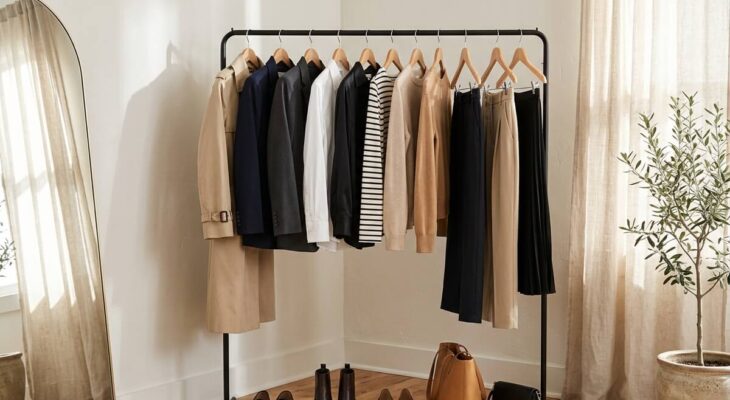
Standing in front of a packed closet at 7:30 a.m. and feeling like you have nothing to wear is one of the most common frustrations working women share. The problem is rarely a lack of clothes. More often, it is a closet full of pieces that don’t work together, don’t fit your current lifestyle, or only match one specific item. A minimalist work capsule wardrobe solves this by giving you a small, carefully chosen collection of versatile pieces that mix and match effortlessly, so every morning feels calm instead of chaotic.
This guide walks you through what a work capsule wardrobe is, why it works, the exact pieces to include, how to choose a color palette, and how to build outfits for an entire month from roughly 30 items.
What Is a Work Capsule Wardrobe?
A capsule wardrobe is a limited collection of clothing in which nearly every piece coordinates with nearly every other piece. The concept was popularized by London boutique owner Susie Faux in the 1970s and later brought into the mainstream by designer Donna Karan’s “Seven Easy Pieces” collection in 1985, which promised a complete professional wardrobe built around a few interchangeable essentials.
A work capsule applies that same idea specifically to your professional life. Instead of hunting for a top that matches one particular skirt, you build around a cohesive palette and classic silhouettes, which means a single blazer might pair with five different bottoms and a dozen tops. Most work capsules land somewhere between 25 and 40 pieces, including shoes and outerwear but usually excluding accessories, workout clothes, and loungewear.
Why a Minimalist Work Wardrobe Makes Life Easier
It reduces decision fatigue. Every choice you make in the morning draws on the same mental energy you need for the rest of your day. When your options are limited and already coordinated, getting dressed becomes almost automatic, leaving you more focus for meetings, deadlines, and the people who matter to you.
It saves money over time. Buying fewer, better pieces costs more upfront per item but far less overall. A well-made wool blazer worn twice a week for five years works out to a fraction of the cost of trendy pieces that fall apart or go out of style after one season.
It creates a recognizable personal style. Women who rely on a capsule often find their look becomes more polished and consistent. Colleagues start associating you with a refined, put-together aesthetic rather than a random rotation of outfits.
It makes packing for work trips simple. Because everything coordinates, you can pack a carry-on with six or seven pieces and create a full week of outfits, which is a huge relief for anyone who travels for conferences or client meetings.
It is kinder to the planet. The fashion industry is one of the world’s largest sources of textile waste. Buying intentionally and wearing your clothes longer is one of the easiest ways to shop more sustainably without changing your entire lifestyle.
Step 1: Choose Your Color Palette
Your palette is the foundation that makes everything mix and match. A simple, reliable formula is three neutrals plus one or two accent colors.
| Palette Role | Purpose | Example Options |
|---|---|---|
| Main neutral | Used for big investment pieces like blazers, trousers, and coats | Black, navy, charcoal, camel |
| Secondary neutral | Bridges outfits and adds softness | Grey, beige, taupe, olive |
| Light neutral | Brightens tops and layers near the face | White, ivory, cream, light blue |
| Accent color(s) | Adds personality through tops, scarves, or one statement piece | Burgundy, emerald, dusty rose, cobalt, rust |
Choose neutrals that flatter your skin tone. Warm undertones often glow in camel, cream, olive, and rust, while cool undertones tend to shine in navy, charcoal, pure white, and jewel tones like emerald or sapphire. If you’re unsure, hold a white and an ivory top up to your face in natural light and notice which one makes your complexion look brighter and more even.
Step 2: The Essential Pieces (About 30 Items)
Below is a balanced starter capsule for a business-casual or smart-casual office. Adjust the numbers based on how many days you go into the office and how formal your workplace is.
Outerwear and Layers (4 pieces)
- A tailored blazer in your main neutral. This is the hardest-working piece in your capsule, so invest in a quality fabric like wool or a structured wool blend, and make sure the shoulders fit perfectly since that is the hardest area to alter.
- A second blazer or soft-structured jacket in a secondary neutral. A camel, grey, or textured tweed option gives you visual variety while still coordinating with every bottom in your collection.
- A long cardigan or knit blazer. This adds comfort for cold offices and relaxed Fridays, and it softens a tailored look without making it feel too casual.
- A classic trench coat or wool coat. Your outer layer is the first thing people see when you walk in, so a timeless trench for mild weather or a wool coat for winter instantly elevates even the simplest outfit.
Tops (9–10 pieces)
- Three to four blouses in silk, satin, or a quality polyester crepe, including at least one white or ivory option. Blouses add a feminine, polished touch and look equally good tucked into trousers or layered under a blazer.
- Three fine-knit tops or sweaters such as a merino crewneck, a cashmere V-neck, and a lightweight turtleneck. Knits are comfortable, wrinkle-resistant, and perfect for cooler months.
- Two fitted tees or shells in neutral colors. A high-quality plain tee under a blazer is one of the most effortless modern work looks.
- One button-down shirt in white or pale blue. It works on its own, under a sweater with the collar peeking out, or tied at the waist over a dress for a creative look.
Bottoms (6 pieces)
- Two pairs of tailored trousers, such as a straight-leg or wide-leg style in black or navy plus a second pair in grey or camel. Pick a rise and leg shape that feels comfortable sitting at a desk all day.
- One pair of dark, clean-wash jeans if your office allows denim. Choose a dark indigo or black wash with no distressing so they read as polished rather than weekend wear.
- Two skirts, such as a midi pencil skirt and a pleated or A-line midi skirt. Midi lengths are flattering on most body types and appropriate for nearly every workplace.
- One pair of cropped or ankle trousers that show off your shoes and work beautifully with loafers or ballet flats in warmer months.
Dresses (2–3 pieces)
- A sheath or wrap dress in a solid neutral. A dress is a complete outfit in one piece, which makes it a lifesaver on rushed mornings, and it layers easily under a blazer or cardigan.
- A knit or shirt dress for a slightly softer, more comfortable option that still looks put together.
- An optional accent-color dress for presentations, events, or days when you simply want to feel your most confident.
Shoes (4–5 pairs)
- Classic pumps or block heels in black or nude for meetings and formal days. A block heel offers stability and comfort if you walk between buildings or stand for long periods.
- Leather loafers, which have become the modern professional staple because they look polished with trousers, skirts, and even jeans.
- Pointed or almond-toe ballet flats that slip easily into a bag and pair well with cropped trousers and midi skirts.
- Ankle boots with a low or mid heel for colder seasons, ideally in black or brown leather or suede.
- Optional clean white leather sneakers if your workplace is relaxed, since they modernize a blazer and trousers combination instantly.
Since comfort directly affects how confident you feel, look for shoes with cushioned insoles, a supportive heel counter, and enough room in the toe box. A beautiful shoe that pinches by noon will end up at the back of your closet.
Accessories (Not Counted in the 30)
A minimalist capsule relies on accessories to keep outfits feeling fresh. Consider a structured leather tote large enough for a laptop, a slim belt in black and one in brown, a silk scarf in your accent color, simple gold or silver jewelry such as small hoops and a delicate necklace, and a classic watch. Swapping just one accessory can make the same blazer-and-trousers combination feel completely different.
Step 3: Use Simple Outfit Formulas
Outfit formulas take the guesswork out of getting dressed. Once you know a handful of combinations that always work, you can plug in different pieces from your capsule.
| Formula | Example Outfit | Best For |
|---|---|---|
| Blazer + blouse + trousers + pumps | Navy blazer, ivory silk blouse, navy trousers, nude block heels | Presentations, client meetings |
| Knit + midi skirt + loafers | Camel merino sweater, black pleated midi skirt, black loafers | Everyday office days |
| Dress + cardigan + ankle boots | Charcoal sheath dress, long grey cardigan, black ankle boots | Cold-weather workdays |
| Button-down + dark jeans + blazer + flats | White shirt, indigo jeans, camel blazer, ballet flats | Casual Fridays |
| Turtleneck + trousers + coat + loafers | Black turtleneck, grey wide-leg trousers, camel coat, loafers | Commutes and winter mornings |
| Tee + cropped trousers + sneakers + blazer | White tee, black cropped trousers, white sneakers, black blazer | Creative or relaxed offices |
With 30 pieces following these formulas, you can easily create more than 50 distinct outfits without repeating the exact same combination in a month.
Step 4: Build Your Capsule Without Starting From Scratch
You do not need to throw out your closet and buy everything new. In fact, the most sustainable and affordable capsule starts with what you already own.
- Empty your work section completely. Take every work-related item out so you can see exactly what you have, including the pieces hiding at the back of drawers.
- Sort into three piles: love, maybe, and let go. Keep items that fit well right now, make you feel confident, and suit your current job. Be honest about pieces you haven’t worn in a year.
- Identify your natural color palette. Look at your “love” pile and notice which colors repeat. These are often the neutrals your capsule should be built around.
- Find the gaps. Compare what you kept against the essentials list above, and write down only the pieces that are genuinely missing.
- Shop slowly and intentionally. Buy one or two key items at a time, starting with whatever will unlock the most new outfits, which is usually a great blazer or a versatile pair of trousers.
- Store the “maybe” pile for 30 days. If you don’t miss an item after a month, donate or sell it with confidence.
Smart Shopping Tips for Quality Pieces
- Check fabric labels first. Natural fibers such as wool, cotton, silk, linen, and cashmere generally breathe better, last longer, and age more gracefully than thin synthetics. Blends with a small percentage of elastane can add helpful stretch and comfort.
- Inspect the construction. Look for straight, tight stitching, matched patterns at the seams, finished hems, and sturdy buttons. Lined blazers and skirts usually hang better and last longer.
- Calculate cost per wear. Divide the price by the number of times you realistically expect to wear an item. A $180 blazer worn 150 times costs just $1.20 per wear, which is far better value than a $40 top worn three times.
- Budget for tailoring. Small adjustments like hemming trousers, taking in a waist, or shortening sleeves make affordable clothes look custom-made. Good tailoring is one of the biggest secrets behind effortlessly polished women.
- Shop secondhand. Consignment shops and resale apps are full of high-quality blazers, wool coats, and leather shoes at a fraction of their original price.
Adapting Your Capsule for Every Season
Rather than building a completely new wardrobe four times a year, keep a core set of year-round pieces, such as trousers, blazers, blouses, and loafers, and rotate in a handful of seasonal items.
For fall and winter, bring in turtlenecks, chunky knits, wool trousers, ankle boots, tights, and your wool coat, leaning into deeper tones like burgundy, chocolate, and forest green. For spring and summer, swap in lightweight linen trousers, short-sleeve blouses, breathable cotton dresses, ballet flats, and your trench coat, with lighter accents like sage, blush, or sky blue. Store off-season clothing in breathable bins under the bed or on a high shelf so your daily closet stays clean and calm.
Common Capsule Wardrobe Mistakes to Avoid
- Choosing pieces you think you “should” wear. If you never feel comfortable in pencil skirts, don’t force them into your capsule just because they appear on every list. Your capsule should reflect your real body, job, and lifestyle.
- Going too minimal too fast. Cutting down to 15 items overnight often leads to frustration and impulse shopping. Start around 35 to 40 pieces and reduce gradually as you learn what you actually reach for.
- Ignoring fit. A capsule only works if every piece fits beautifully, because there is nothing extra to fall back on. If something pulls, gapes, or needs constant adjusting, tailor it or replace it.
- Forgetting about comfort. You’ll spend eight or more hours in these clothes, so stretch, breathability, and supportive shoes matter just as much as style.
- Skipping accent pieces entirely. An all-neutral wardrobe can start to feel flat. A few accent tops, a printed scarf, or a colorful bag keep your capsule feeling personal and joyful.
Final Thoughts
A minimalist work capsule wardrobe isn’t about owning as little as possible. It’s about owning the right things: pieces that fit well, feel good, coordinate effortlessly, and reflect the confident professional you are. Start with what’s already in your closet, choose a palette that makes you glow, fill in the gaps slowly, and lean on simple outfit formulas. Within a few weeks, you’ll notice calmer mornings, fewer impulse purchases, and a polished signature style that feels completely your own.