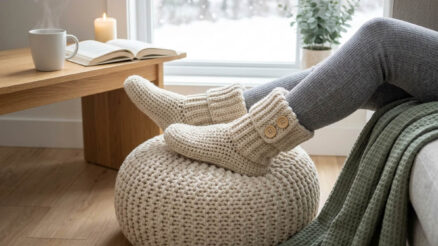
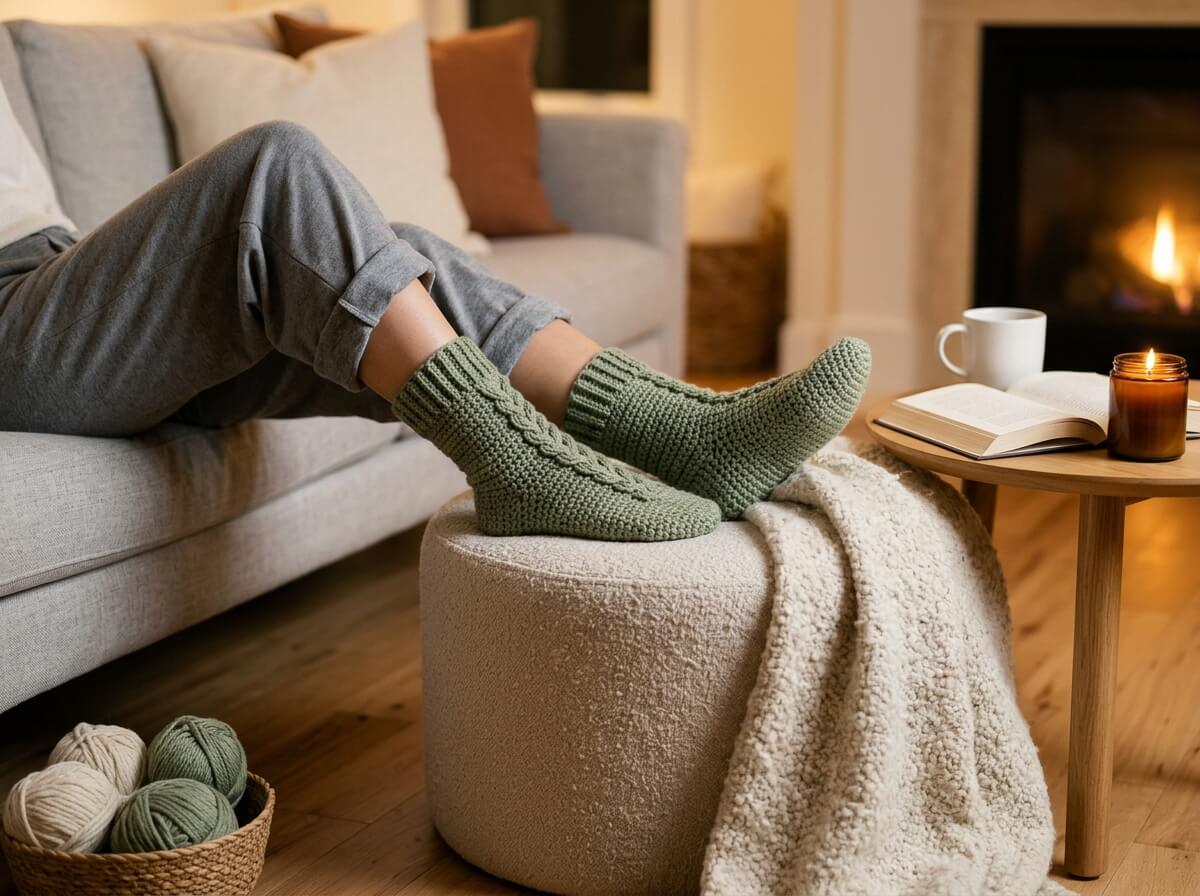
There is a special kind of chill that only seems to live in your feet. You can be wrapped in your softest sweater with a warm mug in your hands, and your toes still feel like they’ve been resting on a tile floor in January. Regular socks feel too thin, and bulky slippers keep slipping off or flattening into sad little pancakes after one season. That’s exactly where crochet slipper socks come in: they’re the cozy middle ground between a sock and a slipper, hugging your whole foot and ankle in thick, textured, handmade warmth.
Whether you love to crochet your own pairs on slow weekend afternoons or you prefer to shop handmade from small makers, this guide walks you through the coziest styles to try, the warmest yarns to look for, how to get a fit that stays put, and how to make them safe on slippery floors. By the end, you’ll know exactly which pair your cold feet have been waiting for this winter.
What Makes Crochet Slipper Socks Different?
Crochet slipper socks are a hybrid between a classic sock and a soft house slipper. Like a sock, they cover your whole foot and rise above the ankle, so there is no gap for drafts to sneak in at the back of your heel. Like a slipper, they’re made from thicker yarn and denser stitches, so they feel substantial underfoot and hold warmth far better than a thin cotton sock ever could. Most pairs are designed to be worn on their own around the house, although many people also slip them over a thin pair of regular socks on especially cold days.
The secret is in the crochet fabric itself. Crochet stitches are built from interlocking loops that stack on top of each other, which naturally creates a thicker, more textured, slightly less stretchy fabric than knitting. All those little bumps and ridges trap pockets of warm air close to your skin, which is what makes them feel so insulating. The trade-off is that crochet has less give, so fit matters more than with a stretchy knitted sock, and that’s why the cuff style and sizing you choose make such a big difference in comfort.
Why They’re So Good for Cold Feet
- They trap warm air. The thick, textured crochet stitches create a cushy layer of insulation around your foot. Air pockets held inside the fabric slow down heat loss, so your feet warm up faster and stay warm longer than they would in thin, flat-knit socks.
- They cover the ankle, not just the foot. Traditional slippers leave your ankles and the back of your heels exposed, and that’s often exactly where you feel the cold first. A slipper sock with a cuff seals that gap and keeps the whole lower foot cozy, especially if you sit with your feet on a cold floor while you work or watch TV.
- They stay on your feet. Unlike loose slip-on slippers, a well-fitted slipper sock moves with you. You can tuck your feet under you on the couch, climb into bed, or curl up in a reading chair without anything sliding off and leaving your toes bare.
- They let your feet move naturally. Most crochet slipper socks have soft, flexible soles. Your toes can spread and your foot can bend freely, which many women find more relaxing for lounging than stiff, structured slippers.
- They’re easy to care for and personalize. Because they’re handmade, you can choose the exact fiber, color, height and texture you love. Many are washable, and if you crochet them yourself you can adjust the length, width and cuff for a fit that feels custom made.
8 Cozy Crochet Slipper Sock Styles to Love
1. Classic Ribbed-Cuff Slipper Socks
If you want one versatile pair that works every single day, start here. Classic ribbed-cuff slipper socks are ankle-high, with a smooth, dense foot and a stretchy ribbed band around the ankle. The ribbing, usually worked in back-loop-only stitches, gives the cuff just enough stretch to slide over your heel and then hug your ankle without pinching. They’re thin enough to fit inside roomy boots on a quick trip outside, yet thick enough to keep your feet warm on hardwood floors.
They look best in soft neutrals like heather gray, oatmeal, cream or charcoal, which go with every pajama set and loungewear color. If you’re crocheting your first pair, this style is a great beginner project because the shapes are simple and the ribbing is forgiving if your tension isn’t perfect yet.
2. Chunky Bootie Slipper Socks
Chunky bootie slipper socks are the plush, pillowy version of the classic style. They’re made with bulky or super bulky yarn, sometimes with two strands of yarn held together, so the fabric is thick, squishy and incredibly warm. The cuff is often wider and more relaxed, giving them a cozy bootie silhouette that looks adorable peeking out from under wide-leg lounge pants.
These are perfect for anyone whose feet run truly cold, for drafty older homes, or for winter evenings when the heating just can’t keep up. Because the yarn is so thick, they also work up quickly if you crochet, often in a single evening per sock. Choose cream, blush, caramel or soft white for a cloud-like look that feels as luxurious as it looks.
3. Knee-High Lounge Slipper Socks
When your legs feel just as chilly as your feet, knee-high slipper socks are pure comfort. They have the same dense, warm foot as a classic pair, but the leg continues all the way up to just below the knee, often with a textured stitch pattern or ribbing that helps them stay up. Think of them as a slipper and a leg warmer combined into one cozy piece.
They pair beautifully with sleep shorts, nightgowns, oversized sweaters or leggings, and they’re a favorite for reading in bed or working from a cold home office. Look for a stretchy ribbed band at the top so they stay up without leaving deep marks on your calves. Dusty rose, sage green and soft lavender give them a sweet, feminine feel.
4. Granny Square Slipper Socks
Granny square slipper socks bring a happy, retro charm to your lounge drawer. The foot is built from small joined granny squares, usually in a mix of colors bordered with a neutral shade, and then finished with a solid ribbed cuff around the ankle. Each pair looks a little like a patchwork quilt for your feet, and no two handmade pairs ever look exactly alike.
This style is a wonderful way to use up leftover yarn scraps if you crochet, and it’s a guaranteed conversation starter if you gift them. Mustard, teal, rose and cream are a classic 70s-inspired combination, while soft pastels feel fresh and modern. Because the joins between squares add a bit of thickness, they’re best worn indoors with a grippy sole added underneath.
5. Cable-Texture Slipper Socks
Cable slipper socks have that timeless, cozy-cabin look you usually associate with chunky fisherman sweaters. In crochet, the raised braids are made with post stitches that sit on top of the fabric, creating deep, sculptural texture. A single braided cable often runs down the front of the leg and over the top of the foot, while the sole and sides stay smooth and dense.
All that extra texture isn’t just pretty: the raised stitches add another layer of thickness, which means even more warmth across the top of your foot. Cable styles look especially elegant in creamy ivory, oatmeal, camel and deep forest green. They’re a lovely choice if you want slipper socks that look polished enough to wear when guests come over for a cozy holiday evening.
6. Mary Jane Slipper Socks
Mary Jane slipper socks are the sweetest, most playful style on this list. The foot is shaped like a soft ballet flat with a rounded toe, a strap across the top of the foot fastened with a button, and a short sock cuff rising above the ankle. They have a vintage, doll-like charm that feels both cozy and a little bit dressy.
The strap does more than look pretty, since it helps the slipper part stay snug around your instep. Burgundy, cherry red, navy and soft pink with wooden or pearl buttons make them feel extra special, and they’re a fun gift for friends who love cottagecore or vintage-inspired style. Just make sure the button is sewn on securely and sits on the outer side of each foot so it doesn’t press into the other ankle.
7. Slipper Socks with Suede or Leather Soles
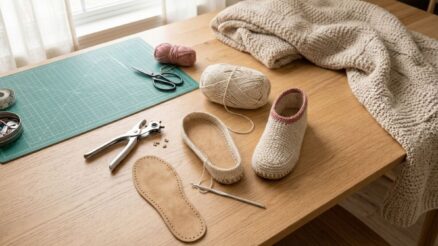
If you walk around a lot at home, or you have smooth hardwood or tile floors, slipper socks with sewn-on suede or leather soles are a game changer. The crochet upper stays soft and warm while the sole adds durability, a little structure and much better grip than bare yarn. Pre-punched suede soles with stitching holes around the edge make it easy to attach them by hand, and many handmade sellers offer this upgrade as an option.
These soles also protect the yarn from wearing thin at the heel and ball of the foot, which is usually the first place handmade slippers show wear. Forest green, charcoal and chestnut brown look gorgeous with a tan suede sole. If you buy a pair, check that the sole is stitched all the way around the edge with no loose sections that could catch on a step.
8. Fold-Over Cuff Slipper Socks with Pom-Poms
For pure fun and festive cheer, it’s hard to beat slipper socks with a fold-over cuff and fluffy pom-poms. The cuff is crocheted extra tall so it can be folded down over itself, sometimes in a contrast color, and small pom-poms dangle from short ties at the front of the ankle. They have a cheerful, ski-lodge personality that makes slow winter mornings feel a little brighter.
They’re a darling choice for holiday photos, matching sets with your kids or your best friend, and cozy gift baskets. Mustard with cream, red with white, and soft gray with blush pink are all charming combinations. If you have pets who love to chase things, choose styles with pom-poms stitched close to the cuff rather than on long, dangling ties.
Choosing the Right Yarn for Warmth
The yarn makes or breaks a pair of slipper socks. Some fibers hold heat beautifully and handle a little foot moisture without feeling clammy, while others look sweet but leave your toes cold. Here’s a quick comparison to help you choose, whether you’re shopping or buying yarn for your next project.
| Fiber | Warmth | Softness | Easy Care | Best For |
|---|---|---|---|---|
| Wool | Very high | Medium (can feel scratchy to some) | Hand wash, can felt in hot water | Very cold homes and winter evenings |
| Merino wool | Very high | High | Hand wash, or machine wash if labeled superwash | Sensitive skin and everyday wear |
| Alpaca | Very high | Very high | Hand wash only | Luxurious, ultra-warm pairs |
| Wool–acrylic blend | High | High | Often machine washable | Balance of warmth, softness and easy care |
| Acrylic | Medium | Medium to high | Machine washable | Budget pairs, kids and wool allergies |
| Cotton | Low | High | Machine washable | Mild climates and spring, not deep winter |
If warmth is your top priority, natural animal fibers like wool, merino and alpaca are hard to beat. They insulate well and can absorb a fair amount of moisture while still feeling dry, which matters because damp feet get cold fast. If you’re sensitive to wool or want something you can toss in the washing machine, a soft wool–acrylic blend gives you most of the warmth with far less fuss. Pure cotton is lovely and breathable but holds moisture and doesn’t insulate well, so save cotton slipper socks for cooler spring evenings rather than the coldest months.
For thickness, look for worsted, aran, bulky or super bulky yarn weights. Worsted and aran give you a classic slipper sock that fits under a loose boot, while bulky and super bulky create those plush, cloud-like booties that are best for lounging at home.
Getting the Right Fit
Because crochet fabric has less stretch than knitted fabric, fit deserves a little extra attention. Start by measuring your foot length from the back of your heel to the tip of your longest toe, and then measure around the widest part of your foot, just behind the toes. If you’re buying handmade, compare both numbers to the seller’s size chart rather than relying only on your shoe size, since every maker’s sizing can be slightly different.
A good slipper sock should feel snug but never tight. For most styles, a foot length about ¼ to ½ inch (0.5 to 1 cm) shorter than your actual foot gives a gentle hug that stops the sock from twisting or bunching, while chunky booties can be made closer to your true foot length because the thick fabric takes up space inside. If you plan to wear them over a regular pair of socks, size up slightly. Pay special attention to the cuff: it should slide over your heel easily and rest comfortably around your ankle without leaving a deep red line, since a cuff that’s too tight can feel uncomfortable after a few hours and isn’t kind to your circulation.
Make Them Safe: Non-Slip Sole Options
Bare yarn on hardwood, laminate or tile can be surprisingly slippery, and that’s the one downside of crochet slipper socks that’s worth taking seriously. A quick slip on the stairs or a kitchen floor is no fun, so adding grip is one of the smartest upgrades you can make. Here are the most popular options:
- Silicone or puff fabric paint dots. Dotting a grid of small raised dots or wavy lines across the sole with fabric puff paint or a silicone sock-grip product is the easiest DIY option. Let them dry fully, usually overnight, before wearing, and refresh the dots when they start to wear flat.
- Sewn-on suede or leather soles. Pre-punched suede soles are the most durable choice and give the best grip and protection, especially for people who wear their slipper socks all day. They take a little time to stitch on, but they can extend the life of a handmade pair by years.
- Liquid latex sock grip. Brushed onto the sole in a thin layer, liquid latex dries into a flexible, rubbery coating that grips well. It’s a great option for full-sole coverage, but skip it if you or anyone wearing the socks has a latex allergy.
- Non-slip grip fabric. You can also sew a piece of non-slip “sock grip” fabric to the sole. It’s thinner than suede, stays flexible, and is a nice middle ground between paint dots and full leather soles.
Extra Warmth Upgrades for Very Cold Feet
If your feet still feel chilly even in a good pair of slipper socks, a few small upgrades can make a big difference. The first is a fleece lining. A thin layer of soft polar fleece sewn inside the foot and cuff adds a second insulating layer and feels incredibly soft against bare skin, which is wonderful if wool feels itchy to you. Many crocheters cut the lining from an old fleece blanket or jacket, and many handmade sellers offer it as an add-on.
Another simple trick is to crochet the sole with two strands of yarn held together, or to add a thin felt insole inside, which puts an extra barrier between your foot and a cold floor. Layering a thin merino liner sock underneath your slipper socks works well too. And beyond your socks, a few habits help warm feet faster: keep a cozy rug under your desk or favorite chair, put your slipper socks on before your feet get cold rather than after, and move your feet and ankles every so often if you’re sitting still for long stretches.
Should You Buy or DIY?
Buying handmade crochet slipper socks is a lovely choice if you don’t crochet, don’t have the time, or simply want to support a small maker. When you shop on handmade marketplaces or at winter craft fairs, look closely at the listing details. Check the fiber content so you know how warm and washable they’ll be, read the size chart carefully, look for photos of the sole to see whether there’s any grip, and confirm the care instructions before you buy. Reading a few reviews about sizing is also a smart way to avoid a pair that runs too big or too small.
Crocheting your own pair is wonderfully rewarding and lets you control every detail, from color and yarn to the exact length of the foot. If you’re a beginner, start with a simple ankle-high style worked in single or half double crochet with a back-loop-only ribbed cuff, and use a worsted or bulky yarn so you can see your stitches clearly. Once you’re confident, move on to cable, granny square or Mary Jane styles. A pair of homemade slipper socks also makes one of the most thoughtful winter gifts you can give, especially when you tuck them into a basket with a candle and a favorite tea.
How to Style Them at Home
- With a matching lounge set. Pair neutral slipper socks with a soft jersey or waffle lounge set in a coordinating shade, like oatmeal socks with a cream set or gray socks with a heather charcoal set. It’s an effortlessly put-together look for slow mornings and video calls where only your top half shows.
- With leggings and an oversized sweater. Knee-high or mid-calf slipper socks look adorable scrunched slightly over the ankle of fitted leggings with a big, slouchy sweater on top. It’s the ultimate cozy reading-nook outfit that still feels cute.
- With pajamas for a seasonal touch. Fold-over cuff and pom-pom styles are made for holiday pajamas, cocoa nights and festive family photos. Coordinating colors with your pajama print makes the whole outfit feel intentional and fun.
- As part of your hygge routine. Keep your favorite pair in a basket by the sofa with a throw blanket and a book. Slipping them on as soon as you get home becomes a small, comforting ritual that signals it’s time to slow down and rest.
Care Tips to Keep Them Cozy
- Wash gently by hand. Unless the yarn is labeled superwash or machine washable, hand wash your slipper socks in cool or lukewarm water with a gentle wool wash. Hot water and rubbing can felt wool, which shrinks it permanently and makes the fabric stiff.
- Never wring or twist. After washing, press the water out gently and roll the socks in a clean towel to absorb moisture. Wringing stretches the stitches and can pull the shape out of the cuffs and heels.
- Dry flat, away from heat. Lay them flat on a towel or drying rack and reshape the foot and cuff while damp. Keep them away from radiators, heaters and the dryer, which can shrink wool and melt or weaken paint or latex grip coatings.
- Remove pilling and refresh the grip. Gently remove fuzz balls with a fabric shaver or sweater comb to keep them looking fresh. Check the grip dots or latex coating every few weeks and touch them up as soon as they start to wear smooth.
- Rotate your pairs. If you wear slipper socks every day, having two or three pairs lets each one rest and dry out completely between wears, which keeps them fresher and helps them last much longer.
When Cold Feet Need More Than Cozy Socks
Most of the time, cold feet are simply the result of a chilly house, sitting still for too long, or a cold floor. However, if your feet are cold all the time even when the rest of you feels warm, or you notice your toes turning white, blue or very red in the cold, feeling numb or tingly, or aching when they warm up, it’s worth mentioning to your doctor. Persistent cold feet can sometimes be linked to circulation issues, Raynaud’s phenomenon, thyroid problems or anemia. If you have diabetes or reduced feeling in your feet, choose slipper socks with loose, comfortable cuffs, check your feet daily, and avoid putting heating pads or hot water bottles directly on your feet, since reduced sensation can make it easy to get burned without noticing.
Final Thoughts
Crochet slipper socks are one of those small, simple comforts that can genuinely change how your winter feels. Whether you fall for a classic ribbed pair, cloud-like chunky booties, retro granny squares or a sweet Mary Jane style, the right pair wraps your feet in handmade warmth from toe to ankle. Choose a warm, soft fiber, aim for a snug fit, add a non-slip sole for safety, and treat them gently in the wash, and your favorite pair will keep your toes toasty for many cozy seasons to come.