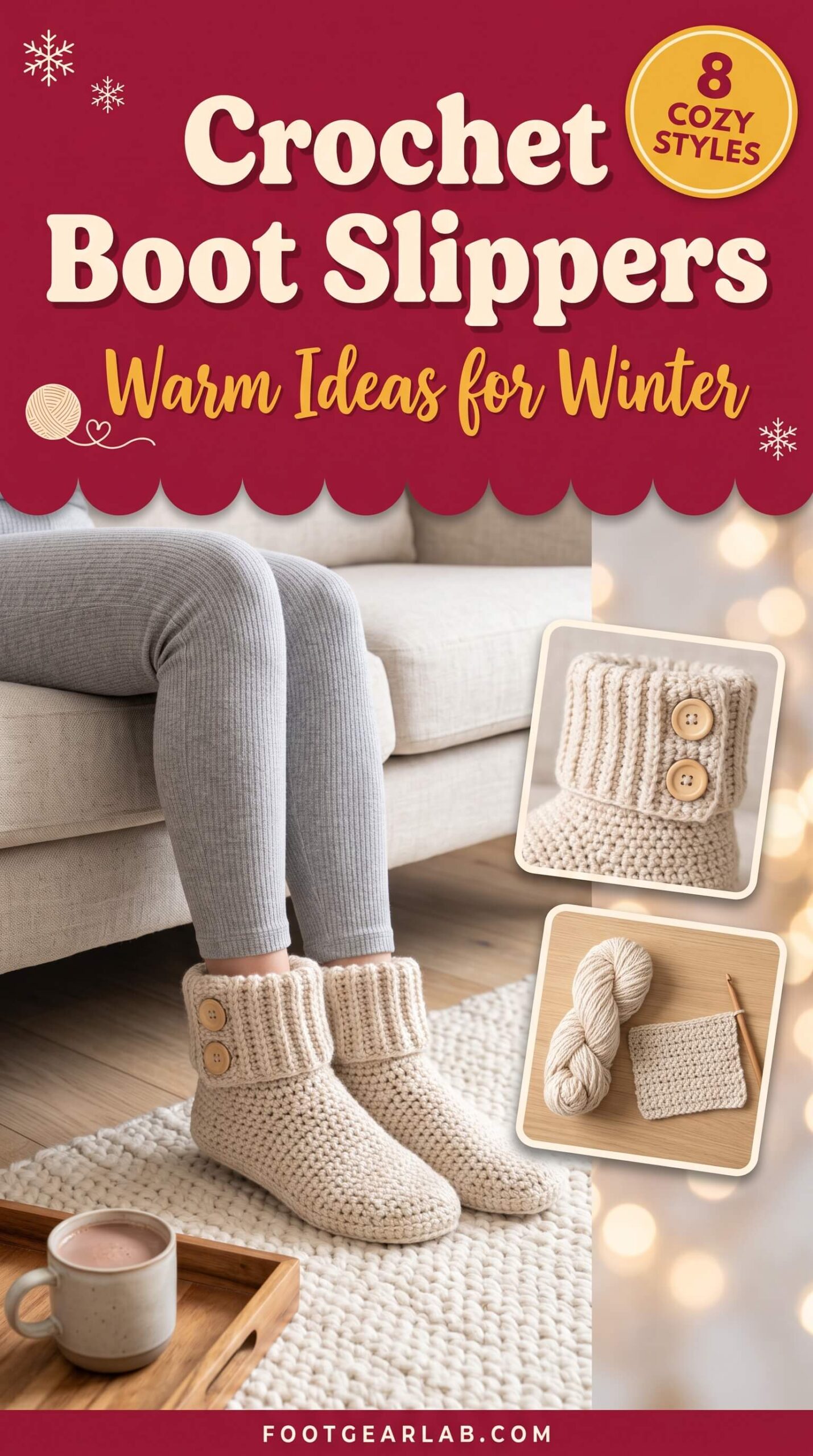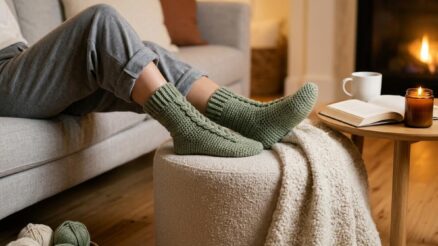
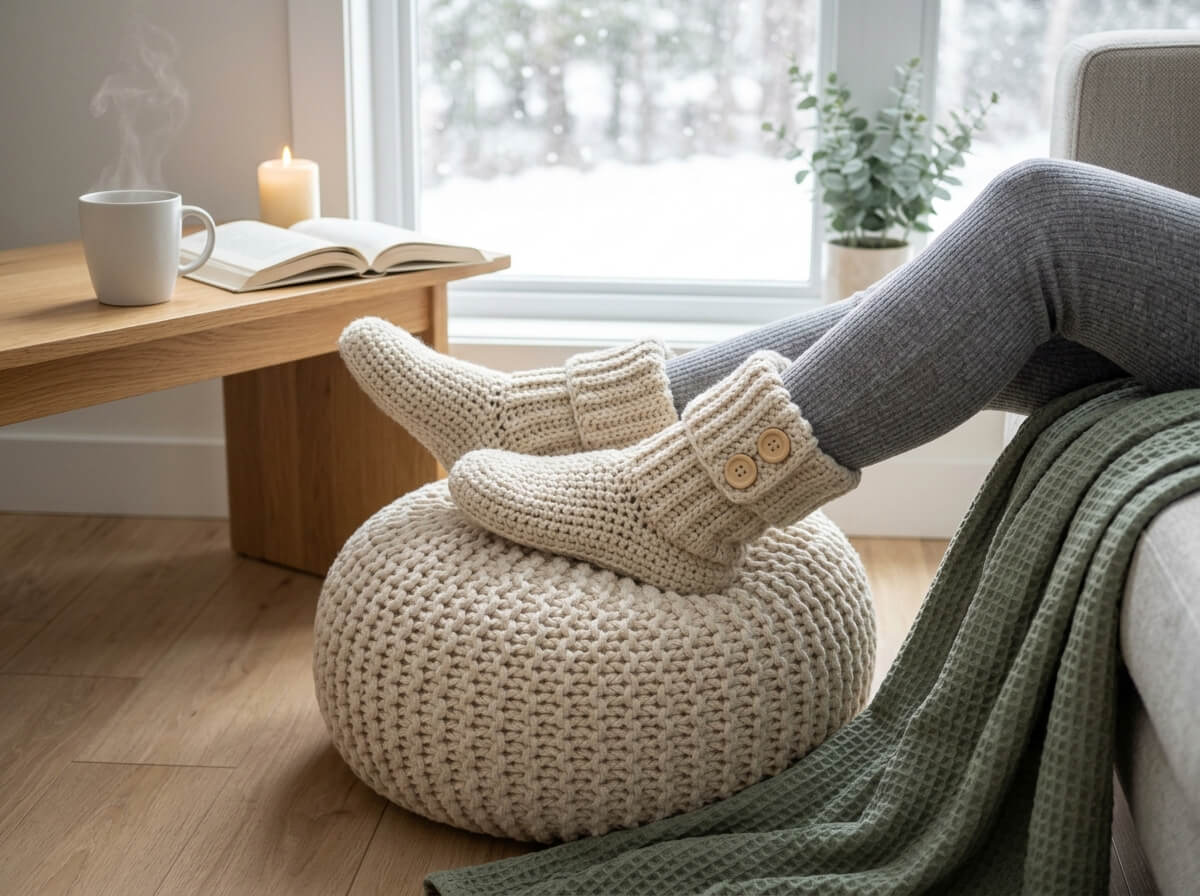
When the temperature drops and the floors start to feel like ice in the morning, ordinary slippers often are not enough. Your toes may be covered, but your ankles and lower legs are left exposed to every chilly draft that sneaks under the door. That is exactly why crochet boot slippers have become such a loved winter project. They wrap your feet, heels, ankles and calves in soft, thick yarn, so the warmth stays with you whether you are working from home, making breakfast or curled up on the sofa with a movie.
Crochet boot slippers are also one of the most satisfying projects you can make with a hook. Chunky yarn works up fast, the shapes are simple once you understand how the pieces fit together, and the finished pair feels much more personal than anything you can buy in a store. You can choose your own colors, decide how tall the shaft should be, add buttons or faux fur, and adjust the fit to your own feet instead of guessing between standard sizes.
In this guide, you will find eight warm and stylish boot slipper ideas for winter, from classic chunky cuffs to Nordic colorwork and cozy granny squares. You will also learn which yarns keep feet warmest, how to make your slippers safe on slippery floors, how to get a snug fit, and how to care for them so they last for many winters.
Why Boot Slippers Are Perfect for Cold Weather
The main advantage of a boot slipper is coverage. A lot of the cold you feel at home comes from the floor and from drafts at ankle level, and low slippers leave that area exposed. A boot slipper keeps your heel, ankle and lower leg covered, which helps trap the warm air around your skin. Many women with naturally cold feet find that keeping the ankles warm makes their whole body feel more comfortable, especially during long hours sitting at a desk.
Crochet fabric is also naturally thick. Because each stitch is built from several loops of yarn stacked together, a crocheted piece is denser than most knitted fabric of the same yarn weight. That density acts like a small insulating layer, and when you use bulky yarn with a slightly smaller hook, the result is a firm, cushioned fabric that blocks cold air very well.
Finally, boot slippers stay on your feet. Low slippers often slide off when you walk up the stairs or rush to answer the door, but a boot shape hugs your ankle and holds the slipper in place. That makes them more comfortable to wear all day and, with the right sole, safer to walk in around the house.
How a Crochet Boot Slipper Is Built
Before you choose a style, it helps to understand the basic parts of a boot slipper, because almost every pattern follows the same structure. Once you know these parts, you can mix and match ideas from different patterns and make adjustments with confidence.
The sole is usually the first piece. In many patterns, it is worked in rounds around a starting chain, which creates a flat racetrack oval with two straight, parallel sides and two equally rounded ends. Some makers work two soles and join them for extra thickness and cushioning, which is a simple way to make the slippers warmer and softer underfoot.
The side wall is worked straight up from the edge of the sole, usually by crocheting into the back loops of the last round. Working into the back loops creates a neat ridge that turns the flat sole into a shallow “tray” and gives the slipper a defined base edge, similar to the edge of a shoe.
The instep (toe cover) is shaped over the front of the foot by decreasing stitches across the toe area. This is the part that gives the slipper its rounded toe and makes it hug the top of the foot.
The shaft is the tall part that rises around the ankle and calf. It can be worked in rounds directly from the foot opening, or made as a separate ribbed band that is sewn on. Ribbing is the most popular choice because it stretches to let your foot in and then pulls back to fit snugly around the ankle.
8 Warm Crochet Boot Slipper Ideas for Winter
1. Classic Chunky Boots With a Fold-Down Cuff
If you want one pair that feels timeless, cozy and easy to wear with everything, start with the classic chunky boot slipper. This style has a dense foot, a tall ribbed shaft, and a top section that folds down into a thick cuff. The fold-down cuff is not only pretty, it also doubles the fabric around your lower leg, which adds a noticeable extra layer of warmth exactly where drafts tend to hit.
For the foot, a tight stitch like single crochet, half double crochet, or the moss stitch (alternating single crochet and chain-1 spaces) gives a firm, warm fabric that holds its shape. The ribbed shaft is usually made with back-loop-only single crochet worked in rows and then seamed, or with alternating front post and back post double crochet worked in rounds, which gives a stretchy, knit-like rib. Two wooden buttons on the outer side of the folded cuff give the boots a rustic, cabin-style finish without making them fussy.
Neutral shades like oatmeal, cream, warm grey, and camel make this pair easy to style with lounge sets, pajamas, and leggings. It is also a great first boot slipper project because the shape is simple and the chunky yarn hides small uneven stitches.
2. Faux Fur Trim Boot Slippers
Faux fur trim instantly turns a simple boot slipper into something that feels luxurious and cozy, like a pair of après-ski boots made for your living room. The fur is usually added as a band around the top of the shaft, either by crocheting a few rounds with faux fur yarn or by sewing on a strip of faux fur fabric after the boot is finished. Both methods work well, but fur yarn blends into the crochet more naturally, while fabric fur gives a fuller, fluffier look.
Because fur yarn hides stitch definition, it is best used only for the trim and not the whole boot. Work the foot and shaft in a smooth bulky yarn so the shape stays clear, then switch to fur for the last two or three rounds. Soft blush pink with white fur, chocolate brown with cream fur, or charcoal grey with grey fur are all beautiful winter combinations.
This style is especially lovely as a gift, since it looks very polished even when the crochet underneath is fairly basic. Just remember that fur trim needs gentle care, so hand washing is the safest option.
3. Nordic Colorwork Boot Slippers
Nothing says winter quite like Nordic patterns, and you can bring that classic snowflake-sweater look to your slippers with tapestry crochet. In tapestry crochet, you carry the unused color inside your stitches as you work, switching colors to build a pattern. Because two strands of yarn sit inside every stitch, the fabric becomes extra thick, which makes colorwork boot slippers some of the warmest you can make.
The easiest approach is to keep the foot in one solid color and add the colorwork only to the shaft, where the pattern shows off best and there is no shaping to worry about. Simple motifs like zigzags, small diamonds, or a row of little stars are beginner-friendly and still look festive. Cranberry red and cream is the most traditional combination, but navy and white, forest green and cream, or charcoal and mustard are just as striking.
Work your color changes on the last step of the stitch before the new color begins, and keep your tension even so the carried strand does not pucker the fabric. A chart drawn on graph paper or in a free charting app makes it much easier to follow the pattern round by round.
4. Granny Square Boot Slippers
Granny squares are having a big comeback, and boot slippers are a fun way to use them. In this style, small granny squares are joined to form the shaft (and sometimes the top of the foot), while the sole and toe are worked in solid crochet for strength and comfort. The result has a cheerful, vintage, cottage-style look that is perfect for anyone who loves color.
To keep this style warm, choose a solid granny square or a “sunburst” square without large holes, since classic granny squares have open spaces that let cold air in. You can also line the shaft with a soft fleece tube sewn inside. Using one joining color, such as cream or soft brown, ties all the colors together and makes the boots look planned rather than random.
This is also a wonderful scrap-busting project. If you have leftover bulky or worsted yarn from blankets and hats, you can turn them into a one-of-a-kind pair. Just make sure all the yarns are a similar weight so the squares end up the same size.
5. Lace-Up Moccasin Boot Slippers
Inspired by classic moccasins, this style has a soft, rounded toe, a slightly slouchy shaft, and a tie or cord laced through the ankle so you can tighten the fit. The lacing makes these boot slippers very practical, because you can loosen them to slip your feet in and then pull them snug to keep warm air inside. They also look charming with a braided cord, a crochet chain, or a simple leather lace finished with small wooden beads.
Earthy shades like caramel tan, chestnut brown, and mushroom grey suit the moccasin look best. Pairing this style with a stitched-on suede sole makes it feel even more like a real moccasin and adds durability and grip. A soft fold-over cuff at the top or a short fringe at the ankle are both nice optional details.
Moccasin boots are a great choice if you have narrow ankles or find that most slippers feel loose, since the tie lets you adjust the fit every time you wear them.
6. Tall Cable Boot Slippers
If you love the look of a cable-knit sweater, tall cable boot slippers will feel like a dream. Crochet cables are made with front post and back post stitches, usually front post treble crochet, which you cross over each other to create twisted columns. They rise in relief from the fabric, adding beautiful texture and, because they stack yarn on top of yarn, extra thickness for warmth.
This style usually goes up to mid-calf or just below the knee, so it works almost like a slipper and leg warmer in one. The shaft can be worn straight up or pushed down into soft slouchy folds. Heather grey, ivory, and soft oatmeal show cables best, since darker or variegated yarns tend to hide the texture.
Cables take a bit more concentration than plain stitches, so this is a good second or third boot slipper project once you are comfortable with post stitches. A single cable running up the front of each shaft is a simpler starting point than covering the whole boot.
7. Slipper Sock Boots
Slipper sock boots sit between a thick sock and a real slipper. They are softer and more flexible than structured boot slippers, with a thinner, more stretchy fabric that hugs the foot. Many women love them for lounging, sleeping in a cold bedroom, or wearing inside other slippers on very cold days.
These are often made with worsted or light bulky yarn and stretchy stitches like half double crochet in the third loop, which creates a knit-look fabric called the camel stitch. The shaft is usually ribbed and can reach the ankle or mid-calf. Since the fabric is softer, adding non-slip grip on the sole is especially important here (see the sole section below).
Soft sage green, lavender, and warm cream are pretty, calm colors for this relaxed style. Because slipper socks are lighter and use less yarn, they also make wonderful quick gifts for friends or family who always complain about cold feet.
8. Pom-Pom and Bow Boot Slippers
For a sweet, playful pair, add pom-poms or bows to the top of your boot slippers. Pom-poms are usually attached to the ends of a crochet chain tie threaded around the ankle, so they bounce as you walk, while bows can be crocheted separately and sewn onto the front or the back of the cuff. These small details make simple boots look youthful, cheerful and very Pinterest-worthy.
Use yarn pom-poms in the same color as the boot for a soft, elegant look, or pick a contrast color for more fun. Faux fur pom-poms with snap buttons are a clever option because you can remove them before washing. Lilac, soft lavender, baby blue, and blush pink are especially pretty with this style, and the design also works beautifully for matching mommy-and-me pairs.
If you have pets or small children at home, make sure pom-poms and bows are sewn on very securely, since they can be tempting to chew or pull.
Choosing the Warmest Yarn for Boot Slippers
Your yarn choice makes the biggest difference in how warm, soft and durable your boot slippers will be. Bulky (#5) and super bulky (#6) yarns are the most popular because they work up quickly and make thick, cozy fabric. You can also hold two strands of worsted (#4) yarn together to create a similar thickness, which is a great way to blend two colors for a tweedy effect.
Many experienced makers also use a hook one or two sizes smaller than the yarn label suggests. This creates a tighter, denser fabric with fewer gaps, which keeps the warmth in and helps the slippers hold their shape longer.
| Yarn Type | Warmth | Softness | Durability | Care | Best For |
|---|---|---|---|---|---|
| Wool | Very high | Medium (can feel scratchy) | High | Hand wash, can felt | Very cold homes, felted soles |
| Wool blend (wool + acrylic) | High | Soft | High | Often machine washable on gentle | The best all-around choice |
| Acrylic | Medium to high | Soft | Medium (can pill) | Machine washable | Budget, beginners, gifts |
| Chenille or velvet yarn | Medium | Very soft | Low to medium | Gentle hand wash | Lounging, plush look |
| Alpaca blend | Very high | Very soft | Medium | Hand wash | Luxury gifts, sensitive skin |
| Cotton | Low | Soft | Medium | Machine washable | Not ideal for winter, better for summer slippers |
A wool blend is usually the sweet spot: it is warmer than pure acrylic, softer than pure wool, and easier to wash. If you have sensitive skin, test a small swatch against your inner wrist before you buy enough for a whole pair, since some wool can feel itchy.
Soles: How to Make Boot Slippers Non-Slip and Durable
This is one of the most important parts of the project, and one that is easy to skip. Crochet soles look lovely, but on their own they can be very slippery on wood, tile and laminate floors, especially on stairs. They also wear out faster than the rest of the slipper, since the sole takes all the friction from walking. Taking a few extra minutes to add grip and strength will make your boot slippers safer and help them last much longer.
Suede or leather soles are the most durable option. You can buy pre-punched suede slipper soles in craft and yarn shops or online. The easiest way to use them is to crochet the first round of single crochet directly into the punched holes, then build the side wall from there, so the suede becomes the sole of the slipper. Alternatively, you can finish your crochet slipper and then stitch the suede sole onto the bottom with a strong yarn or waxed thread using a blanket stitch.
Non-slip fabric paint or silicone dots are a quick and affordable fix. Puffy fabric paint or liquid latex can be dotted or drawn in lines across the bottom of the sole and left to dry completely. This adds grip but wears off over time, so you may need to reapply it each winter.
Felt or foam insoles add cushioning and warmth inside the slipper. A thin felt insole or a cut-to-size memory foam insole sits between your foot and the crochet sole, making the slipper softer and more comfortable to stand in. This is especially helpful if you spend a lot of time on your feet at home, such as cooking or cleaning.
Flip flop soles are another popular trick. Some makers crochet the upper directly onto an inexpensive rubber flip flop, which gives a sturdy rubber base with excellent grip. This works best for ankle-height styles, since a heavy rubber sole and a tall shaft can feel a bit clumsy together.
Getting the Right Fit
A well-fitting boot slipper feels snug but never tight. Crochet fabric stretches with wear, especially in the sole and toe, so a slipper that feels perfect on the first day may become loose after a few weeks. That is why most patterns build in a little “negative ease,” meaning the sole is made slightly shorter than your foot.
Start by measuring your foot. Stand on a sheet of paper, trace around your foot with a pencil held straight up, and measure from the tip of your longest toe to the back of your heel. Then measure the widest part of your foot across the ball. For a snug fit, most makers aim for a crochet sole that is about 0.25 to 0.5 inches (0.5 to 1 cm) shorter than the foot length. If you plan to wear thick socks inside your slippers, keep the sole the same length as your foot instead.
Always crochet a small gauge swatch before you start. If your stitches are bigger or smaller than the pattern’s gauge, your slippers will come out a different size, even if you follow every row exactly. If your swatch has too many stitches, go up a hook size, and if it has too few, go down a hook size.
For the shaft, measure around your ankle and around your calf at the height you want the boot to reach. A ribbed shaft can stretch a lot, so it should be made slightly smaller than your calf measurement to stay up without slouching. If you have wider calves, add extra stitches or choose a lace-up or button style that you can adjust. Avoid making the top band so tight that it leaves marks on your skin, since that can feel uncomfortable over a long day.
Easy Upgrades for Extra Warmth and Style
Once you have made a basic pair, small upgrades can make your next boot slippers even cozier. Doubling the sole is the simplest one. Make two identical soles and join them with a round of single crochet around the edge before building the side wall. The extra layer adds softness underfoot and keeps cold floors from chilling your feet.
Adding a fleece lining is another great idea, especially for granny square or lacy styles. Cut a simple tube of fleece the size of the shaft and a sole shape for the bottom, then hand stitch them inside with small, loose stitches so the crochet can still stretch. Fleece lining also protects sensitive skin from scratchy wool.
Mixing textures brings a handmade boot to the next level. Try a smooth foot with a bumpy bobble cuff, a waffle-stitch shaft, or a band of faux fur at the heel. Wooden or coconut shell buttons, leather labels, and contrasting heel patches in suede or felt also add a professional, boutique-style finish.
How to Care for Crochet Boot Slippers
Good care keeps your boot slippers soft, warm and in shape for many winters. Always check your yarn label first, because the right care depends on the fiber. Wool and alpaca can shrink and felt if washed in hot water or agitated too much, while most acrylics and many wool blends can handle a gentle machine cycle.
Hand washing is the safest choice for most handmade slippers. Fill a basin with cool or lukewarm water and a small amount of gentle wool wash or mild detergent, soak the slippers for about 10 to 15 minutes, and gently squeeze the water through them without twisting or wringing. Rinse in clean water of the same temperature, then press out the excess water by rolling them in a clean towel.
Dry your boot slippers flat, away from radiators and direct sunlight. Heat can shrink wool and damage suede soles, and hanging wet slippers can stretch the shaft out of shape. Reshape the toe and cuff by hand while they are still damp, and stuff the toe lightly with a dry cloth to help it hold its rounded shape.
Between washes, use a fabric shaver or sweater comb to gently remove pilling, and let your slippers air out overnight after wearing them. Rotating between two pairs during the coldest months also helps both pairs last much longer.
Foot Comfort and Safety Tips
Crochet boot slippers are wonderfully cozy, but a few simple habits will help you wear them comfortably and safely. Always add some kind of grip to the soles before wearing them on smooth floors or stairs, because plain yarn can be surprisingly slippery. This is especially important for older family members, pregnant women, and anyone who already has balance concerns.
Most crochet slippers offer warmth and softness but very little arch support. If you have flat feet, plantar fasciitis, or simply feel tired after standing for a long time in soft slippers, slipping a thin supportive insole inside can make a big difference. You can also save your boot slippers for relaxing moments and wear more supportive house shoes when you are on your feet for long periods.
If you have diabetes, poor circulation, or reduced feeling in your feet, choose seamless or flat-seamed designs that will not rub, avoid tight top bands that press into the skin, and check your feet regularly for redness or pressure marks. Persistently cold feet can sometimes be a sign of a circulation issue, so it is worth mentioning to your doctor if it happens often.
This article is for general information only and is not medical advice. If you have a foot condition or ongoing foot pain, please talk to a doctor or podiatrist.
Crochet Boot Slippers as Cozy Winter Gifts
Handmade boot slippers are one of the most thoughtful gifts you can give during the holidays. They are practical, personal, and something people actually use every day of winter. A soft neutral pair with a fold-down cuff suits almost anyone, while faux fur trim or pom-poms feel extra special for a sister, best friend or teenage daughter.
If you are making slippers as gifts, ask for shoe sizes early, or trace the recipient’s foot during a visit without making it too obvious. Choose machine-washable yarn for busy moms and kids, and include a small handwritten care card with the yarn type and washing instructions. Matching family sets, such as mommy-and-me boot slippers or a pair for each sibling in coordinating colors, make adorable Christmas morning photos and lasting memories.
Because chunky yarn works up quickly, many makers can finish a pair over a weekend. Start your gift slippers in early November so you have time to add soles, buttons and finishing touches without rushing before the holidays.
Frequently Asked Questions
How much yarn do I need for crochet boot slippers? The amount depends on your foot size, the yarn weight, and how tall the shaft is. As a rough guide, an adult pair of ankle-height boot slippers in bulky yarn often uses around 250 yards (about 230 meters), while taller mid-calf styles can use 350 to 450 yards (about 320 to 410 meters) or more. Always check your pattern, and buy one extra skein from the same dye lot so the color matches if you run short.
Are crochet boot slippers good for beginners? Yes, especially the classic chunky style. If you know chains, single crochet, half double crochet, and how to work in rounds, you can make a simple pair. Colorwork, cables, and granny squares are great next steps once you feel confident with the basic shape.
How long does it take to crochet a pair? With bulky yarn, many makers finish a simple pair in about 6 to 10 hours, which is easy to do over a weekend. More detailed styles with cables, colorwork or many granny squares can take a few days longer.
Can I wear crochet boot slippers outside? They are made for indoor use. Even with suede soles, crochet uppers absorb water and can stretch or get dirty quickly outside. If you want to step out to the mailbox or balcony now and then, a rubber flip flop sole or a sturdy outdoor slipper sole is a better choice.
How do I stop my boot slippers from stretching out? Use a hook one or two sizes smaller than recommended for a denser fabric, build in a little negative ease on the sole, and choose wool blends instead of very soft, loosely spun acrylic. Washing and drying them flat, then reshaping them while damp, also helps them bounce back to their original size.
Conclusion
Crochet boot slippers are a cozy, practical way to stay warm all winter, and a deeply satisfying project for your hook. Whether you choose a classic chunky pair with a fold-down cuff, festive Nordic colorwork, a cheerful granny square design, or a sweet pair with pom-poms, you are creating something that keeps your feet and ankles warm far better than ordinary slippers.
Focus on a warm, durable yarn, a snug fit with a little negative ease, and a sole that will not slip on your floors, and your boot slippers will feel like a hug for your feet every chilly morning. Make one pair for yourself, then maybe a few more for the people you love, because once you slip into handmade warmth, you will never want to go back.