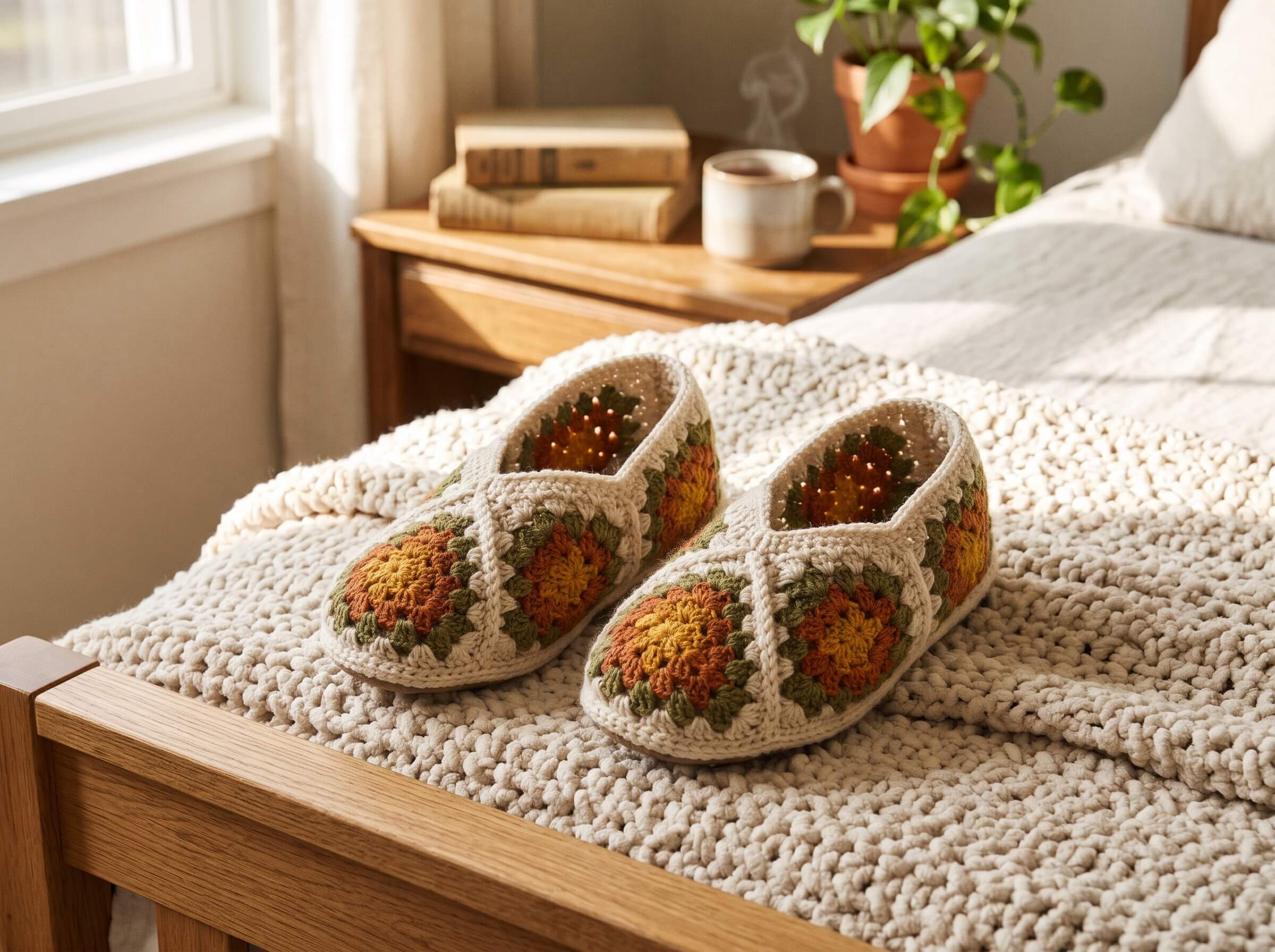
There’s something about a granny square that instantly feels like home. Maybe it’s the memory of a crocheted afghan thrown over your grandmother’s couch, or the bright patchwork colors that remind you of old family photos from the 1970s. Whatever the reason, that little square of yarn has made a big comeback, and one of its most charming new forms is the granny square slipper.
Granny square slippers have quietly taken over Pinterest boards, cozy-living feeds, and handmade marketplaces. They’re colorful, soft, a little bit retro, and completely personal, because no two handmade pairs are ever exactly alike. Whether you crochet yourself or simply love the look, this guide explains what granny square slippers are, where the granny square came from, why this nostalgic style is trending again, and how to choose, make, style, and care for a pair you’ll love wearing around the house.
What Are Granny Square Slippers?
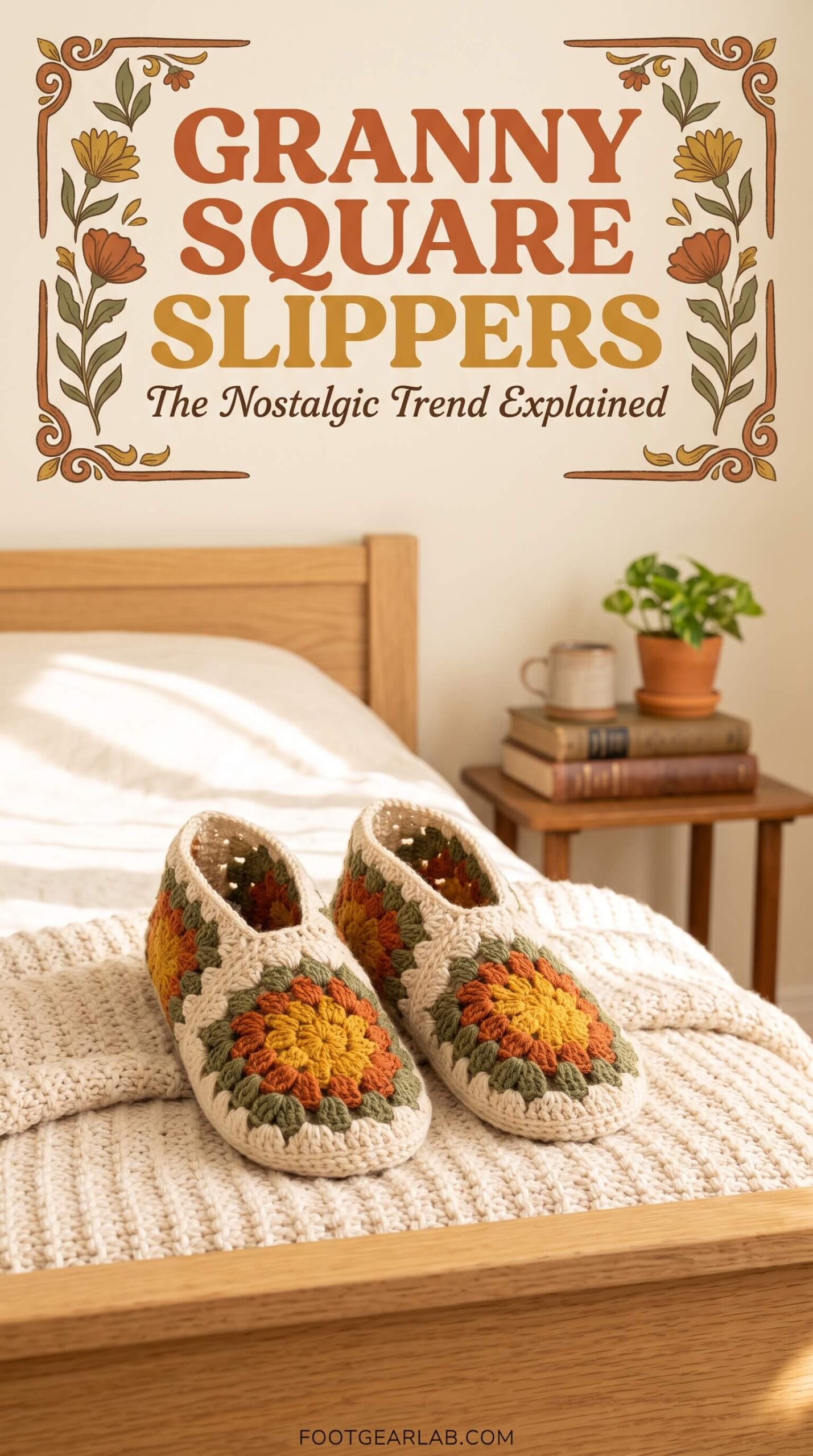
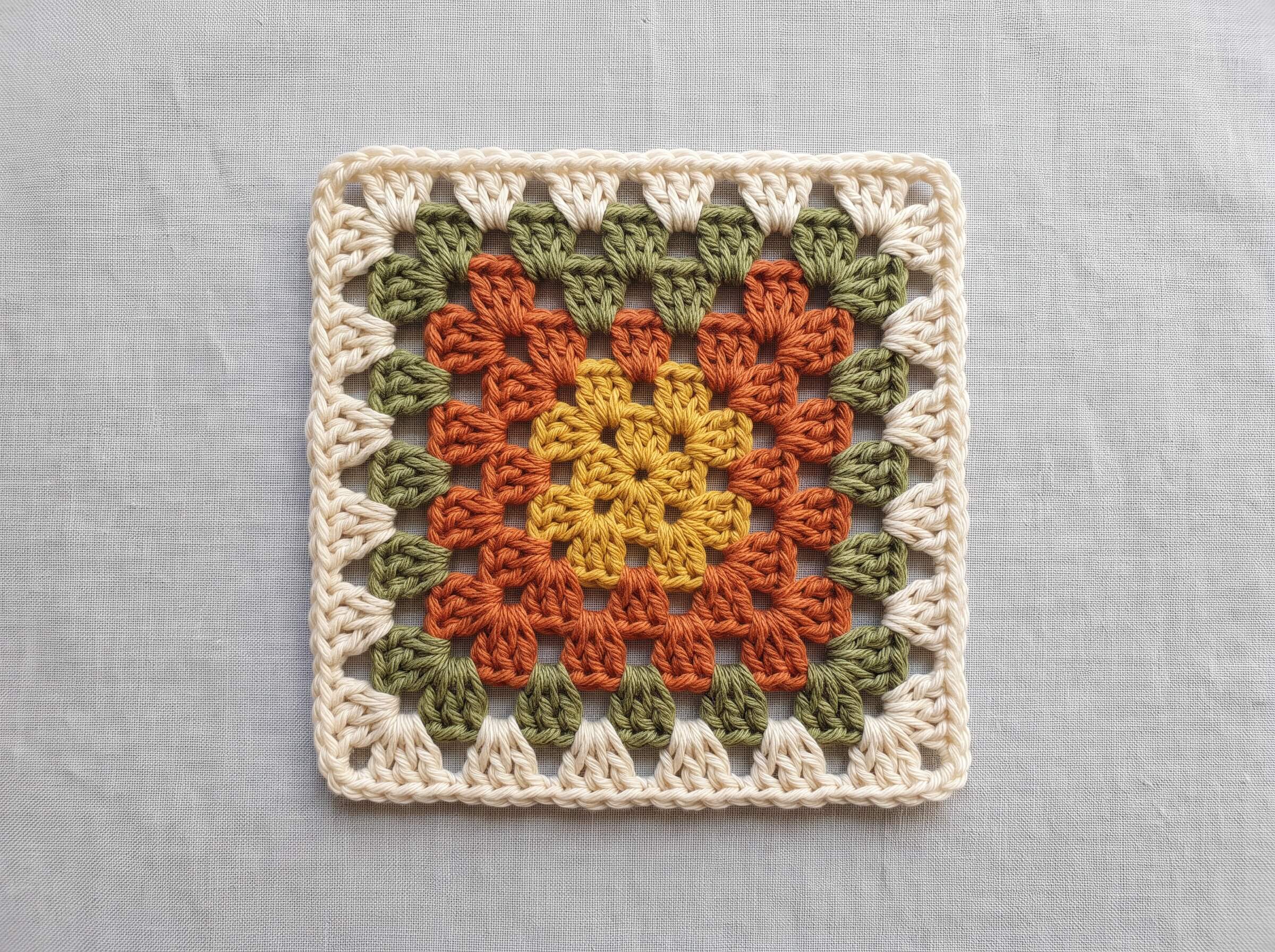
Granny square slippers are house shoes made from crocheted granny squares, the classic motif that starts with a small ring in the center and grows outward in rounds of stitch clusters. Each round adds a new layer, often in a new color, until the motif becomes a square with four distinct corners. Once several squares are finished, they are sewn or crocheted together and shaped around the foot to form a slipper.
Unlike store-bought slippers, which are usually cut from fleece or terry cloth and glued to a rubber sole, granny square slippers are built entirely by hand, stitch by stitch. The result is a slipper with a textured, slightly open-weave surface, a soft and flexible feel, and a look that sits somewhere between a cozy sock and a patchwork quilt for your feet. Many makers add a sole, a lining, or a non-slip coating underneath to make them more practical on hard floors.
Avoid: hands, crochet hooks, scissors, yarn balls, extra squares, text, labels, arrows, rounded or circle-shaped motifs, wavy or curling edges, uneven corners, knitted texture, loose yarn tails, wrinkled tablecloth, colors other than mustard, burnt orange, olive green, and cream.
A Short History of the Granny Square
The granny square is much older than most people realize. Crochet motifs worked in rounds and joined together were already appearing in needlework publications in the late 1800s, when thrifty homemakers used leftover bits of yarn to make blankets, shawls, and covers. Because each square could be made from small scraps, it was the perfect way to avoid wasting anything, which made the technique especially popular during times when money and materials were tight.
The granny square truly became a household icon in the 1960s and 1970s. It moved off the couch and into fashion, showing up on vests, bags, ponchos, skirts, and even full outfits in bold earthy palettes of mustard, orange, avocado green, and brown. During that era, the granny square became a symbol of handmade individuality and a relaxed, free-spirited style. After falling out of fashion for a few decades and being labeled “old-fashioned,” it has returned with a fresh reputation as a stylish, sustainable, and deeply personal craft.
Slippers were a natural fit for the motif all along. Squares are small, quick to make, and easy to shape, so crocheters have been turning them into house shoes and booties for generations. What has changed is how visible these slippers have become, thanks to social media and a renewed love of all things handmade.
Why Granny Square Slippers Are Trending Again
The comeback of granny square slippers is not a coincidence. Several cultural shifts have come together to make this humble craft feel exciting again, especially for women who love cozy, meaningful style.
- Nostalgia feels comforting. In a fast and often stressful world, many people are drawn to things that remind them of simpler times. Granny squares bring back memories of grandmothers, family homes, and handmade gifts, so wearing them feels emotionally warm as well as physically warm.
- The rise of cozy home aesthetics. Styles like cottagecore and “grandmacore” celebrate vintage textures, warm colors, and homemade details. Granny square slippers fit perfectly into this look and make even an ordinary evening at home feel a little more special and intentional.
- Slow fashion and sustainability. More women are choosing to buy less and make or buy items that last. A handmade pair of slippers takes time and care, and many crocheters use leftover yarn from other projects, which keeps scraps out of the trash and gives each pair a one-of-a-kind color mix.
- Crochet’s social media moment. Crochet has exploded online, with countless tutorials, pattern shares, and “what I made this week” posts. Granny square projects are especially popular because they’re beginner-friendly, and slippers are a satisfying small project that can be finished in a weekend.
- Personal expression. Because you pick every color and every round, your slippers become a reflection of your personality. Bold rainbow, soft pastel, earthy 70s, or calm neutrals, the choice is entirely yours, which makes this trend feel personal rather than mass-produced.
Popular Styles of Granny Square Slippers
Not all granny square slippers look the same. Makers have developed many clever ways to turn flat motifs into something that hugs the foot, and each style has its own look and level of difficulty.
Classic Square Slippers
This is the original and most recognizable style. Several granny squares are joined so that one square covers the toe and top of the foot, while others form the sides and the heel. The joins are often worked in a contrasting border color, which frames each square and creates that unmistakable patchwork look. These slippers are a great choice for crocheters who already know how to make basic squares and want to try their first wearable project.
Hexagon Slippers
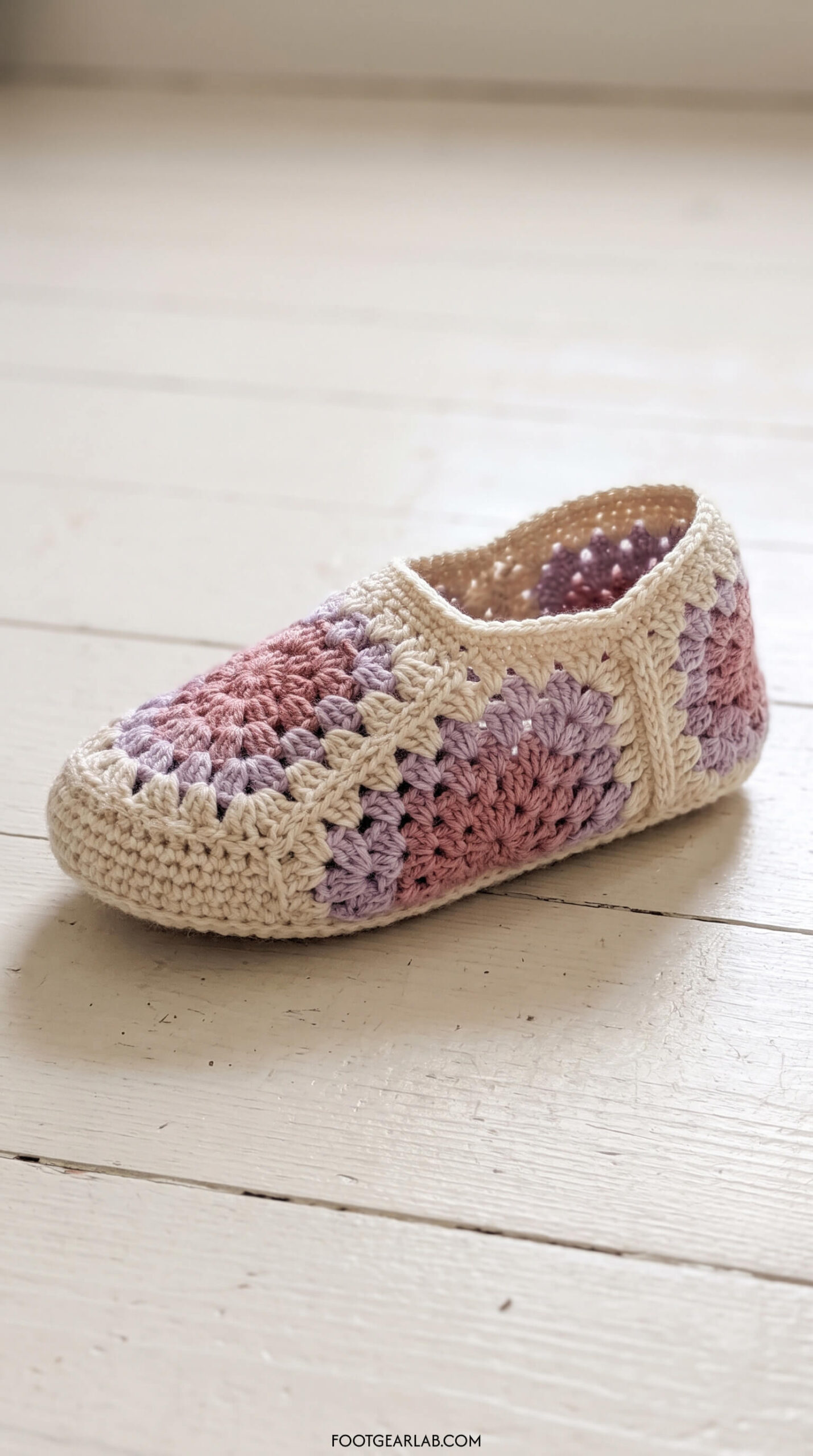
Hexagon slippers use a six-sided version of the granny motif. A large hexagon is folded and seamed along some of its edges, so the flat shape magically turns into a slipper with a rounded toe and a snug heel. They tend to look sleek and simple from the outside, and many crocheters love them because one large motif can become a complete slipper with very little sewing.
Avoid: a second slipper, feet, hands, legs, pom-poms, fur, rubber soles, buttons, text, labels, square-shaped motifs, pointed toe, slipper standing upright on its heel, stretched or distorted shape, loose yarn tails, busy background, cool blue light.
Granny Square Booties
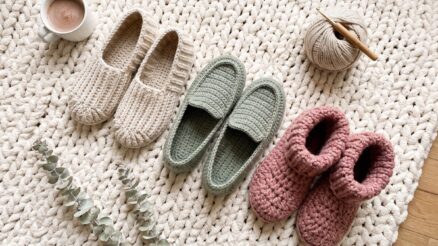
Booties extend the granny square design above the ankle, sometimes with an extra row of squares or a ribbed cuff that folds over. They’re warmer than low slippers and perfect for chilly winter mornings, reading in bed, or keeping your feet cozy on cold tile floors. Many booties include a drawstring or a tie at the ankle to help them stay on.
Slip-On Mules
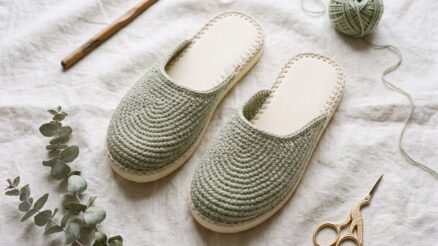
Mule-style granny square slippers leave the heel open, with squares covering only the front of the foot. They’re attached to a ready-made sole, often a cork, felt, or suede insole, which gives them more structure. This style is airy, easy to slip on and off, and popular for spring and summer when a full slipper feels too warm.
Lined and Padded Slippers
Some makers sew a fleece or felt lining inside their slippers, or add a cushioned insole. This makes the slippers warmer, softer underfoot, and less see-through, since the open spaces in granny squares can let in drafts. If you have sensitive feet or simply love plush comfort, this is the style to look for.
Choosing the Right Yarn
Yarn choice makes a huge difference in how your slippers look, feel, and last. Slippers deal with constant friction, weight, and the occasional spilled drink, so durability is just as important as softness.
| Yarn Type | Feel | Durability | Best For |
|---|---|---|---|
| Acrylic | Soft, light, slightly synthetic | Very good, holds color well | Beginners, bright colors, machine-washable pairs |
| Wool | Warm, springy, breathable | Good, but can felt or pill | Winter slippers and cold floors |
| Wool blend (wool + acrylic or nylon) | Warm and soft with structure | Excellent | Everyday slippers that need to last |
| Cotton | Smooth, cool, crisp stitch definition | Good, but less stretchy | Spring and summer mules |
| Chenille or velvet yarn | Ultra plush and cuddly | Moderate, can wear at the sole | Gift slippers and lounge styles |
For most people, a worsted-weight acrylic or wool-blend yarn is the sweet spot. It’s easy to work with, widely available in endless colors, and sturdy enough to handle daily wear. If you want extra thickness and warmth, some crocheters hold two strands of yarn together while working, which makes the fabric denser and less airy.
Color Palettes That Capture the Look
Color is where granny square slippers truly come alive. You can lean fully into vintage nostalgia or give the design a modern twist with a softer palette.
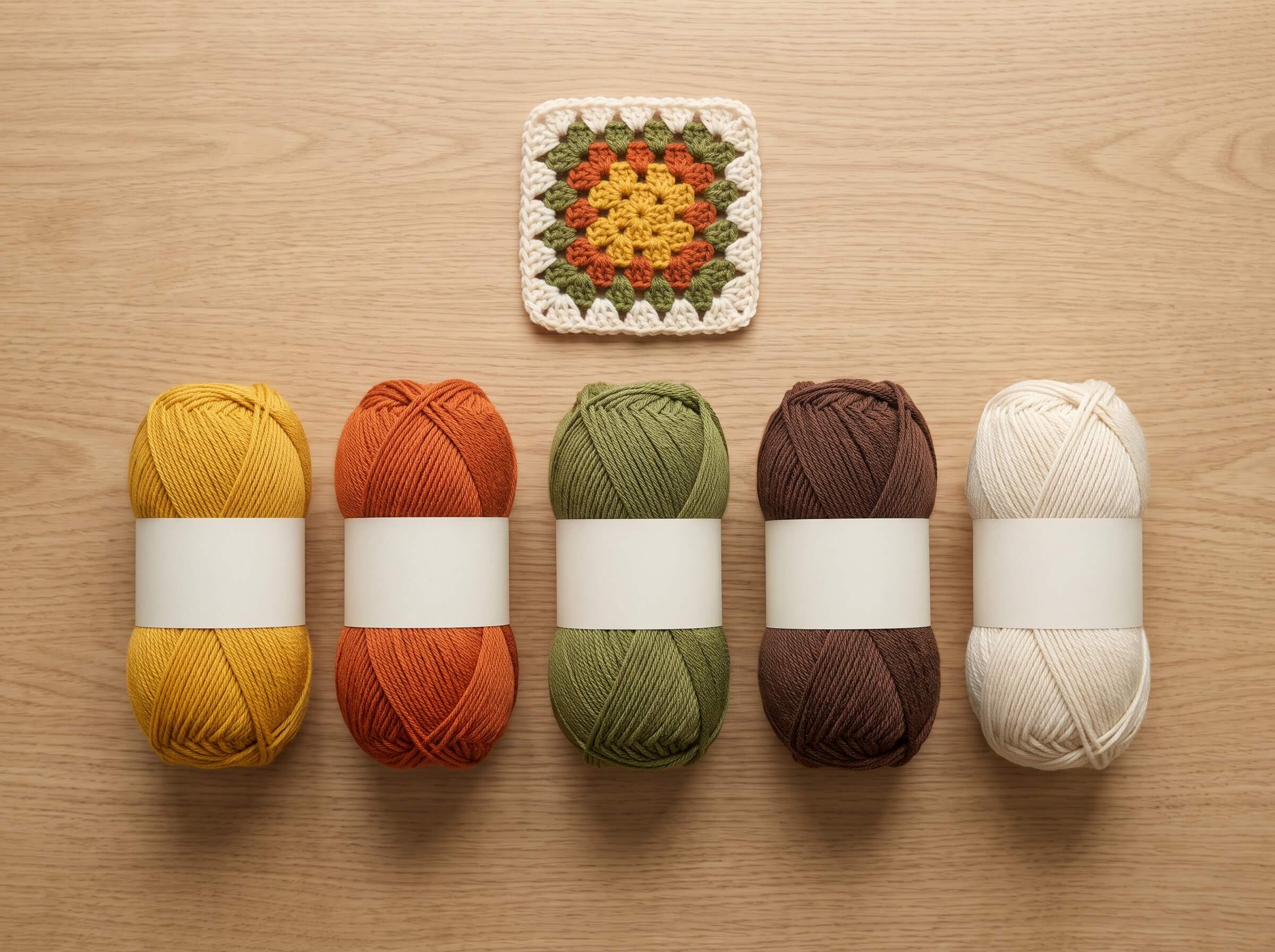
- Classic 1970s. Mustard yellow, burnt orange, avocado or olive green, and chocolate brown, often finished with a black or cream border. This is the palette most people picture when they think of retro granny squares, and it feels instantly warm and cheerful.
- Soft pastels. Blush pink, lilac, mint, butter yellow, and baby blue with a white or cream border. This palette feels sweet, fresh, and modern, and it’s especially popular for spring and for gifts.
- Neutral and minimalist. Oatmeal, cream, taupe, warm gray, and a touch of camel. This is a great choice if you love the texture of granny squares but prefer a calm, Scandinavian-style home look that matches almost everything.
- Scrappy rainbow. Every square uses different leftover colors, tied together with one consistent border color. This is the most traditional “use what you have” approach, and the single border color is the secret that keeps it looking intentional instead of chaotic.
- Monochrome. Several shades of one color, such as light sage to deep forest green. This option looks elegant and sophisticated and lets the stitch texture take center stage.
Avoid: hands, crochet hooks, scissors, text, brand names, printed labels on yarn bands, extra yarn colors, tangled or loose yarn, yarn tails trailing across the table, round or uneven motifs, wrinkled cloth, cluttered props, harsh shadows.
Making Granny Square Slippers Safe and Comfortable
Crocheted slippers are wonderfully cozy, but yarn on a smooth floor can be slippery. Taking a few extra steps makes them safer and more comfortable to wear every day.
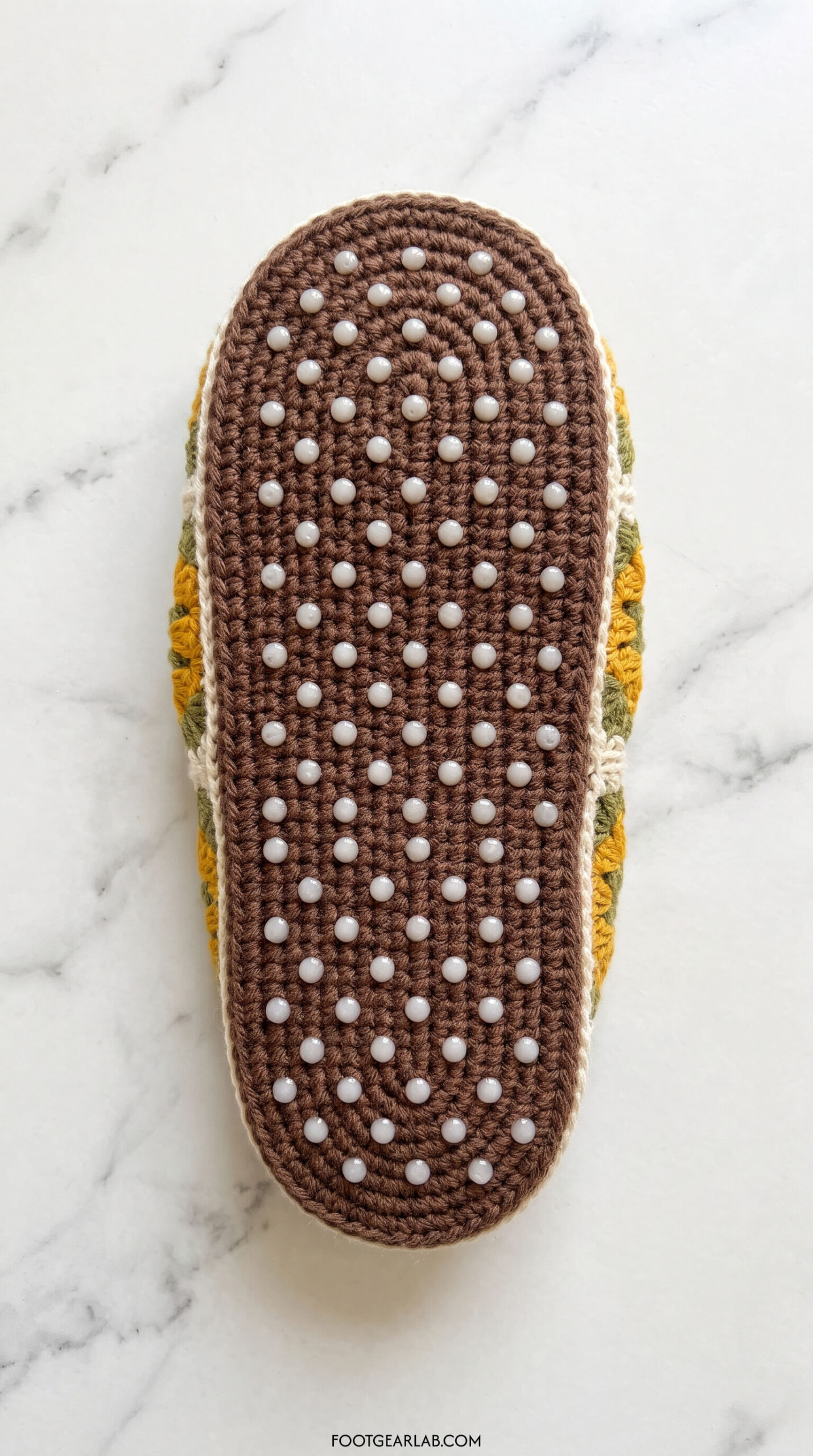
- Add a non-slip sole. The simplest option is to dot the bottom with silicone or fabric puff paint and let it dry completely, which creates grip on wood, tile, and laminate floors. Another option is to sew on ready-made suede or leather soles, which add both grip and durability and help the slippers keep their shape.
- Make the sole extra sturdy. Many patterns use tighter stitches like single crochet on the sole, while the granny squares stay on top of the foot. A denser sole wears more slowly and feels less bumpy underfoot than an open granny square texture would.
- Get the size right. Crochet stretches over time, especially acrylic and cotton, so it’s better for slippers to feel snug at first than loose. Measuring your foot length and checking your square size against the pattern before joining everything together saves a lot of frustration later.
- Consider a lining or insole. A thin felt or fleece insole adds cushioning and blocks drafts through the open spaces between stitch clusters. This is especially helpful if you’ll wear your slippers on cold floors or for long periods of time.
- Keep ties and edges secure. If your slippers have drawstrings, bows, or decorative trims, make sure they’re firmly attached and not long enough to trip over, especially on stairs.
Avoid: hands, a second slipper, a paint tube or bottle, wet or smeared dots, uneven or clumped dots, foot-shaped or peanut-shaped sole, narrow waist on the sole, open granny-square texture on the sole, text, labels, arrows, loose yarn tails, dirty marks.
How to Style Your Granny Square Slippers
Granny square slippers are made for lounging, but with a little thought they become part of a cozy, put-together at-home look.
- Pair them with a matching lounge set. Cream, oatmeal, or sage loungewear lets colorful slippers stand out, while a set in one of your slipper colors creates a cute coordinated look for slow weekends at home.
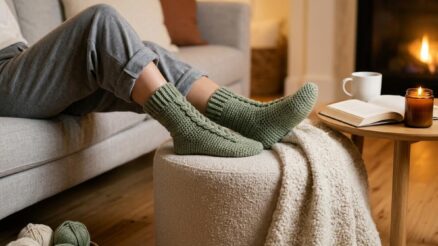
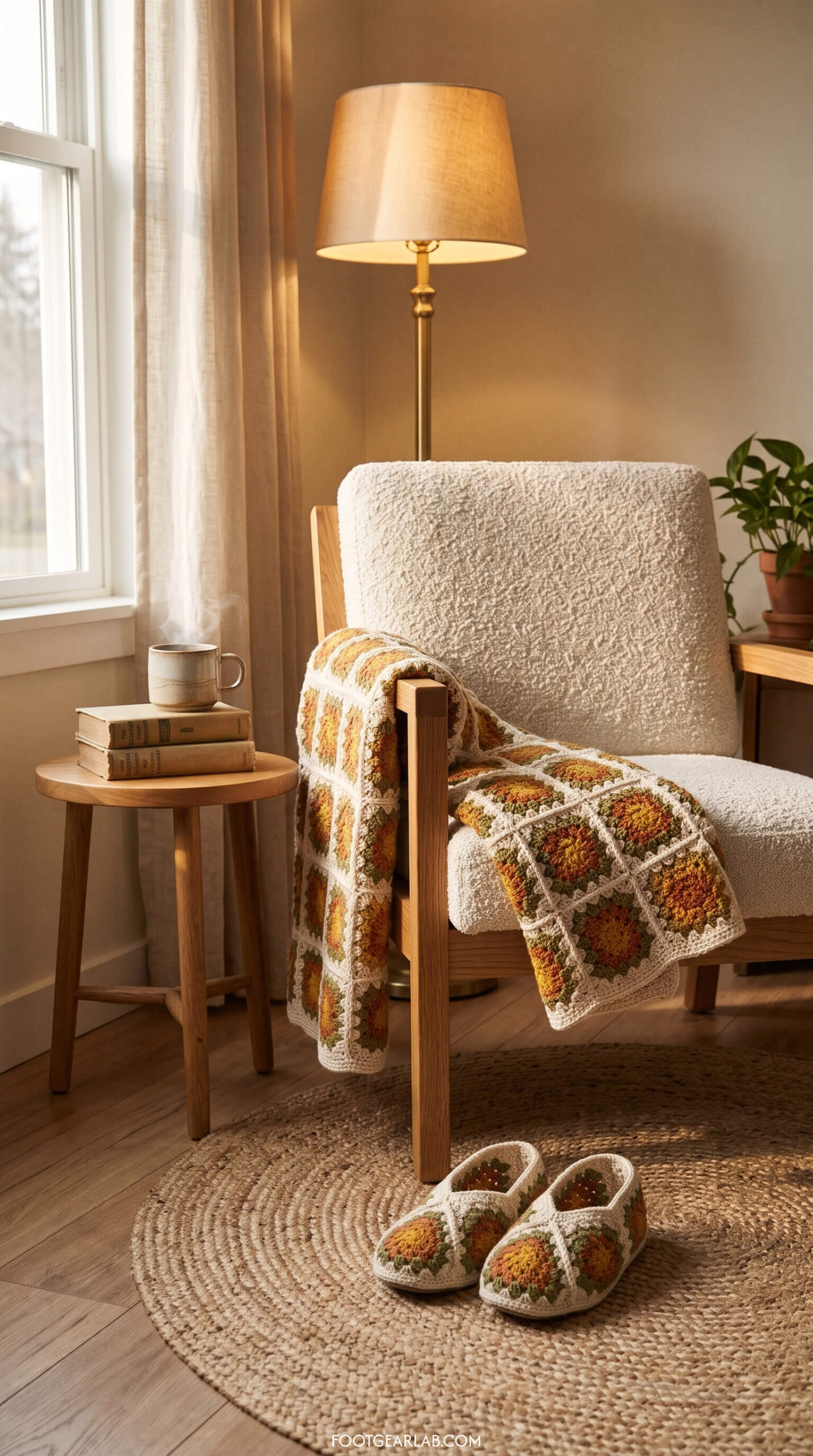
- Build a cozy reading corner. Granny square slippers look beautiful next to a crocheted throw, a stack of books, a warm mug, and a soft lamp. Together, these details turn any chair or window seat into a little nostalgic retreat that feels great to relax in.
- Wear them with wide-leg pants or flowy skirts. For a 70s-inspired outfit at home or for casual photos, long relaxed silhouettes complement the retro patchwork perfectly and give the whole look a vintage, free-spirited feel.
- Use them as seasonal decor. In autumn, earthy-toned slippers by the bed or near the door add warmth to your space. In spring, pastel pairs feel fresh and cheerful and can be styled on a bench with fresh flowers.
- Coordinate with other granny square pieces. A matching tote bag, cushion cover, or blanket in the same colors pulls a room or outfit together and shows off your handmade style in a cohesive way.
Avoid: people, feet, hands, pets, text, readable book titles, logos, slippers in different colors from the blanket, clutter, televisions or screens, modern plastic furniture, harsh overhead lighting, cool blue tones.
Buying vs. Making Your Own
You don’t need to crochet to enjoy this trend. Both buying and making have their own advantages, depending on your time, budget, and skills.
Buying handmade slippers is ideal if you love the look but don’t crochet. Independent makers on handmade marketplaces and at local craft fairs sell beautiful pairs, and many will take custom orders in your favorite colors and size. Handmade slippers usually cost more than mass-produced ones because each pair takes hours of work, but you’re supporting a small business and getting something truly unique. When shopping, look for clear sizing information, details about the yarn used, and whether the slippers include a non-slip sole.
Making your own is a rewarding project if you already know basic crochet stitches, especially chain, single crochet, and double crochet. Granny squares are one of the first motifs many beginners learn, so slippers are a natural next step. The project is small, portable, and budget-friendly, and it’s a lovely way to use up leftover yarn. Start with a simple pattern made from basic squares before trying more advanced styles like hexagons or booties.
Pros and Cons at a Glance
| Pros | Cons |
|---|---|
| Unique, personal designs in any color you love | Can be slippery on hard floors without a non-slip sole |
| Great way to use leftover yarn sustainably | Open stitches may let in drafts unless lined |
| Soft, flexible, and lightweight on the feet | Not suitable for outdoor wear |
| Thoughtful handmade gift for any age | Handmade pairs can be pricier to buy |
| Easy to repair a worn spot or replace a square | Some yarns stretch or pill over time |
How to Care for Granny Square Slippers
With the right care, a good pair of granny square slippers can last for several seasons and keep their colors bright.
- Wash gently. Hand washing in cool water with a mild detergent or wool wash is the safest method for most yarns. Gently squeeze out the water instead of wringing or twisting, which can stretch the stitches and distort the shape of the squares.
- Dry flat. Lay your slippers flat on a clean towel and reshape them while damp, gently pushing out the toe and heel. Avoid the dryer and direct heat, which can shrink wool or flatten acrylic fibers and loosen any glued or painted sole.
- Check the yarn label. Some acrylic slippers can go in the washing machine on a delicate cycle inside a mesh laundry bag. Wool slippers should never be machine washed unless the yarn is labeled “superwash,” because agitation can felt and shrink them.
- Remove pilling. Over time, small fuzz balls may appear, especially on the sole and sides. A fabric shaver or a gentle pass with a sweater comb keeps them looking fresh and tidy.
- Repair early. If you notice a thinning spot or a loose join, fix it right away with a few stitches of matching yarn. Catching small problems early prevents bigger holes and keeps your slippers going much longer.
Granny Square Slippers as Gifts
Granny square slippers make some of the most heartfelt gifts you can give. They’re perfect for birthdays, holidays, Mother’s Day, new homeowners, and even as a “get cozy” gift for a friend going through a tough week. Choosing colors that match the recipient’s home or favorite palette shows extra thoughtfulness.
For an extra-special touch, wrap the slippers with a small bundle of tea, a candle, or a book to create a complete cozy-night-in gift set. If you’re crocheting them, consider making a matching pair for yourself too, because twinning slippers with your mom, sister, or best friend is a sweet way to share the nostalgia.
Frequently Asked Questions
Are granny square slippers good for beginners to make? Yes, they can be a great early project once you’re comfortable making basic granny squares. The squares themselves are simple, and the main new skill is joining and shaping them. Choosing a beginner-labeled pattern and a smooth, light-colored yarn makes it much easier to see your stitches and fix mistakes.
How long does it take to make a pair? It depends on your speed and the pattern, but many crocheters finish a pair over a weekend or a few evenings. Larger styles like booties or lined slippers take longer, while simple hexagon slippers can be surprisingly quick.
Can I wear granny square slippers outside? They’re designed for indoor use. Yarn soles wear down quickly on rough outdoor surfaces and can soak up moisture and dirt. If you want to step outside briefly, choose a pair with a sewn-on leather or suede sole.
Do granny square slippers keep feet warm? They do, especially when made with wool or a wool blend, worked with a thicker yarn, or lined with felt or fleece. Unlined slippers in cotton are lighter and better suited to warmer months.
Why do my slippers feel loose after a while? Most yarns relax and stretch with wear, especially acrylic and cotton. Making the slippers slightly snug at first, adding an ankle tie, or washing and reshaping them can help them keep a better fit.
Final Thoughts
Granny square slippers are much more than a passing fad. They connect a craft with deep roots in thrift and family tradition to today’s love of cozy homes, slow fashion, and personal style. Every pair carries a little bit of history, a lot of warmth, and a color story that’s entirely its own.
Whether you crochet a pair from your yarn stash, buy a handmade pair from a small maker, or gift them to someone you love, granny square slippers are a simple way to bring comfort and nostalgia into your everyday routine. Slip them on, make a warm drink, and enjoy a cozy moment that feels just like a hug from the past.