
For years, my mornings looked the same. The alarm went off, I hit snooze two or three times, and then I grabbed my phone before my eyes were fully open. By the time I got out of bed I had already scrolled through emails, news, and other people’s highlight reels. I rushed through a shower, skipped breakfast or grabbed something sugary on the way out, and spent the rest of the day feeling like I was running ten minutes behind my own life.
I didn’t change everything overnight. In fact, my first attempt at a “perfect morning routine” (5 a.m. wake-up, cold shower, hour-long workout, green smoothie) lasted exactly four days. What finally worked was much smaller and much gentler: a handful of simple habits, added one at a time, that made my mornings calmer and my days noticeably better. My energy steadied, I stopped feeling anxious before 9 a.m., my skin looked better, and I finally felt like I was starting the day on purpose instead of by accident.
In this article, I’m sharing the exact morning habits that changed my life, why each one works, and how you can build your own version without waking up at dawn or turning your life upside down.
Why Your Morning Matters More Than You Think
It’s easy to think of the morning as just the time you get ready for the “real” day. But the first hour after waking sets the tone for your mood, focus, and choices for hours afterward. A rushed, reactive morning tends to lead to a rushed, reactive day, while a calm and intentional start makes it easier to keep making good decisions.
There’s also a body clock side to this. Your internal clock (your circadian rhythm) controls when you feel alert, when you get hungry, and when you start feeling sleepy at night. Morning signals like daylight, movement, and a regular wake-up time help keep that clock on schedule, which is why a better morning often leads to better sleep that night as well.
Finally, mornings are one of the few times of day that most of us can actually control. Afternoons get taken over by work, kids, errands, and other people’s needs. Even fifteen protected minutes in the morning can give you a sense of ownership over your day that carries you through everything that comes after.
1. Waking Up at the Same Time Every Day
The single habit that made the biggest difference for me wasn’t waking up early; it was waking up consistently. I picked a wake-up time that fit my real life (7:00 a.m., not 5:00), and I stuck to it on weekdays and, within about an hour, on weekends too.
A regular wake time helps your body clock settle into a predictable pattern. After a couple of weeks, I started waking up a few minutes before my alarm and feeling far less groggy. Sleeping in until 10 a.m. on Saturday used to leave me feeling jet-lagged on Monday, and once I stopped doing that, my Monday mornings became much easier.
How to start: Choose a time you can realistically keep seven days a week, and work backward to make sure you get at least seven hours of sleep, which is what most adults need. Put your alarm across the room so you have to physically get up to turn it off; this one trick ended my snooze-button habit for good.
2. Leaving My Phone Alone for the First 30 Minutes
I used to reach for my phone before I even sat up. Within seconds, my brain was flooded with work emails, notifications, and bad news, and I felt stressed before my feet touched the floor. Reading other people’s demands first thing meant my morning instantly became about everyone else’s priorities instead of my own.
Now my phone charges in the kitchen overnight, and I use a simple alarm clock in the bedroom. I don’t check messages, email, or social media until I’ve finished my morning basics, usually about 30 minutes after waking. This small boundary has done more for my anxiety than almost anything else I’ve tried.
How to start: If 30 minutes feels impossible, begin with 10. Keep your phone out of reach, turn off non-urgent notifications overnight, or use your phone’s “focus” or “bedtime” mode so nothing pings until a set time. The goal isn’t to be perfect but to give your mind a quiet runway before the noise begins.
3. Drinking a Big Glass of Water Before Anything Else
After seven or eight hours without a drink, most of us wake up slightly dehydrated. Even mild dehydration can make you feel tired, foggy, or headachy, which I used to mistake for “just not being a morning person.”
I keep a large glass or bottle of water on my nightstand or next to the kettle, and I drink it before my coffee. Sometimes I add a squeeze of lemon or a few slices of cucumber because it makes it feel like a small ritual rather than a chore. It’s the easiest habit on this list, and it gives me a quick win to start the day.
How to start: Fill your glass the night before so it’s waiting for you. Aim for roughly 250 to 500 ml (one to two cups) in the first half hour, and don’t force down more than feels comfortable. If you have a medical condition that limits fluids, follow your doctor’s advice.
4. Getting Outside (or Near a Window) for Morning Light
This habit sounded too simple to matter, but it surprised me the most. Natural daylight in the morning is one of the strongest signals your body clock gets. It tells your brain that the day has started, helps you feel more alert, and supports a natural rise in sleepiness later in the evening.
Most mornings I take my coffee onto the balcony or stand by an open window for 10 to 15 minutes. On busier days, I simply walk to the corner shop or around the block. Since I started doing this, I fall asleep more easily at night and no longer feel that heavy, sluggish fog in the middle of the morning.
How to start: Step outside within the first hour of waking for at least 5 to 10 minutes on bright days and a bit longer on cloudy ones, since outdoor light is still much brighter than indoor lighting even when the sky is gray. Never look directly at the sun; just being outdoors in daylight is enough.
5. Moving My Body Gently (No Intense Workout Required)
I used to believe that morning exercise only counted if it was a sweaty, hour-long session. Because that felt overwhelming, I usually did nothing at all. Everything changed when I gave myself permission to start small with gentle movement that wakes the body up instead of wearing it out.
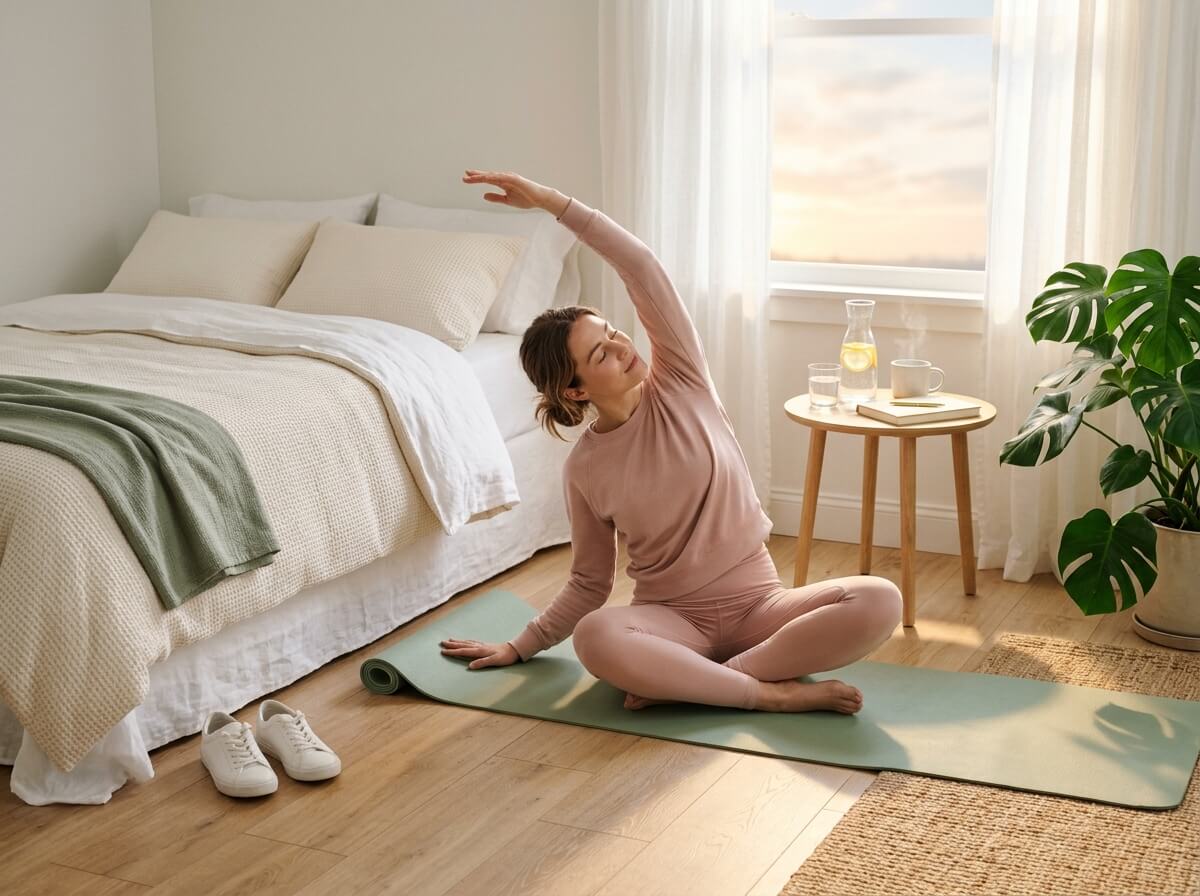
My usual routine is about 10 minutes of stretching on a yoga mat beside my bed: cat-cow, a few slow forward folds, hip openers, and some neck and shoulder rolls. Two or three times a week, I go for a brisk 20-minute walk instead. Moving early loosens the stiffness from sleep, lifts my mood, and makes me far more likely to stay active for the rest of the day.
How to start: Pick one easy option and do it for just five minutes, like a short stretching sequence, a walk around the block, or a beginner yoga video. Over time, these sessions add up toward the general guideline of at least 150 minutes of moderate activity per week. If you have joint pain, an injury, or a health condition, check with your doctor about which movements are right for you.
6. Making My Bed Right Away
It might sound like something your mom used to nag you about, but making my bed every morning has become one of my favorite small habits. It takes less than two minutes, and it gives me an instant feeling of accomplishment before the day has really started.
There’s also a practical benefit: a made bed makes the whole bedroom feel calmer and tidier, which makes it much less tempting to crawl back under the covers. And at night, getting into a neat, fresh-looking bed feels like a little reward that makes my evening wind-down more pleasant.
How to start: Keep it simple. Pull up the duvet, fluff the pillows, and fold your throw blanket at the foot of the bed. It doesn’t have to look like a hotel; it just has to look finished. Do it as soon as you get up so it becomes automatic.
7. Eating a Real, Protein-Rich Breakfast
For years, my breakfast was either nothing or a pastry eaten in the car. By 10:30 a.m., I’d be starving, shaky, and reaching for whatever snack was closest. I didn’t realize how much my breakfast was affecting my energy, mood, and cravings for the rest of the day.
Now I build my breakfast around protein, fiber, and a little healthy fat, which keeps me full and steady for much longer. My go-to options include Greek yogurt with berries and a sprinkle of oats, two eggs with whole-grain toast and avocado, or overnight oats made with milk and chia seeds. None of these take more than five minutes, especially when I prep a few things the night before.
How to start: Try adding one protein source to whatever you already eat, like eggs, Greek yogurt, cottage cheese, a nut butter, or a protein-rich smoothie. If you’re simply not hungry early, that’s fine; a small, balanced snack an hour or two after waking can work just as well. If you have specific nutrition needs, a registered dietitian can help you personalize this.
8. Five Minutes of Journaling
Journaling once felt like something only very organized people did, and the idea of filling pages every day made me want to give up before I started. What I do now is much simpler: I spend about five minutes writing three short things in a small notebook.
First, I write one thing I’m grateful for. Second, I write how I’m feeling, honestly and without judgment. Third, I write one intention for the day, like “be patient with myself” or “take a real lunch break.” This little check-in helps me notice my mood before it controls me, and it’s been especially helpful on days when I wake up already feeling anxious or overwhelmed.
How to start: Keep a notebook and pen right where you have your coffee. If a blank page feels intimidating, use the same three prompts every day. Some mornings you’ll write a paragraph, and some mornings you’ll write three words, and both are completely fine.
9. A Simple Skincare Routine (and Never Skipping Sunscreen)
I used to either skip skincare completely or use a complicated ten-step routine that I couldn’t keep up with. What finally made a difference was a short, consistent routine that I actually follow every single morning.
Mine has just three steps: a gentle cleanser (or simply a splash of water if my skin feels dry), a light moisturizer, and broad-spectrum sunscreen with SPF 30 or higher. Sunscreen is the step I never skip, even on cloudy days or when I’m staying indoors near windows, because daily UV exposure contributes to dark spots, uneven tone, and early signs of aging. After a few months of consistency, my skin looked brighter and more even than it did with my old “fancy” products.
How to start: Choose three products that suit your skin type and keep them together on one shelf so the routine takes under five minutes. Apply sunscreen as the last step, and use enough to cover your face and neck evenly. If you have a skin condition, a dermatologist can recommend products that suit you.
10. Choosing My Top Three Priorities for the Day
Before I open my laptop or check my messages, I write down the three most important things I want to get done that day. They can be work tasks, personal errands, or even self-care, such as “go for a walk at lunch” or “call my sister.”
This habit has changed the way my days feel. Instead of reacting to everything that lands in my inbox, I already know what matters most. Even on chaotic days, if I finish those three things, I go to bed feeling like the day was a success, rather than feeling guilty about an endless to-do list I could never finish anyway.
How to start: Write your three priorities in the same notebook you journal in, and put the hardest or most important one first. Keep the list short on purpose; three is enough to feel productive without becoming overwhelming.
The Secret Behind All of These Habits: My Evening Routine
The truth is that a good morning really starts the night before. Once I realized this, my mornings became dramatically easier. A few small things in the evening remove the decisions and stress that used to slow me down when I woke up.
Each night, I fill my water glass, set out my yoga mat or walking shoes, prepare overnight oats or set out what I need for breakfast, choose my outfit, and charge my phone outside the bedroom. I also try to start winding down about an hour before bed by dimming the lights, putting screens away, and reading or stretching. When my evening is calm, I sleep better, and when I sleep better, every habit in this list feels effortless rather than forced.
My Morning Routine at a Glance
You don’t need a full hour to benefit from these habits. Here’s how my routine looks on a normal day, along with the shorter version I use when I’m in a hurry.
| Habit | My Full Routine (about 60 minutes) | My Busy-Day Routine (about 20 minutes) |
|---|---|---|
| Wake up | Same time every day, alarm across the room | Same time every day, alarm across the room |
| Hydrate | Large glass of lemon water | Glass of water while the kettle boils |
| Make the bed | 2 minutes | 1 minute (duvet up, pillows straight) |
| Move | 10 to 20 minutes of stretching or a walk | 3 to 5 minutes of stretching |
| Morning light | 10 to 15 minutes outside with coffee | Drink coffee by an open window |
| Journal and priorities | 5 to 10 minutes | 2 minutes: one gratitude and three priorities |
| Skincare and SPF | 5 minutes | 2 minutes: moisturizer with SPF |
| Breakfast | Seated, protein-rich breakfast | Prepped overnight oats or yogurt bowl |
| Phone | Checked only after the routine | Checked only after breakfast |
How to Build Your Own Morning Routine Without Feeling Overwhelmed
The biggest mistake I made at first was trying to change everything at once. The routine that finally stuck was built slowly, one habit at a time, and here’s the approach I’d recommend to anyone starting out.
Start with just one habit. Choose the one that feels easiest or most appealing to you, like drinking water first thing or leaving your phone in another room. Practice it for one or two weeks until it feels automatic before adding anything else. Small wins build the confidence you need for bigger changes.
Stack new habits onto existing ones. Attach each new habit to something you already do every day. For example, “After I start the kettle, I drink my glass of water,” or “After I make my bed, I roll out my yoga mat.” Linking habits this way makes them much easier to remember because the first action reminds you to do the second.
Make it easy and make it pleasant. Remove friction wherever you can by preparing things the night before, keeping supplies in plain sight, and choosing versions of each habit that you actually enjoy. A favorite mug, a pretty notebook, or a cozy playlist can turn a habit into something you look forward to.
Expect imperfect days. Some mornings the baby will wake up early, you’ll oversleep, or you’ll feel unwell. On those days, do the smallest possible version of your routine, even if it’s just a glass of water and a minute by the window. Missing one day doesn’t break a habit; giving up after one missed day does.
Common Morning Routine Mistakes (and What to Do Instead)
| Mistake | Why It Backfires | What to Do Instead |
|---|---|---|
| Copying an influencer’s 5 a.m. routine | It ignores your sleep needs and schedule, so it rarely lasts | Pick a wake time that still gives you at least 7 hours of sleep |
| Adding ten new habits at once | It quickly becomes overwhelming and easy to abandon | Add one habit every one to two weeks |
| Checking your phone in bed | It floods you with stress and other people’s priorities | Charge your phone outside the bedroom |
| Skipping breakfast, then snacking all morning | It can lead to energy crashes and strong cravings | Eat a simple, protein-rich breakfast or mid-morning snack |
| Sleeping in late on weekends | It shifts your body clock and makes Monday harder | Keep weekend wake times within about an hour of weekdays |
| Treating the routine as all-or-nothing | One busy day can make you quit entirely | Have a short “minimum version” for hectic days |
What Actually Changed in My Life
I want to be honest: these habits didn’t magically fix every problem in my life. I still have stressful weeks, tired mornings, and days when everything goes wrong. But the overall difference has been real and lasting, and it’s the reason I’ll never go back to my old chaotic mornings.
My energy is steadier throughout the day, and I rarely experience the mid-morning crash I used to accept as normal. I fall asleep more easily and wake up feeling more rested. I feel less anxious, because I start the day with a quiet moment for myself instead of a flood of notifications. My skin looks healthier, I eat more balanced meals, and I’ve become someone who moves her body most days without forcing it. Most importantly, I feel more in control of my time and more like myself.
Frequently Asked Questions
Do I have to wake up early to have a healthy morning routine? Not at all. A healthy morning routine is about what you do after waking, not the time on the clock. A consistent wake time that allows you to get enough sleep is far more important than waking up at 5 a.m. If you naturally wake up at 8 a.m., build your routine around 8 a.m.
How long should a morning routine take? Anywhere from 10 minutes to an hour, depending on your schedule. Even a short routine that includes water, a few minutes of light, and a quick stretch can make a noticeable difference. It’s better to have a short routine you actually do than a long one you keep skipping.
What if I’m a busy mom or work early shifts? Focus on the habits that take almost no extra time, such as drinking water, stepping outside for a few minutes, and keeping your phone away until you’re ready. Preparing breakfast and supplies the night before is especially helpful when your mornings are packed. You can also move habits like journaling or stretching to a quieter moment later in the day.
How long does it take for a new habit to stick? It varies from person to person and from habit to habit. Simple habits like drinking water may feel automatic within a couple of weeks, while bigger ones like daily exercise can take a few months. The key is consistency, not perfection, so keep going even if you miss a day here and there.
Which habit should I start with? Start with the one that feels easiest and most appealing to you. For many women, leaving the phone out of the bedroom or drinking a glass of water first thing is the perfect starting point because both are simple and give quick, noticeable results.
Final Thoughts
Changing my mornings didn’t require a strict schedule, expensive products, or waking up before sunrise. It came down to a few simple habits done consistently: waking at the same time, staying off my phone, hydrating, getting daylight, moving gently, eating a real breakfast, and taking a few quiet minutes to check in with myself. Together, these small changes added up to calmer days, better sleep, and a life that feels much more intentional.
If you take one thing from this article, let it be this: start small. Choose one habit, try it for the next week, and notice how you feel. Your best mornings, and maybe the best version of your life, can begin with something as simple as a glass of water and ten minutes of sunshine.