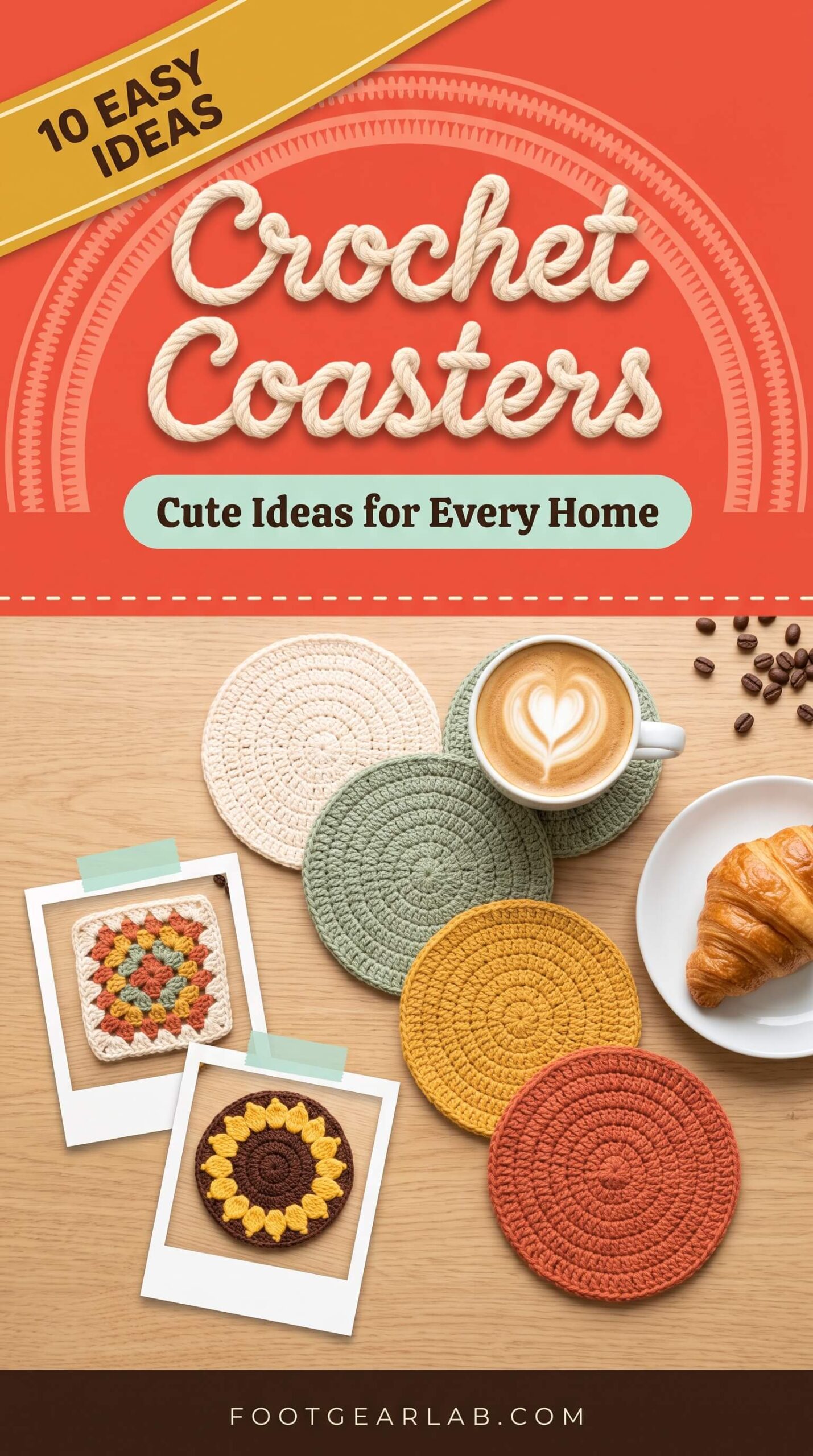
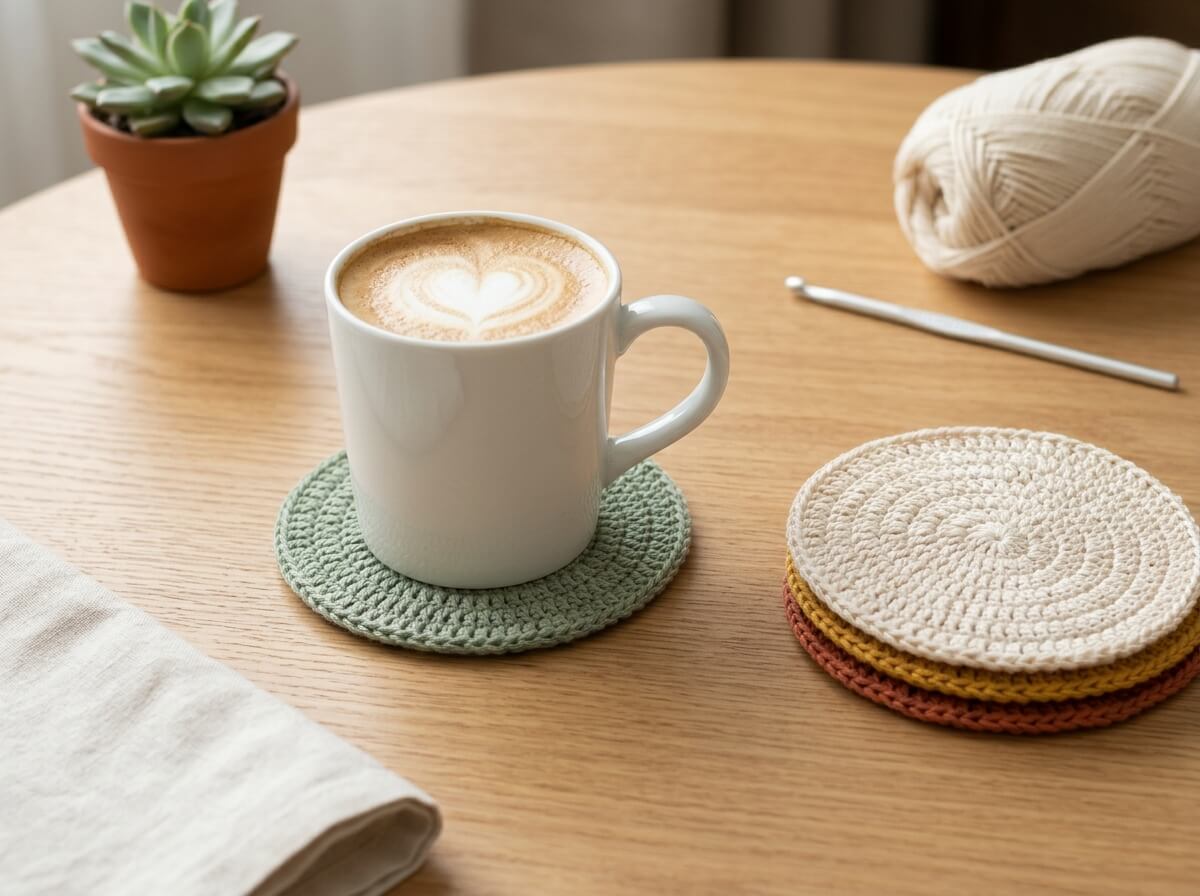
There is something wonderfully satisfying about setting a warm mug of coffee down on a little circle of yarn you made with your own hands. Crochet coasters are one of the most loved small projects in the crochet world, and for good reason. They protect your tables from rings, drips and heat, they add a pop of color and texture to any room, and they work up so quickly that you can finish one during a single episode of your favorite show.
If you are new to crochet, coasters are the perfect first “real” project. They teach you how to work in the round, how to increase evenly, and how to finish a piece neatly, all without the frustration of a big blanket that takes months. If you already crochet, coasters are the ideal way to use up leftover cotton yarn, try a new stitch, or whip up a last-minute handmade gift that looks far more expensive than it is.
In this guide, you will find everything you need to get started: the best yarn and tools, a simple beginner pattern for a classic round coaster with step-by-step photos, ten cute coaster ideas for every style and season, tips for styling and gifting, and an easy troubleshooting guide for when your coaster ruffles or curls. Grab your hook and your coziest drink, and let’s make something pretty.
Why Crochet Coasters Are the Perfect Project
Crochet coasters may be small, but they offer a surprising number of benefits, which is exactly why so many makers keep coming back to them.
- They are quick and rewarding. A basic round coaster takes most beginners about 20 to 40 minutes, and experienced crocheters can make one in 15 minutes or less. That fast finish line gives you a real sense of accomplishment and keeps you motivated to keep learning.
- They are budget friendly. One standard ball of worsted weight cotton yarn usually makes four to five coasters, so a full matching set can cost just a few dollars. Coasters are also the best way to use up those small leftover balls sitting in your yarn basket.
- They are genuinely useful. Unlike some decorative projects, coasters are used every single day. Cotton coasters absorb condensation from cold drinks and cushion hot mugs, which helps protect wooden, glass and stone surfaces from water rings and marks.
- They are great for learning. Working a coaster teaches you magic rings, joining rounds, even increases, color changes and finishing techniques. Every skill you practice on a coaster will help you later with hats, bags, baskets and amigurumi.
- They make lovely gifts. A set of four coasters tied with twine is a thoughtful, handmade present for housewarmings, birthdays, teachers, hostesses and holidays, and you can personalize the colors to match the recipient’s home.
Choosing the Right Yarn for Crochet Coasters
The yarn you choose makes a huge difference in how your coasters look, feel and perform. Since coasters need to handle moisture, heat and frequent washing, fiber content matters more here than in many other projects.
Cotton Yarn: The Best Choice
100% cotton yarn is the top choice for coasters, and for good reason. Cotton is absorbent, so it soaks up drips and condensation instead of letting them run onto your table. It handles warm mugs well, holds its shape nicely when worked tightly, and can be washed again and again. A worsted weight (weight 4) cotton is the easiest to work with and gives a sturdy coaster that feels substantial under a mug.
Other Good Options
Cotton blends, such as cotton with a little bamboo or linen, give a softer drape and a slight sheen while still absorbing moisture well. Recycled cotton and cotton t-shirt yarn create chunky, modern coasters with a lovely texture. Jute and hemp twine make rustic, farmhouse-style coasters, although they feel rougher on the hands while you work.
Yarn to Avoid
Acrylic yarn is soft, inexpensive and comes in endless colors, but it is not ideal for coasters. Acrylic repels water rather than absorbing it, so condensation from a cold glass can still pool on your table. It can also be damaged by very hot pots or kettles. Save your acrylic for blankets and amigurumi, and choose cotton for anything that will sit under a drink.
Quick Yarn Comparison
| Yarn type | Absorbency | Heat tolerance | Look and feel | Best for |
|---|---|---|---|---|
| 100% cotton | High | Good | Matte, crisp stitch definition | Everyday coasters, all styles |
| Cotton blends (bamboo, linen) | High | Good | Soft with a light sheen | Elegant, softer coasters |
| T-shirt or recycled cotton | Medium to high | Good | Chunky and modern | Thick, quick, statement coasters |
| Jute or hemp | Medium | Good | Rustic and textured | Farmhouse and boho styles |
| Acrylic | Low | Poor | Soft, sometimes fuzzy | Not recommended for coasters |
Tools and Materials You Will Need
You only need a handful of supplies to make crochet coasters, and you may already have most of them at home.
- Worsted weight cotton yarn. About 25 to 30 yards (roughly 15 grams) is enough for one 4-inch round coaster, so a single ball will make a small set. Choose smooth yarn in a light or medium color for your first coaster, because it is much easier to see your stitches.
- A 4.5 mm (US 7) crochet hook. This size is slightly smaller than many cotton yarn labels suggest, which creates a firmer, denser fabric that lies flat and protects your table better. If you crochet very tightly, go up to a 5 mm hook.
- A blunt tapestry needle. You will use it to weave in your yarn ends so they are hidden and secure. A needle with a large eye makes threading cotton yarn much easier.
- Small, sharp scissors. Embroidery scissors or any small pair will give you a clean cut on cotton yarn.
- A locking stitch marker. Placing it in the first stitch of each round helps you find where to join and keeps your stitch count accurate.
- A measuring tape or ruler. This lets you check that your coaster is the right size and that every coaster in a set matches.
Basic Stitches and Abbreviations
This pattern uses US crochet terms. If you learned crochet with UK terms, simply note that a US double crochet is the same stitch as a UK treble, and a US single crochet is a UK double crochet.
| Abbreviation | Stitch (US terms) | What it means |
|---|---|---|
| MR | Magic ring | An adjustable loop you work into, then pull tight to close the center |
| ch | Chain | The foundation stitch; used at the start of each round |
| sl st | Slip stitch | A flat stitch used to join rounds and finish neatly |
| sc | Single crochet | A short stitch used for the border |
| dc | Double crochet | A taller stitch that builds the coaster quickly |
| inc | Increase | Two stitches worked into the same stitch to make the circle grow |
| st(s) | Stitch(es) | The stitches in the previous round |
Easy Beginner Pattern: Classic Round Crochet Coaster
This simple pattern creates a flat, sturdy round coaster that measures about 4 inches (10 cm) across, which comfortably fits most mugs and glasses. It is worked in joined rounds of double crochet, with a single crochet border that gives it a neat, finished edge.
Notes before you start: The chain 2 at the beginning of each round does not count as a stitch. Place your stitch marker in the first double crochet of each round so you always know where to join. The number in brackets at the end of each round is your stitch count, so count your stitches after every round, because catching a mistake early is much easier than fixing it later.
Round 1: Make the Center
Make a magic ring. Chain 2, then work 12 double crochet into the ring. Gently pull the tail to close the center hole until it is completely shut or only a tiny pinhole remains. Join with a slip stitch to the top of the first double crochet. (12 sts)
If the magic ring feels tricky, you can chain 4 and join with a slip stitch to form a small ring instead. Your center will have a slightly bigger hole, but the coaster will still look lovely and work perfectly.
Round 2: Double the Stitches
Chain 2. Work 2 double crochet in each stitch around. Join with a slip stitch to the first double crochet. (24 sts)
Every stitch from Round 1 now has two stitches sitting in it. Your circle will look noticeably bigger and should still lie completely flat on the table.
Round 3: Begin Spacing the Increases
Chain 2. Work 1 double crochet in the next stitch, then 2 double crochet in the next stitch. Repeat from * around. Join with a slip stitch to the first double crochet. (36 sts)
Round 4: Keep Growing Evenly
Chain 2. Work 1 double crochet in each of the next 2 stitches, then 2 double crochet in the next stitch. Repeat from * around. Join with a slip stitch to the first double crochet. (48 sts)
Round 5: The Final Double Crochet Round
Chain 2. Work 1 double crochet in each of the next 3 stitches, then 2 double crochet in the next stitch. Repeat from * around. Join with a slip stitch to the first double crochet. (60 sts)
Pro tip for a perfectly round coaster: If you notice your coaster starting to look a little like a hexagon, it is because the increases are stacking on top of each other in the same spots. To fix this on Round 4 and Round 5, start the round with a few plain stitches before your first increase (for example, on Round 5 work 2 double crochet, then 2 double crochet in the next stitch, then continue the repeat). This shifts the increases so they are spread around the circle, and the edge stays beautifully round.
Round 6: Add the Border
Chain 1. Work 1 single crochet in each stitch around. Join with a slip stitch to the first single crochet. (60 sts)
This border round tidies up the edge, adds a little extra firmness and gives your coaster a polished, store-bought look. For a decorative twist, you can work this round in a contrasting color, or use reverse single crochet (also called crab stitch) for a lovely twisted rope edge.
Finishing Your Coaster
Cut the yarn, leaving a 6-inch tail, and pull it through the last loop to fasten off. For an invisible finish, thread the tail onto your tapestry needle and use an invisible join: skip the first stitch, pass the needle under both loops of the second stitch, then back down through the back loop of the last stitch. This creates a fake stitch that hides the join completely.
Turn your coaster over and weave both the beginning and ending tails through the backs of several stitches, changing direction once or twice so they stay secure through washing. Trim the ends close to the fabric. Finally, gently stretch your coaster into a perfect circle with your hands, or block it (see the care section below) so it lies flat and neat.
10 Cute Crochet Coaster Ideas for Every Home
Once you have mastered the classic round coaster, a whole world of styles opens up. Here are ten adorable ideas to suit every decor style, season and skill level.
1. Classic Solid Color Rounds
The pattern above is a timeless choice that suits every home. Make a set in one calm neutral, such as cream or oatmeal, for a minimalist Scandinavian look, or choose four coordinating colors for a cheerful mix-and-match set. Earthy shades like sage, mustard, terracotta and cream look stunning on wooden tables and pair beautifully with plants and ceramic mugs. This is also the easiest set to make in a hurry when you need a quick gift.
2. Granny Square Coasters
The granny square is the most iconic crochet motif of all, and it makes a fabulous square coaster. Three rounds of the classic granny pattern in worsted cotton create a square about 3.5 to 4 inches wide, and a final round of single crochet gives it a firm, tidy edge. Granny squares are perfect for using up small scraps in different colors, and they bring a cheerful retro charm to any kitchen or coffee table. For a modern twist, make each round in a different shade of the same color family, from light to dark.
3. Sunflower and Daisy Coasters
Flower coasters are pure happiness on a table. A sunflower coaster starts with a solid brown center worked like the first rounds of the classic coaster, then adds a round of golden yellow pointed petals made with taller stitches that rise and fall. For a daisy, switch to a yellow center and white petals. These coasters look adorable under a glass of iced tea on a sunny patio, and a set of mixed flowers makes a sweet spring or summer gift.
4. Citrus Slice Coasters
Lemon, orange and lime slice coasters are bright, fresh and perfect for summer drinks. They are worked like a classic round coaster in three colors: a pale fruit-colored center, a round of white for the pith and a bright outer round for the rind. The segment lines are added at the end by working surface slip stitches in white from the center outward, which creates a remarkably realistic look. A mixed set of lemon, orange and lime coasters looks especially cheerful on an outdoor table.
5. Heart Coasters
Heart coasters are a romantic, sweet addition to your home for Valentine’s Day, anniversaries, Galentine’s brunches or simply because you love hearts. They are usually worked in rounds that build two rounded tops and a pointed bottom, then finished with a single crochet border. Dusty rose, blush, cherry red and cream are classic color choices, and a pair of heart coasters wrapped with a little bag of coffee or tea makes a lovely gift for someone you care about.
6. Mandala Coasters
Mandala coasters are little works of art, built from colorful rounds of clusters, chain spaces, puff stitches and picots. They are slightly more advanced than solid coasters but are a wonderful next step once you are comfortable working in the round. Each round can be a different color, so they are perfect for scrap yarn, and you can make every coaster in a set unique. Display them on a tray or a side table where their pretty patterns can really shine.
7. Boho Fringe Coasters
For a relaxed, bohemian look, finish your round coasters with a short fringe all around the edge. Cut short strands of cotton yarn and attach them with a simple lark’s head knot into every other stitch of the last round, then trim them to an even length. Cream, oatmeal and natural cotton look beautiful in this style, especially when paired with rattan trays, plants and woven baskets. Keep the fringe short, about 1 inch, so it does not get tangled in the washing machine.
8. Textured Waffle Stitch Square Coasters
If you love a cozy, chunky look, try square coasters made with the waffle stitch. This stitch uses front post double crochet to create a deep, grid-like texture that looks exactly like a waffle. The resulting fabric is thick, squishy and extra protective, which makes these coasters ideal for hot mugs of coffee and tea. Rich solid colors like terracotta, rust and deep teal show off the texture best.
9. Seasonal Coasters
Seasonal coasters are a fun, affordable way to refresh your home decor all year long. Think pumpkin coasters with ridged segments for autumn, white snowflakes and green wreaths for winter, pastel eggs and tulips for spring, and watermelon slices for summer. A pumpkin coaster, for example, is worked as an orange circle with raised segment lines made from front post stitches, then topped with a small green stem. Store each seasonal set in a labeled bag so it is ready to bring out when the season changes.
10. Matching Coaster Set with a Crochet Holder
A matching coaster holder turns a simple set of coasters into a finished home accessory and a really impressive gift. The holder is a small, shallow round basket worked in single crochet: you crochet a flat circle slightly larger than your coasters, then work straight rounds without increasing until the sides are about 1.5 inches tall. Your coasters stack neatly inside, so they stay tidy on the coffee table and never get lost.
How to Style Crochet Coasters in Your Home
Crochet coasters are practical, but they are also a simple, budget-friendly way to make your home feel cozier and more personal. A little thought about color and placement goes a long way.
Match your decor palette. Look at the colors already in your room, such as your throw pillows, rug or curtains, and pick two or three to repeat in your coasters. Neutral creams and oatmeal tones suit minimalist and Scandinavian spaces, earthy sage, mustard and terracotta feel warm and boho, and bright citrus or rainbow colors bring a playful energy to kitchens and kids’ spaces.
Create a coffee table vignette. Place a coaster set in a holder or on a small wooden tray alongside a candle, a small plant and a stack of books. This turns your coasters into part of the decor rather than an afterthought, and it keeps them within reach for guests.
Keep sets in every room where drinks land. A pair on your nightstand, a set on your desk for your morning coffee and a few on your patio table will help protect every surface. Mixing different styles by room, such as florals on the patio and neutrals in the living room, keeps things fun.
Rotate with the seasons. Swap your everyday coasters for seasonal sets during holidays. It is one of the easiest and cheapest ways to make your home feel festive without buying new decor every year.
Crochet Coasters as Handmade Gifts
A set of handmade coasters is a thoughtful gift that people genuinely use, and it is easy to make several sets in a weekend. Here are a few ways to make your gift feel extra special.
- Make a set of four or six. Four coasters is the classic set size and is enough for a couple or small household, while six works well for families and people who love to host. Matching or coordinating colors make the set feel intentional and polished.
- Choose colors with the recipient in mind. Think about their home, favorite colors or the season. A housewarming gift could match their new kitchen, while a teacher gift might come in bright, cheerful colors for a classroom desk.
- Package them beautifully. Stack the coasters, tie them with natural twine or a satin ribbon, and add a kraft paper tag. A handwritten care note that says “machine wash cold, lay flat to dry” is a thoughtful finishing touch.
- Create a little gift bundle. Pair your coasters with a favorite mug, a bag of local coffee, a box of tea or a scented candle. The coasters turn a simple store-bought item into a personal, handmade present.
How to Wash and Care for Crochet Coasters
Cotton coasters are easy to care for, and a little attention will keep them looking fresh and flat for years.
Washing. Most cotton coasters can be machine washed on a cold or warm, gentle cycle. Place them in a mesh laundry bag to keep them from stretching or tangling, especially if they have fringe or delicate picots. Always check your yarn label first, as some cotton blends and hand-dyed yarns need cold water or hand washing to protect their colors.
Drying. Lay your coasters flat on a towel to air dry, gently pulling them back into shape while they are damp. A tumble dryer can shrink cotton slightly and may cause curling or fuzziness, so air drying is the safest choice.
Blocking for a perfect shape. If a coaster is curling or a little uneven, block it. Dampen it, then pin it flat onto a blocking mat or folded towel in a perfect circle or square, and let it dry completely. Because cotton handles heat well, you can also steam block by holding a steam iron just above the coaster or pressing it through a damp cloth, then letting it cool flat.
Removing stains. Treat coffee, tea or wine stains as soon as possible by rinsing them in cold water and dabbing on a little gentle dish soap or stain remover before washing. Light colored coasters show stains more easily, so darker or patterned coasters are a smart choice for heavy coffee drinkers.
Common Crochet Coaster Problems and How to Fix Them
Even experienced crocheters run into a wavy or curling coaster now and then. The good news is that most problems are easy to fix once you know what is causing them.
| Problem | What causes it | How to fix it |
|---|---|---|
| The edge ruffles or looks wavy | Too many stitches for the size of the circle, or a hook that is too large | Double-check your stitch count each round, go down a hook size, or remove one increase round |
| The coaster cups into a bowl shape | Too few increases or stitches that are too tight | Recount your increases, relax your tension, or try a hook one size larger |
| It looks like a hexagon | Increases stacking in the same places each round | Stagger the increases by starting each round with a few plain stitches before the first increase |
| The join seam drifts or looks messy | Joining into the wrong stitch or the chain 2 | Always join into the first double crochet, marked with your stitch marker, not into the starting chain |
| There is a hole in the center | The magic ring was not pulled tight enough | Pull the beginning tail firmly before joining, then weave it in securely so it cannot loosen |
| Coasters in a set are different sizes | Tension changes between coasters or different yarn brands | Use the same yarn and hook for the whole set and measure each coaster as you finish it |
| The coaster is floppy and thin | A hook that is too large for the yarn | Go down a half or full hook size for a firmer, denser fabric |
Frequently Asked Questions
What size should a crochet coaster be? Most coasters measure between 4 and 4.5 inches (10 to 11.5 cm) across, which fits standard mugs, glasses and wine glasses comfortably. If you love oversized mugs or large tumblers, make your coasters 4.5 to 5 inches wide by adding one more increase round before the border.
How much yarn does one crochet coaster use? A 4-inch round coaster in worsted weight cotton uses about 25 to 30 yards, or roughly 15 grams of yarn. That means a typical 2 to 2.5 ounce ball of cotton yarn will make around four to five coasters, depending on your tension.
Are crochet coasters heat resistant? Cotton coasters handle everyday hot mugs of coffee and tea very well, especially when they are worked tightly. For very hot pots, pans or kettles, use a thicker potholder or trivet instead, as a thin coaster is not designed for that level of heat.
Can beginners make crochet coasters? Absolutely. Coasters are one of the best beginner projects because they are small, quick and teach important skills like working in the round and increasing evenly. If the magic ring feels difficult at first, start with a chain-4 ring or try a simple square coaster worked in rows of single crochet.
How long does it take to crochet a coaster? A beginner can usually finish a classic round coaster in about 20 to 40 minutes, while more experienced crocheters can make one in about 15 minutes. Detailed styles like mandalas, flowers or citrus slices with surface stitching may take closer to an hour.
Can I sell the crochet coasters I make? Coasters are a popular item at craft fairs, markets and online shops because they are affordable to make and easy to ship. If you use someone else’s pattern, check the designer’s terms first, since many designers are happy for you to sell finished items but ask that you credit them.
Conclusion
Crochet coasters are proof that small projects can bring big joy. They are quick to make, kind to your budget, wonderful for building your crochet skills and genuinely useful every single day. Whether you start with a simple sage green round, try a retro granny square, make a cheerful set of lemon slices or build a cozy matching set with its own little basket, each coaster adds a handmade touch of warmth to your home.
Start with the classic beginner pattern, choose a good cotton yarn, count your stitches each round, and do not worry if your first coaster is a little wavy, because every one you make will be neater than the last. Before long, you will have coasters on every table, a stack of handmade gifts ready for friends, and a brand new favorite way to unwind with a cup of coffee and your hook.