
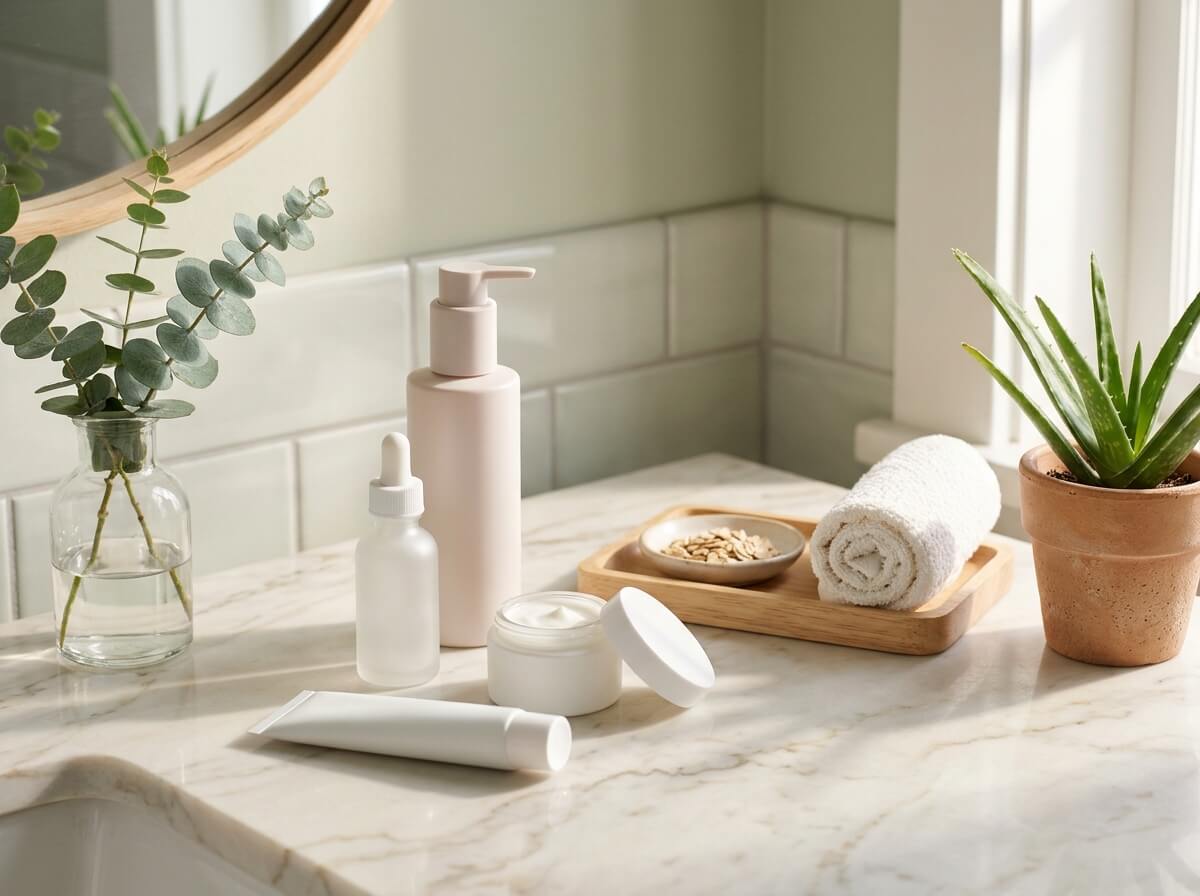
If your face turns pink after a new moisturizer, stings when you apply serum, or feels tight and itchy no matter what you try, you are far from alone. Surveys across many countries consistently find that a large share of women describe their skin as sensitive, and the frustration is usually the same: shelves full of products promising “calm” and “gentle,” and no clear way to know which ones will actually behave on your skin.
The good news is that you don’t need a twelve-step routine or a cabinet full of expensive bottles. Sensitive skin usually does best with fewer, simpler products chosen with care. This guide walks you through what sensitive skin really is, which ingredients tend to soothe and which tend to irritate, how to choose each product in your routine, and how to test anything new without risking a week of redness.
What “Sensitive Skin” Actually Means
Sensitive skin isn’t a single medical diagnosis. It’s a description of skin that reacts more easily than average, with stinging, burning, itching, tightness, redness, or bumps, often after contact with products, weather changes, hot water, or stress. Most of the time, the root of the problem is a weakened skin barrier, the outer layer that keeps moisture in and irritants out. When that barrier has gaps, ingredients that wouldn’t bother other people can slip through and trigger a reaction.
Sensitive skin can also overlap with specific conditions, and it helps to know which pattern sounds most like you:
- Dry, barrier-damaged skin feels tight, looks flaky or dull, and stings when you apply products, especially in winter or after over-exfoliating. This is the most common type and often improves dramatically once you simplify your routine and focus on repair.
- Redness-prone or rosacea-prone skin flushes easily with heat, spicy food, alcohol, sun, or emotion, and may show visible small blood vessels or bumps on the cheeks and nose. It tends to react to fragrance, alcohol, and strong acids.
- Eczema-prone skin (atopic dermatitis) brings patches of itchy, dry, sometimes cracked skin, often around the eyes, mouth, neck, or in skin folds. It needs rich, fragrance-free moisture and very gentle cleansing.
- Allergic or contact-reactive skin develops itchy rashes or bumps where a specific ingredient touched it, sometimes a day or two after use. Fragrance and certain preservatives are among the most frequent culprits.
- Acne-prone sensitive skin breaks out easily yet can’t tolerate harsh acne treatments. It needs lightweight, non-comedogenic products and slow, careful introduction of active ingredients.
Knowing your pattern doesn’t change the core rules below, but it helps you decide where to be extra cautious.
Ingredients That Calm and Protect
When reading labels, these are the ingredients that tend to support a stressed barrier and soothe reactive skin. You don’t need all of them in one product; even two or three in a short ingredient list is a great sign.
- Ceramides are fats that naturally make up a large part of your skin barrier. Products that contain them, often alongside cholesterol and fatty acids, help refill the “mortar” between skin cells so moisture stays in and irritants stay out. They are one of the most reliable ingredients for dry, tight, or eczema-prone skin.
- Glycerin and hyaluronic acid are humectants that draw water into the skin and keep it plump. Glycerin in particular is inexpensive, well-studied, and very rarely irritating, which makes it a quiet hero in many gentle formulas.
- Niacinamide (vitamin B3) helps strengthen the barrier, reduce redness, and even out tone. At lower concentrations, roughly 2% to 5%, it is generally well tolerated; very high percentages can cause flushing in some people, so sensitive skin should start low.
- Panthenol (pro-vitamin B5) soothes and hydrates, and it’s frequently used in products designed for skin recovering from irritation or procedures.
- Colloidal oatmeal is finely ground oat that forms a protective film and calms itching. It’s a classic for eczema-prone and very dry skin, in both face and body products.
- Centella asiatica (cica) is a plant extract associated with soothing and supporting skin repair. It’s popular in calming creams and serums, though, like any botanical, it can still bother a small number of people.
- Allantoin and bisabolol are mild soothing agents that help reduce the feeling of irritation and are common in “comfort” formulas.
- Squalane is a lightweight, stable oil that moisturizes without feeling greasy and is unlikely to clog pores, which makes it useful for sensitive skin that is also oily or acne-prone.
- Zinc oxide and titanium dioxide are mineral sunscreen filters. They sit on the skin and are generally less likely to sting than some chemical filters, which is why many people with sensitive skin prefer them.
Ingredients to Avoid or Approach with Caution
Not every ingredient on this list is “bad.” Many are fine for most people. But when your skin is reactive, these are the usual suspects worth eliminating first.
- Fragrance (parfum) and essential oils are among the most common causes of skin allergies and irritation from cosmetics. That includes “natural” scents such as lavender, citrus, peppermint, and tea tree oil. If you only change one thing, choose fragrance-free products.
- Drying alcohols such as alcohol denat., SD alcohol, or ethanol high on the ingredient list can strip moisture and sting broken skin. Fatty alcohols like cetyl or cetearyl alcohol are different; they are moisturizing and usually fine.
- Harsh sulfates, especially sodium lauryl sulfate (SLS), create a big foamy lather but can disrupt the barrier and leave skin tight and squeaky. Sensitive skin prefers low-foam or non-foaming cleansers.
- Physical scrubs with crushed shells, pits, sugar, or rough beads create tiny scratches and inflammation. Skip them on the face entirely if your skin is reactive.
- Strong acids and peels, such as high-strength glycolic acid, frequent AHA/BHA toners, and at-home peels, can quickly overwhelm a fragile barrier. If you want exfoliation, gentler options like PHAs (gluconolactone) or low-strength lactic acid used once or twice a week are easier to tolerate, and only once your skin is calm.
- Retinoids, including retinol and prescription tretinoin, are excellent for aging and acne but are a common source of redness and peeling. They aren’t off-limits, but sensitive skin needs a low strength, a slow schedule (two nights a week to start), and a good moisturizer alongside.
- Certain preservatives, particularly methylisothiazolinone (MI) and methylchloroisothiazolinone, have been linked to allergic contact reactions. They’re used less in leave-on products now, but they still appear in some rinse-off items and wipes.
- Some chemical sunscreen filters, such as oxybenzone and avobenzone, sting or irritate certain people, especially around the eyes. If your sunscreen burns, try a mineral formula instead.
Quick Reference Table
| Look For | Why It Helps | Approach with Caution | Why It Can Irritate |
|---|---|---|---|
| Ceramides | Rebuild the barrier | Fragrance and essential oils | Top cause of cosmetic allergies |
| Glycerin, hyaluronic acid | Draw in and hold water | Alcohol denat. / SD alcohol | Dries and stings broken skin |
| Niacinamide (2–5%) | Calms redness, strengthens barrier | SLS and harsh sulfates | Strips natural oils |
| Panthenol, allantoin | Soothe irritation | Physical scrubs | Cause micro-tears |
| Colloidal oatmeal | Relieves itch and dryness | High-strength AHAs/BHAs | Overwhelm a weak barrier |
| Squalane | Light, non-greasy moisture | Retinoids (used too fast) | Redness, peeling |
| Zinc oxide | Gentle sun protection | MI / MCI preservatives | Linked to allergic reactions |
Your Product-by-Product Guide
1. Cleanser
Your cleanser has one job: remove dirt, sunscreen, and makeup without taking your skin’s natural oils with it. For sensitive skin, look for a cream, milk, gel-cream, or micellar formula that is fragrance-free and low-foaming. After rinsing, your skin should feel soft and comfortable, never tight or squeaky; tightness is a sign the cleanser is too strong.
Use lukewarm water rather than hot, which worsens redness and dryness, and gently pat your face dry with a clean, soft towel instead of rubbing. Many people with sensitive or dry skin find that cleansing with water alone in the morning and using a gentle cleanser only at night is plenty. If you wear long-wear makeup or water-resistant sunscreen, a fragrance-free cleansing balm or micellar water used as a first step can lift it off without scrubbing.
Widely available examples: Vanicream Gentle Facial Cleanser, La Roche-Posay Toleriane Hydrating Gentle Cleanser, Cetaphil Gentle Skin Cleanser, Avène Extremely Gentle Cleanser Lotion. Formulas can change, so always re-check the ingredient list before buying.
2. Toner or Essence (Optional)
Toners are entirely optional, and many sensitive-skin routines are better without one. If you enjoy the step, choose a hydrating, alcohol-free toner or essence with ingredients like glycerin, panthenol, or centella, and avoid anything described as “astringent,” “clarifying,” or “pore-tightening,” which often signals alcohol or acids. Press it in with clean hands rather than wiping with a cotton pad, which adds friction.
3. Serum
A serum is where you can target a specific concern, but for sensitive skin it should be one serum at a time, introduced slowly. A niacinamide serum at a modest strength is a good first choice for redness and uneven tone. A hyaluronic acid or panthenol serum suits dehydration and tightness. If you’re interested in vitamin C for brightness, gentler derivatives such as sodium ascorbyl phosphate or magnesium ascorbyl phosphate tend to sting less than pure L-ascorbic acid.
Avoid layering several actives in the same routine. Using a vitamin C serum, an exfoliating toner, and a retinol together is one of the fastest ways to irritate even resilient skin.
4. Moisturizer
For sensitive skin, moisturizer is the most important product you own. It seals in water, supports barrier repair, and acts as a buffer between your skin and the environment. Look for a fragrance-free formula with barrier-supporting ingredients such as ceramides, glycerin, squalane, or colloidal oatmeal, and choose the texture based on your skin type.
Lightweight gel-creams and lotions suit combination or oily sensitive skin, while richer creams and balms suit dry, eczema-prone, or winter-stressed skin. Apply moisturizer within a few minutes of cleansing, while skin is still slightly damp, to lock in more hydration. If your skin is very dry at night, a thin layer of a plain occlusive like petrolatum over your moisturizer on the driest areas can make a real difference by morning.
Widely available examples: La Roche-Posay Toleriane Double Repair Face Moisturizer, CeraVe Moisturizing Cream, Vanicream Moisturizing Cream, Avène Tolerance Control Soothing Skin Recovery Cream.
5. Sunscreen
Daily sunscreen protects sensitive skin from UV damage, which can worsen redness, rosacea flare-ups, and pigmentation. Choose a broad-spectrum SPF 30 or higher and, if chemical filters have stung you before, go for a mineral formula based on zinc oxide and/or titanium dioxide. Modern tinted mineral sunscreens are a great option because the tint helps counter the white cast and can double as a light base makeup.
Apply a generous amount, roughly two finger-lengths for the face and neck, as the last step of your morning routine, and reapply when you’re outdoors for long periods. If you find sunscreen stings around the eyes, a mineral sunscreen stick for that area is often more comfortable.
6. Eye Cream
The skin around the eyes is thinner and more reactive than the rest of the face, so this area reacts first to fragrance, retinol, and chemical sunscreen. You don’t strictly need a separate eye cream; a gentle face moisturizer that your skin already tolerates usually works well here too. If you do want one, look for a short, fragrance-free formula with ceramides, peptides, or caffeine, and pat it on with your ring finger rather than rubbing.
7. Makeup
Makeup can be part of a sensitive-skin routine if you choose carefully. Look for fragrance-free, non-comedogenic formulas and, where possible, mineral-based powders, which contain fewer ingredients and fewer preservatives than many liquids. Pressed or loose mineral foundations, tinted moisturizers, and cream blushes with short ingredient lists are generally kinder choices.
Clean your brushes and sponges weekly, since old product and bacteria can irritate skin and cause breakouts. Replace mascara every three months, and always remove eye makeup gently with a fragrance-free micellar water or oil rather than tugging with a wipe.
8. Body Care
Sensitive facial skin often comes with sensitive body skin. Switch to a fragrance-free body wash or a gentle cleansing bar labeled “syndet” (synthetic detergent), which is usually milder than traditional soap. Keep showers short and warm rather than hot, and apply a fragrance-free body cream or ointment right after you towel off. For very itchy or dry areas, products with colloidal oatmeal or ceramides are especially soothing.
Don’t forget your laundry: fragrance and dyes in detergents and fabric softeners can irritate skin through clothing, towels, and pillowcases. A “free and clear” style detergent is an easy change that sometimes solves a mystery rash.
How to Read a Label Like a Pro
Marketing words on the front of the bottle can be misleading, so the ingredient list on the back is where the truth lives. A few things to keep in mind will make shopping much easier.
- “Hypoallergenic” and “dermatologist tested” are not regulated standards. They suggest the brand designed the product with sensitive skin in mind, but they don’t guarantee it won’t irritate you. Always check the ingredient list anyway.
- “Fragrance-free” and “unscented” are not the same. “Fragrance-free” generally means no fragrance has been added, while “unscented” products can contain masking fragrances to cover the smell of the raw ingredients. For reactive skin, fragrance-free is the safer choice.
- Ingredients are listed in descending order of concentration, at least for those above about 1%. If something you want to avoid, like alcohol denat., appears in the first few ingredients, it’s a major part of the formula.
- Shorter ingredient lists are usually easier to troubleshoot. Fewer ingredients means fewer chances of a reaction and, if one happens, an easier time figuring out the cause.
- Seals from trusted organizations can help. In the United States, for example, the National Eczema Association’s Seal of Acceptance marks products reviewed for ingredients known to irritate eczema-prone skin. It’s not a guarantee, but it’s a useful shortcut.
How to Patch Test a New Product
Patch testing is the single best habit for sensitive skin, because it lets you find a problem on a small, hidden area instead of across your whole face. It takes a little patience, but it can save you weeks of irritation.
- Choose a discreet spot, such as the inside of your forearm, the side of your neck, or just behind your ear. For face products, a small area along the jawline is useful once the arm test has passed, because facial skin can behave differently.
- Apply a small, coin-sized amount twice a day to the same spot, exactly as you would use the product normally. Leave-on products should stay on; cleansers can be rinsed off after the usual amount of time.
- Continue for 7 to 10 days, because some allergic reactions take a few days to appear. A product that seems fine on day one can still cause a delayed rash.
- Watch for redness, itching, burning, swelling, or bumps. If any appear, wash the area gently and stop using the product. If nothing happens after the full testing period, you can introduce the product into your routine.
- Introduce only one new product at a time and wait about two weeks before adding the next. This way, if your skin reacts, you’ll know exactly which product caused it.
A Simple Sensitive-Skin Routine
Here is a gentle, realistic routine that covers everything sensitive skin truly needs. Start with these basics for at least a month before adding anything else; many people find this is all their skin wants.
| Step | Morning | Evening |
|---|---|---|
| 1. Cleanse | Rinse with lukewarm water, or use a gentle cream cleanser if skin feels oily | Gentle, fragrance-free cleanser (balm or micellar first if wearing makeup or water-resistant SPF) |
| 2. Treat (optional) | Niacinamide or hydrating serum | Same serum, or a low-strength retinoid 2 nights a week once skin is calm |
| 3. Moisturize | Light, fragrance-free moisturizer with ceramides or glycerin | Richer cream; add a thin layer of petrolatum on very dry spots if needed |
| 4. Protect | Broad-spectrum mineral SPF 30+ | — |
Common Mistakes That Keep Sensitive Skin Irritated
- Using too many products at once. Every extra product adds more ingredients and more chances for a reaction. When skin is flaring, strip your routine back to cleanser, moisturizer, and sunscreen until it settles, usually within two to four weeks.
- Over-exfoliating to “fix” flakiness. Flaky, dull skin is often a sign of a damaged barrier, not dead-skin buildup. Scrubbing or acid-toning it away makes the barrier weaker and the stinging worse, while moisturizing is what actually helps.
- Trusting “natural” to mean “gentle.” Plant extracts and essential oils are some of the most common irritants and allergens. Natural ingredients can be wonderful, but they aren’t automatically safer for reactive skin.
- Switching products too often. Changing your routine every week means your skin never has a chance to settle, and you’ll never know what’s working. Give a product at least four to six weeks unless it’s clearly irritating you.
- Washing with hot water. Hot showers and steamy face washes feel lovely but dilate blood vessels and strip oils, which increases redness and dryness. Lukewarm is the sweet spot.
- Skipping sunscreen on cloudy days. UV rays reach your skin through clouds and windows, and sun exposure is a major trigger for redness and rosacea flares. Make sunscreen a daily habit, not a beach-only step.
When to See a Dermatologist
Sensitive skin is common and often manageable at home, but some signs deserve professional attention. Book an appointment with a dermatologist or your doctor if your skin stays red, itchy, or painful even after simplifying your routine for several weeks, or if you notice persistent facial flushing, visible blood vessels, or acne-like bumps that could point to rosacea.
You should also seek care if you develop cracked, weeping, or crusting patches, signs of infection like warmth, swelling, or pus, or a rash that spreads. A dermatologist can diagnose conditions like eczema, rosacea, or contact allergies, prescribe treatments when needed, and even perform professional patch testing to identify exactly which ingredients you’re allergic to. And if you ever experience swelling of the lips, eyes, or throat, or difficulty breathing after using a product, seek emergency care right away.
Frequently Asked Questions
Can sensitive skin ever become less sensitive? Often, yes. When sensitivity is caused by a damaged barrier, a few weeks of gentle cleansing, consistent moisturizing, daily sunscreen, and avoiding irritants can make skin noticeably calmer and more resilient. Skin with an underlying condition such as rosacea or eczema may always need extra care, but flare-ups can become far less frequent.
Are expensive products better for sensitive skin? Not necessarily. Some of the most trusted sensitive-skin cleansers and moisturizers are drugstore products with short, simple ingredient lists. Price often reflects packaging, fragrance, and marketing more than gentleness, so focus on the ingredient list rather than the price tag.
Is mineral sunscreen always better for sensitive skin? Mineral sunscreens with zinc oxide or titanium dioxide are less likely to sting for many people, which is why they’re often recommended. That said, some people tolerate modern chemical sunscreens perfectly well. The best sunscreen is the one your skin accepts and that you’ll actually wear every day.
Can I still use retinol if I have sensitive skin? Many people can, with patience. Start with a low-strength product, apply a pea-sized amount two nights a week over moisturizer, and slowly increase only if your skin stays comfortable. If you have rosacea or eczema, talk to a dermatologist first, as they may suggest gentler alternatives.
How long does it take to know if a product suits my skin? Allow 7 to 10 days of patch testing to rule out a reaction, then about four to six weeks of regular use to judge whether the product is truly improving your skin. Results such as calmer redness or better hydration build gradually.
The Bottom Line
Caring for sensitive skin isn’t about finding a miracle product; it’s about choosing fewer, gentler ones and giving your skin time to recover. Build your routine around a mild cleanser, a fragrance-free barrier-repair moisturizer, and a daily mineral sunscreen, then add one targeted product at a time after a careful patch test. Read labels instead of front-of-bottle claims, skip fragrance and harsh scrubs, and keep water lukewarm. With a little patience, most sensitive skin becomes calmer, more comfortable, and far more predictable.